



Wanted: More emotional women
Opinion
The ruthless commentary surrounding Rachel Reeves underlines how women’s emotions are still weaponised against them.
Do you care too much to be a strong leader or are you too cold to connect?
Nowhere is the impossible tightrope women walk between being too much and not enough clearer than in leadership.
The notion that women’s tears dilute their strength has withstood the test of time. Women’s emotions are still weaponised against them.
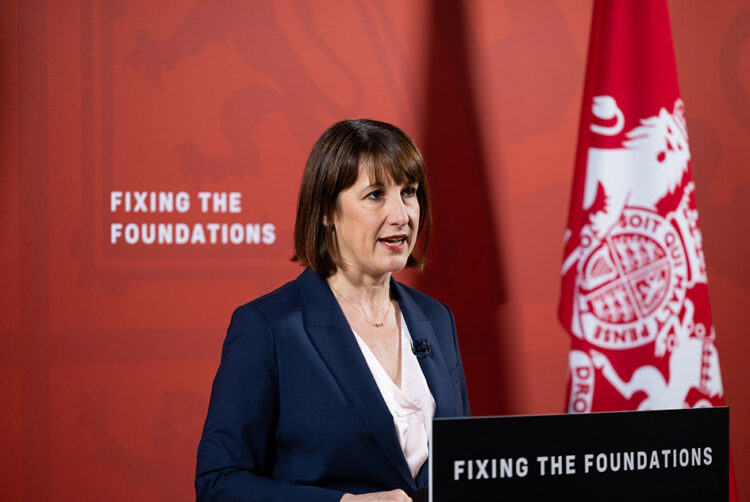
Indeed, the sight of chancellor Rachel Reeves shedding a tear on the front bench sparked a flurry of derisive commentary. As disgraced former Mirror editor Piers Morgan lamented: “If you can’t stand the heat, Rachel, get out of the political kitchen.”
Puncturing the equality malaise
Collectively, we have failed to address issues that have plagued our industry for years: sexual harassment, bullying, maternity discrimination.
Our industry narrative is still dominated by men, presenting a one-dimensional image of what a “thought leader” should look like. We continue to perpetuate sexist ideas about the shape and longevity of women’s careers.
The reason why the coverage of Reeves hits hard is because so many women have felt the misplaced shame of showing emotion.
We do not know, nor do we have the right to know, the private matters that Reeves is navigating. But we know women carry the disproportionate burden of caring responsibilities, all the while being undermined for “caring too much”: the three-word vendetta wielded against women who dare to give a shit about the people who make this industry so special.
Weaponising tears
The unending pressure that women in leadership place on themselves to bend but never break wraps its toxic tentacles around every aspect of women’s lives. As a result, we accept the unacceptable.
So heavily instilled is the notion that crying is a weakness that at one publisher I worked at I was advised which toilet was best to cry in.
While it is no longer acceptable to physically wheel female journalists out of news meetings or shout in their faces, bullying and sexism persist.
Yet the narrative remains that women are weak. It is us who cannot hack it.
In media, #MeToo never applied to you
Women continue to endure an unforgivable amount of trolling and harassment. We are content to uphold a media narrative that scrutinises women’s emotions rather than behaviours that cause real-world harm.
When you consider how some commentators are content to call the #MeToo movement a “purge” and point to how many Cannes Lions an abuser has won, it is easy to see why so many stories of abuse were so successfully covered up.
Is it any wonder many men in leadership felt safe in the knowledge that #MeToo doesn’t apply to them?
Into that accountability void walked the ultimate wolf in sheep’s clothing: I’ve heard of a DEI leader who sexually harasses a woman while platforming himself as the solution to a problem he cruelly contributes to.
If that sentence doesn’t make you want to weep with frustration, perhaps the problem is not women’s emotions but your own catastrophic lack of care.
Media needs more emotional women
In place of meaningful analysis and accountability for tackling sexual harassment, we vent our collective frustration in the wrong places. Women continue to pull each other apart, failing to recognise that raw emotion, anger, tears and frustration are all necessary fuel for change.
We pick at female leaders, then roll out the “be kind” mantra as they unravel. We expect female leaders to embrace the most impossible, conflicting construct of perfect leadership.
You can be ambitious, but not too ambitious or we will label you a bully. You can call out sexual harassment, but be polite or we will spend more time questioning your ethics than urging the industry to be accountable.
Collectively, we ignore the real-world repercussions of continuing to platform abusive men. Imagine how you would feel watching the man who ruined your career platformed at the world’s biggest advertising festival?
A shallow narrative
The LinkedIn leadership dudes, fresh from advising Rachel from accounts to be more human, are quick to adopt the empty rhetoric of “be kind”.
The painful flaw is that only when female leaders are completely broken can they summon up the ounce of humanity necessary to give them a break. They light a match and then announce not enough is being done to put out the fire of their own creation.
Misogyny is the fault-line that runs through women’s lives — amplified by a media narrative in which women leaders are endlessly stereotyped.
Stereotypes stop people from achieving their full potential, as they dehumanise and diminish. The fact that “Rachel from accounts” has become synonymous with the UK’s first female chancellor underlines just how powerful media narratives can be in undermining women’s achievements.
The war on women’s emotions
Female leaders simply cannot avoid this misogynistic narrative — a truth that means, as an industry, we spend more time critiquing women for showing emotion rather than recognising how we contribute to systems and stereotypes that ensure so many women never reach their full potential.
Instead of endlessly policing women’s emotions, let’s recognise that fault lies with those who seemingly could not care less.
Imagine if advertising and media leaders dedicated as many column inches to eradicating sexual harassment at Cannes as they did lamenting fake campaigns.
Imagine if the thought leadership dudes (let’s be honest, they are still predominantly dudes) brought the same energy in debating “the era of brand” to addressing the fact that 120,000 women left the creative industries over the past two years.
When it comes to the media narratives we create as an industry and beyond, we continue to view equality as an afterthought.
Industry gatekeepers not only continue to lock women out, but they also act as if the experiences of half of the world do not exist.
We must stop piling shame on to women’s emotions. Every single one of the best, most talented leaders I have ever worked with has shed a tear or let out an angry sob at some point. Their creativity and leadership clarity are built on the simple truth that they care about their work and the people they work with. You cannot cry if you do not care.
The media industry desperately needs more emotional women. From the toxic impact of social media on children’s mental health to cultures of bullying and presenteeism, we need women’s wisdom more than ever.
 Nicola Kemp has spent over two decades writing about diversity, equality and inclusion in the media. She is now editorial director of Creativebrief. She writes for The Media Leader each month.