



Forget about the AI Guess model — let’s talk about Range Rover’s Vogue ad
Opinion
Other luxury brands can learn from Range Rover’s media planning and not forget the psychology of domestic diplomacy when it comes to big purchases.
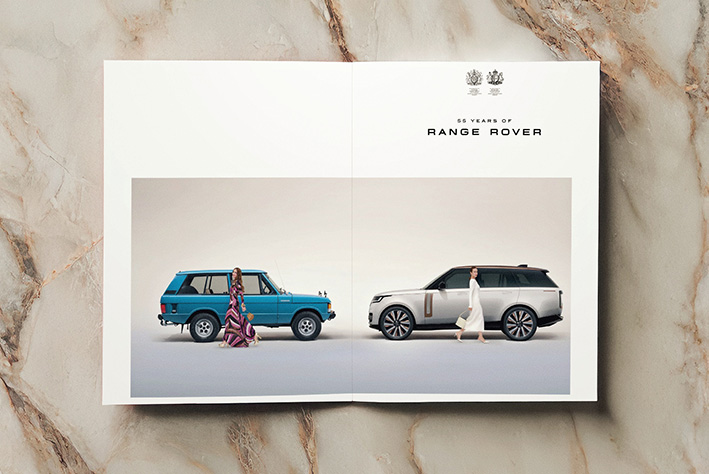
The headlines might have focused on Guess using an AI generated model in an ad, but the Vogue ad we should be talking about is Range Rover’s full-bleed, double-page spread.
It is one of only two automotive ads running in the August edition, with the other promoting the significantly more affordable Alpine A290 Electric. This is in a 160-page magazine that’s full of the kind of aspirational lifestyle content that provides a powerful ad environment for any luxury brand.
It’s part of a wider brand growth strategy that has seen Range Rover branching out into high-end clothing and accessories, and developing a range of luxurious experiences.
That’s nothing new in the automotive category, but the thinking is not driven by the usual idea of accessibility, like buying a Ferrari baseball cap as a kind of capitalist trinket. Instead, according to Land Rover, it’s so that clients can connect with the luxury brands they love in ways that “reflect and ultimately embody their lifestyles”.
That’s interesting because, luxury brand-building strategy aside, advertising in Vogue strikes me as a great piece of media planning — and one that other high-end, but not traditionally “luxury”, brands could consider.
Joint decision-making
To be in the market for even the smallest Range Rover, it’s highly likely that the car is being bought by a family, not a single person. And given the price, it’s a family with two decent salaries or one very big one.
For some couples, buying a car is purely a utility purchase. For others, there’s one partner who will be doing most or all of the driving and is car mad, so the input of the other partner might be minimal.
But a more common scenario is one where the decision is made jointly, though not always equally. Let’s call one partner “the enthusiast”, who brings the energy, starts the specs list and does the hardcore research. The other, “the pragmatist”, may not care about Autocar reviews, but they hold the power of veto.
The enthusiast giddily skips around, device in hand, to present a bundle of vehicle options to their partner. Of course, the options will be framed as meeting all the rational requirements in a car purchase, like high safety standards, enough boot space and how it’s powered.
But, at this point, logic and desire will begin wrestling with each other, as both partners bring their emotions to the decision-making process (yes, even the pragmatist): what looks great, their history with the brand and how it makes them feel when, however briefly, they floor it.
Through advertising in Vogue, Range Rover is dramatically increasing its chances of being a choice the couple considers during that conversation. If the enthusiast has presented Range Rover as an option, the pragmatist who’s seen the brand advertised in Vogue will already be more disposed to think of it as something that is tasteful and elegant. In other words, something sanctionable.
And if Range Rover wasn’t on the list, it could even prompt the pragmatist to suggest it.
Forget the acronyms
It’s easy for advertisers and marketers to worry so much about fundamentals like reach, frequency, salience, SOV, ROAS, PESO and the plethora of other acronyms we like to throw around and forget about the greatest fundamental of all: psychology. In particular, the kind of shared psychology between partners, families and households, that algorithms aren’t nuanced enough to understand.
In short: do we matter and do we mean something to both parties involved in the purchase decision?
Advertising works best when it respects domestic diplomacy by not only working on the obvious decision-maker but by also taking into account any parties with the power of veto. So much advertising forgets how real decisions are made. It misses the beautifully boring realities that actually drive much of the populace’s decisions.
For that reason, Range Rover advertising in Vogue — and with almost no competition — is rather clever. It’s a magazine that retains the ability to define tastes and an environment where advertising and editorial sort of merge into one long shopping catalogue.
Range Rover, like every premium automotive brand, needs both parties’ psychological signatures before the vehicle can pull off the forecourt. But, unlike other premium automotive brands, Range Rover is actually doing something about it.
In the vein of another industry fundamental: what we do isn’t a game of hoping the right people notice, but forcing them to and cultivating their attention.
 Elliott Starr is creative director at Impero