



Three pillars for eye-opening effectiveness
Opinion
At the Future 100 Empowering Voices event earlier this year, a panel of Future 100 Club members discussed their most effective campaigns. Here, Emily Alcorn breaks down its work with Specsavers and why she believes achieving reach, investing in brand building, and nailing the creative are key to effectiveness.
In a digital-focused, fast-paced advertising world, what actually contributes to advertising effectiveness?
In its purest form, it’s the ability of a campaign to achieve its intended objective. That could be awareness, engagement, sales or ideally, all three.
The challenge? Achieving that in a fragmented media landscape, with more data but less clarity, and a growing obsession with short-term results.
At its heart, true effectiveness rests on three non-negotiables:
Reach
To be effective, you first need to be seen. And not by bots or proxies but by real people, in real moments.
Quality reach is about the right message, at the right time, to the right audience. OOH provides high-impact visibility in physical spaces that drive memorability, especially when that visibility is used to deliver contextual creative that lands in the moment.
Specsavers is a great example of a brand that knows how to reach people in all the right places. Whether it’s parents booking eye tests for their kids, young adults getting their first pair of glasses, or older customers exploring hearing care, its strategy covers a wide demographic without spreading itself too thin.
The brand has invested wisely in a mix of channels that ensures it appears where it matters. Whether you are walking past a bus stop or a poster in a train station, it’s all perfectly timed and placed to make you smile and think, “Yep, I probably should go to Specsavers.”
Like the way it showed up around the highly anticipated Oasis reunion tour, stating its claim as “the original ‘blur’ rivals”. These high-impact placements don’t just grab attention; they stick in your mind, making the brand feel familiar and relevant in everyday life.
Why consistency is key for brand success — with Specsavers’ Ian Maybank
Brand Building
As Les Binet and Peter Field have long argued, long-term brand building is what drives sustainable growth. And central to that is mental availability being top of mind when people enter a buying situation.
In today’s post-pandemic, cost-of-living climate, this matters more than ever. The Leo Burnett State of the Nation research shows we’re still living through a crisis hangover, and people are seeking out brands that feel human, transparent and authentic. That’s not just a moral imperative it’s a business one. Building brand is building future demand.
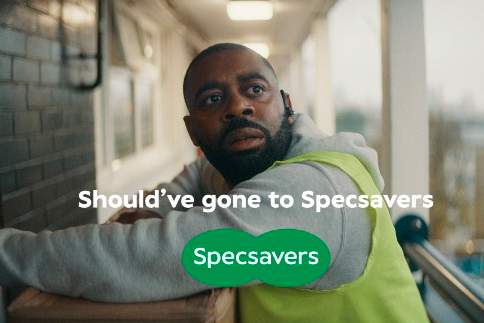
Specsavers has done a brilliant job of building a brand that people genuinely connect with. I’m sure most have smiled at its “Should’ve gone to Specsavers” ads, whether it’s someone mistaking a parking space for a swimming pool or mixing up a cat with a hat.
That consistent tone has helped the brand naturally expand into new areas, such as audiology, without losing its identity. Campaigns like “I don’t go to Specsavers” and “Specs and hearing savers” cleverly demonstrate how the brand’s message resonates across different services, all while maintaining a focus on great value and excellent customer care – something we all as consumers appreciate.
Behind the scenes, it’s the strong collaboration between partners that keeps the creative spark alive, built on trust and collaboration, which keeps the brand fresh, relevant, and strategically on point.
Creativity
We’ve seen the data: whether it’s the IPA databank or Nielsen studies, creative is responsible for the lion’s share of advertising effectiveness. Yet, creativity is being squeezed by short-termism, as campaigns are forced to conform to uniform metrics across all channels. That uniformity is stifling originality. It’s bad for creativity, and worse for effectiveness.
So what’s the answer? It starts with resisting the urge to standardise everything. Not all data is equal, and not all media works the same way.
We need to protect the strategic nuance of media planning and celebrate the unique strengths of each channel. We need to return to a balanced model where short-term activation works in tandem with long-term brand building.
Again, Specsavers does this brilliantly. Its use of OOH has become a talking point far beyond the billboard. Its bollard campaign sparked conversation, earned media, making it a discussion point on This Morning. Why? Because it was funny, distinctive, connecting with consumers via perfectly placed classic creative effectiveness, built for visibility and talkability and sparking curiosity.
But beyond that one moment, Specsavers is consistent in how it balances long and short. It builds fame through humour and creativity, but it also delivers performance with precision, even within OOH, using data to drive contextual, localised messaging, right down to the number of appointments available at your nearest branch.
In a world where cookies are crumbling and AI is accelerating, the temptation will be to chase efficiencies and uniformity. But real effectiveness doesn’t come from flattening everything. It comes from smart planning, brave creative, and a relentless focus on mental availability – everything OOH is known for.
‘OOH is enjoying a real moment’: Check out 2025’s impactful new formats
 Emily Alcorn is chief effectiveness officer at global OOH agency Talon.