



Marketers, meet your new role as editor-in-chief
Opinion
In a world of AI-powered campaigns, here are three ways the role of marketers will change as they guide and place limits around the technology.
From Reddit’s new social listening feature and the image-to-video animation tool by TikTok to Unilever’s reactive content design studio, AI is rewriting the rules of modern-day marketing.
Over half of brand experts now use AI to generate content and creative campaign ideas, but the transition is far from an easy — or reliable — fix.
As demand for AI-powered marketing soars, so does the consumer pushback. With nearly three-quarters of new webpages containing some form of AI-generated content, “AI slop fatigue” is gaining pace.
Customers and creatives alike are recognising the danger of marketing content that is bland, nonsensical or ethically unsound. And while 59% of marketers are excited about using AI in ads, there’s also a growing demand for data that is trustworthy, relevant and reliable.
Far from reducing the role of the marketer, then, the age of AI brings an organisational promotion. With machines taking over the grunt work of big-ticket campaigns by analysing trends or surfacing instant community feedback, their human overseers must step up.
In a world where AI tools can either make or break a brand, marketers are the arbiters of their impact. They are the editors-in-chief: the people who guide and place limits around AI, as a sidekick to authentic human storytelling.
Here are three key insights on what this means for teams, tools and marketing culture.
1. Building an AI-first team
As AI takes on a growing share of research, targeting, creative production and optimisation, every role within the team will depend on it, driving the rise of fully AI-first structures.
Tomorrow’s AI-first marketing teams will blend prompt engineers, narrative editors, compliance thinkers and systems designers. Each brings a distinct skillset, but their real power lies in how they work together.
Leaders who act now can shape these collaborations early, building the culture and workflows to make them thrive.
AI tools deliver the greatest results when everyone — not just senior engineers — uses them. The marketer’s new remit is to embed their role seamlessly within this wider organisational framework.
As narrative leaders, marketers will need to collaborate daily with specialists across technical, creative and compliance disciplines to ensure every nuance of AI-driven campaigns is executed effectively.
This demands tight-knit communication and constant iteration. A marketer might know they want a chatbot to generate story leads, for instance, but they’ll need technical specialists to fine-tune it.
Equally, they can instantly spot the hallmarks of “churn” content and work with design experts to set parameters that elevate output.
News, analysis, comment and community — Join The Media Leader
2. From managing campaigns to curating meaning
There are plenty of strong use cases for AI in marketing. For example, Google’s new Veo 3 image-to-video model can transform still product images into dynamic ad clips, drastically cutting the production time for campaign assets. Meanwhile, “digital twin” services can make localised adjustments to a product image without call for costly reshoots.
Unilever has leveraged digital twins of its products to generate imagery twice as fast and at half the cost, while preserving 100% brand consistency across packaging variants and formats.
The value of marketers within this picture lies with interpretation. The brand experts of the future must become polished sense-makers, using AI to enhance performance without taking away the soul of a given campaign.
This is important from a practical viewpoint: Google, for example, continues to insist that it prioritises people-first content, meaning content solely created to rank in AI Overviews will likely be downgraded.
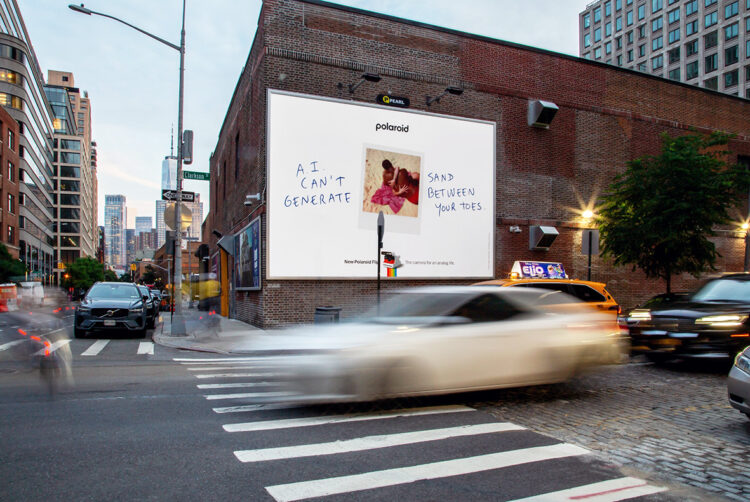
It’s also a PR issue: 50% of consumers know when copy is AI-generated and the backlash is evident in campaigns such as Polaroid’s “AI can’t generate sand between your toes” billboards.
With a barrage of automated, mid-tier content now flooding our social media and search platforms, marketers play a key part in protecting brand integrity. They must walk the line, deciding where AI can add value while retaining creative and strategic control.
Roll your own DICE: How values will save you from the AI swamp
3. Safeguarding brand reputation
Like any great editor-in-chief, the most important task for tomorrow’s marketer revolves around reputation. While AI brings a raft of advantages to the average marketing suite, it also carries huge potential for damage.
Think of Coca-Cola’s AI-made Christmas ad, described by audiences as “devoid of any actual creativity”. Or the Los Angeles Times withdrawing an AI-supported tool that generated content defending the Ku Klux Klan. Or the hundreds of online lifestyle articles written using fake journalists.
Even if marketers are able to navigate the complex threats posed by hallucinations, bias and brand damage, they must be alert to the subtler ways in which AI can underperform. A recent study found that anthropomorphic chatbots actually reduce customer satisfaction, either because they unnerve people or users expect much more from a human-like transaction.
Marketers who ignore AI are in for a rude awakening — but so, too, are those who choose over-reliance. There are plenty of companies that have dismantled their in-house content teams too soon, only to be left with a pile of generic noise.
AI alone cannot deliver rich, resonant and culturally astute messaging. But with a marketer in play as the editor-in-chief, it makes a great junior collaborator.
 Siddharth Asokan is chief marketing officer at Softwire