



7 commercial layers in ITV’s 70-year journey
Opinion
As ITV reaches seven decades, its commercial MD reflects on the key moments that show how advertising has powered the broadcaster’s growth, kept TV free and helped shape UK culture.
Growing up in the north west, my evening soundtrack often began with Tony Wilson on Granada Reports.
Wilson fascinated me. A serious, suited newsman, but also the force behind Factory Records, Joy Division, New Order and The Haçienda. How could the same person be both a buttoned-up broadcaster and a restless cultural pioneer?
Wilson’s layers made him brilliant: a reporter, an impresario, a poet, a socialist and — because nobody’s perfect — a Man United fan.
Layers are the key to understanding what has made ITV so successful since the first TV ads were aired in 1955. ITV can be both mainstream and extraordinary, both culture and commerce.
Advertising enables those layers to exist together by ensuring that TV is free to watch while funding new ideas, talent and shared national moments.
Looking back on ITV at 70, I see our commercial journey through seven significant layers.
News, analysis, comment and community — Join The Media Leader
1. Ideas beyond idents
The first UK TV ad for Gibbs SR aired in 1955, but it’s remarkable that the first sponsorship of a UK TV programme would not happen for another three decades, when Powergen attached its name to the national weather.
Today, sponsorships feature the most ambitious integrations in broadcasting. Love Island has pioneered multi-brand partnerships, brand and talent licences, product placements, and social and podcast extensions.
Take Win Win, funded entirely by People’s Postcode Lottery. It’s ITV’s most ambitious ad-funded programme: an interactive primetime Saturday quiz giving away £1m, with viewers able to play along.
We now build formats around a brand, where the advertiser is part of the show itself.
2. Collaboration: Channel 4 launch
Channel 4’s launch in 1982 was not just a historic UK media event; it was also my first job.
The government legislated that ITV would fund Channel 4 so that it could focus on its new remit. Having started in regional sales at Thames Television, I sold spots for both ITV and Channel 4.
That collaboration taught me early on how much stronger broadcasters can be when working together.
The same spirit continues today through Barb, Thinkbox, CFlight, Lantern and now Universal Ads. In a world of global platforms, collaboration keeps UK TV distinctive, relevant and trusted.
Channel 4, ITV and Sky roll out ad marketplace to attract new advertisers
3. Mass reach: Rugby World Cup
Nearly 15m of us got up early to watch Jonny Wilkinson’s drop goal win the 2003 Rugby World Cup for England. ITV’s cameras captured the moment (as they have done for every Rugby World Cup), but advertising made it free to air.
From major sporting events to UK-produced drama to Saturday night entertainment, ITV has always been the place where the nation gathers. Mass reach is the bedrock of commercial TV — as vital today as it was in 1955.
4. Regulation and resilience: Carlton-Granada merger
The 2004 merger created ITV plc and, with it, the Contract Rights Renewal (CRR) regulatory system.
Designed to protect advertisers from a dominant broadcaster, CRR remains in place two decades later, even as today’s competitors are global giants with far fewer restrictions.
The fact that ITV continues to thrive under those conditions speaks to its resilience. Regulation may have been designed for another era, but ITV has kept evolving.
5. Driving social change: Britain Get Talking
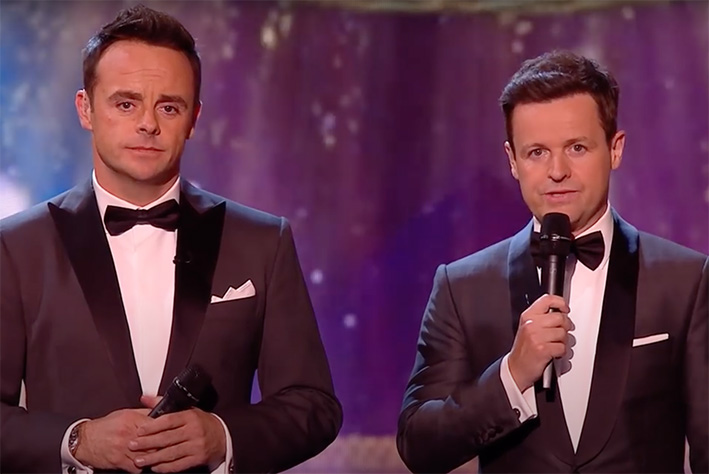
In 2019, Ant & Dec paused Britain’s Got Talent to launch Britain Get Talking, inviting viewers to put down their phones and open up about mental health. It quickly became one of the UK’s most recognised wellbeing initiatives.
Since then, we’ve seen eBay promote sustainable fashion through its six-year Love Island sponsorship, major brands unite to mark World Environment Day and the British Heart Foundation interrupt Coronation Street’s credits to highlight its vital research.
Each showed how advertising on ITV can change behaviour for the better.
6. Data and addressable: Launch of ITVX
ITVX, which launched in 2022, has become the fastest-growing UK streaming service.
Combined with ITV’s self-serve platform Planet V, advertisers could plan and buy campaigns with the same addressability and targeting precision they were used to online.
ITVX has over 40m registered users: valuable first-party data that can be matched with viewing data, third-party datasets or an advertiser’s own. It allows brands to combine the scale of broadcast with the precision of digital, building on layers of mass reach and creativity.
ITVX’s content strategy: Hero genres, higher volume and catching the long tail
7. Measurement: Lantern
A year ago, we unveiled Lantern alongside Channel 4 and Sky: a joint proof of concept to prove what happens after people see an ad.
As Lantern develops, it will track many online and offline behaviours, from searches to site visits to sales.
It’s the latest step in a long history of measurement innovation and a reminder that TV continues to adapt to what brands need: clear evidence that TV delivers outcomes.
How Lantern will bring outcome measurement to TV — with Sameer Modha and Matt Hill
Where would we be…
Wilson became more than a Granada reporter because he fought for his local community. Regional layers are vital, too, in the history of ITV.
But no matter how you slice and dice us, you’ll find that advertising is the glue: keeping the lights on while ensuring free access to cultural moments.
Or, as another Manchester legend, John Cooper Clarke, put it in a recent poem to mark ITV’s 70th anniversary:
Where would we be without ITV
At the mercy of the BBC…
Where would we be without ITV
And the advert breaks that come for free.
 Kelly Williams is managing director, commercial, at ITV