



Move over, Hollywood: Brands need new narratives and archetypes
Opinion
Today’s attention economy is fluid, meme-driven, game-infused and influencer-fuelled. Brands can no longer rely on linear storytelling. The best modern storytelling is multiplayer.
Once upon a time, Joseph Campbell wrote The Hero with a Thousand Faces, setting out how myths from every culture follow a pattern: the hero’s journey.
From Odyssey to Star Wars, it’s classic storytelling — our hero is called to adventure (reluctantly), tested by trials, rewarded and returned transformed. For decades, brands have leaned on the same narrative arc to structure messaging.
But here’s the thing: linear storytelling is losing its grip. Today’s attention economy is fluid, meme-driven, game-infused and influencer-fuelled. Younger audiences have grown up not just watching but playing out stories; not just following the narrative but steering it. They’ve never just watched a story — they help shape it.
Consider the most successful media property of all time: Pokémon. It’s a world where gaming is ubiquitous and audiences are familiar with multi-branching, player-driven plots. The player is (almost) always the star of the show and this main character energy extends into other media. Influencers push this further, breaking the fourth wall to appeal directly to the audience for engagement and amplification.
This interplay is clear in Cannes Lions winners. The standouts weren’t just watched; they were played-with campaigns that invited audiences to remix, respond, vote and even perform. It’s a participatory role rewarded with attention and brand advocacy.
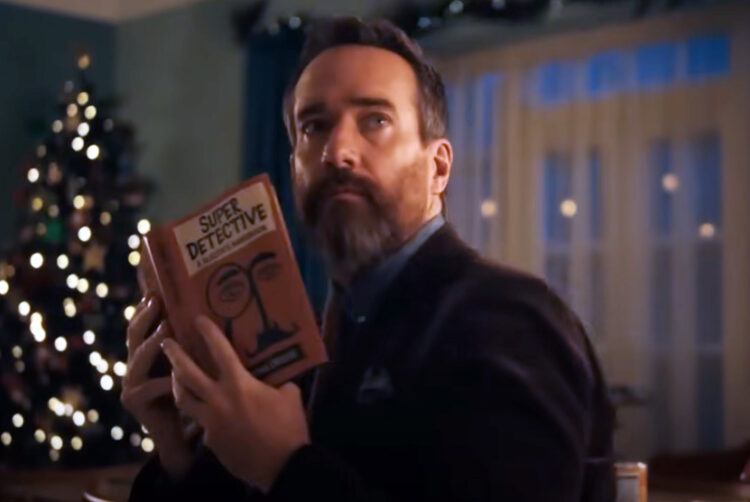
From Christmas whodunnits to creators fact-checking skincare hacks, the magic came from the blurring of lines between audience and co-author. The best modern storytelling, it seems, is multiplayer. This means media needs to be designed with entry points, rewards and other ways for audiences to leave their mark.
Globalised story shapes
Mainstream audiences, both young and old, have consistently shown they are open to more complex or experimental narratives. We see this as much in the success of Christopher Nolan’s films as in the explosion of increasingly convoluted reality TV formats or cinematic universes.
In a globalised, connected society, we — advertisers and audiences — all have access to a wider range of cultural influences than ever. We can encourage our clients to loosen their grip on the narrative confines of established structures within a spectrum of what feels right for them.
In fact, other traditional story shapes that deviate from Hollywood’s “the hero’s journey” are well-suited to ad formats (see box 2, below). These include the Japanese kishōtenketsu, Indian circular storytelling and West African griot traditions.
Nor do we need to hold on to character archetypes. These have always grown to fit contemporary culture, from knights in armour to cowboys to Iron Man. The balance we need to find is keeping brand narratives and characters relevant in a world where cultural and subcultural meanings shift at the speed of a meme.
Campbell identified eight archetypes (see below) that still hold true. But contexts change. It’s increasingly difficult to speak to universal “truths” or ideal “types” in a global digital society in which audiences become more fragmented — but they certainly aren’t passive. As such, contemporary archetypes need to be less rigid and, from a brand perspective, they need to actively invite them on to a shared journey.
(Certain) brands can play more than one archetypal role depending on the context, media environment, who they are playing to and the culture they want to create. Equally, there’s nothing stopping us from creating variants on established archetypes that feed into and from globalised digital culture.
Box 1: Simon Carr’s brand archetypes for a digital age
Letting go of narrative structures
There’s no question that our media strategies can become more collaborative, multidimensional and layered. The question is: how far should we venture from the safety of traditional story and character forms and embrace the chaos?
Some brands might feel emboldened to take on the role of the community protagonist and let the audience co-create the narrative — with the right tools, guidelines and guardrails in place. This is a lot easier for youth brands than it is for established legacy ones that have cultivated a clearly defined “persona” over the years.
That shouldn’t be read as a get-out clause. The key is to test, learn and do what feels right in terms of letting go of the expected, little by little. Let’s not forget Peter Field’s Cost of Dull project or Les Binet’s assertion that “emotion is the most powerful selling tool we have”. To avoid the dull tax, we need to be prepared to surprise — and occasionally shock — audiences.
It’s also not to say we should immediately rip up our copies of The Hero with a Thousand Faces. Recognisable narrative structure and archetypes are a shorthand we can and should use within the confines of a 30-second spot to set the scene.
There is literally a whole world of characters and narrative forms at our fingertips. It’s time to start rewriting the story and looking further afield than Hollywood for inspiration.
Box 2: Non-Western narrative structures made for adland
Japanese kishōtenketsu
A four-act structure with no conflict:
• Ki: Introduction
• Shō: Development
• Ten: Twist
• Ketsu: Resolution
A more meditative approach to storytelling that would work particularly well
for a luxury brand to demonstrate a ritual or process. Bonus points for
employing an AMSR soundtrack.
Indian circular storytelling
(Kathak/Mahabharata tradition)
Stories that loop back or embed within other stories. This makes identity fluid —
perfect for gaming fans — and time non-linear, so meaning emerges over cycles.
Imagine an ad that starts and ends in the same visual moment, but with deeper
resonance the second time.
Forget the Cannes Lions, bring on the Oscars!
West African griot traditions
Evolving narratives that are improvised, musical and communal — perfect for
campaigns that treat culture as co-created and living, remixing stories through
crowd-sourced formats.
Perfect for any creative teams still kicking themselves that they didn’t kick off the Wellerman sea shanty.
 Simon Carr is chief strategy officer at Hearts & Science