



Relevance and simplicity beat frequency and complexity
Partner Content
TiVo’s VP of advertising sales, EMEA, cites four ways simplicity and relevance pack a punch in CTV homepage advertising.
In an increasingly complex advertising landscape, focusing on essential features and functionality can yield tremendous results.
By stripping away unnecessary elements, advertisers can create clear, relatable and memorable campaigns that resonate with consumers.
When it comes to TV and streaming, straightforward, simple solutions can be incredibly effective and deliver high-value reach for brands.
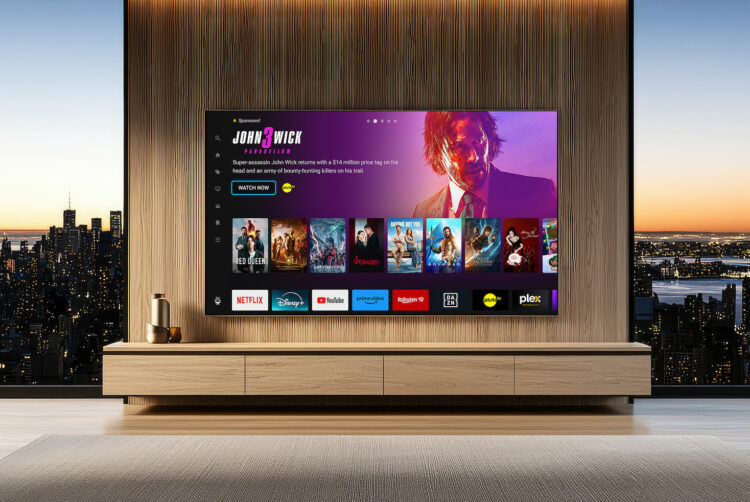
For example, early connected TV (CTV) homepages were not the best designed, featuring little more than simple navigation to a limited number of apps. Today’s TV homepages are more sophisticated, with integrated search functionality, personalised recommendations and interactive elements.
Advanced smart TV homepages leverage user data and machine learning to tailor content and ads to individual households, increasing engagement.
A billboard in the home
Today’s CTV homepage ad units — often occupying half of the screen — are like a billboard in the home: highly visible, unskippable and seamlessly integrated into the user experience.
However, many marketers fail to incorporate TV homepage advertising into their TV strategy, instead opting for in-app video ads across a variety of streaming platforms and content providers.
The problem with this approach is that it misses a crucial step in the user journey. In billboard terms, it’s akin to investing only in advertising on screens in malls, skipping roadside, rail and underground screens — ie. only reaching shoppers once they have reached their destination, not on the way there.
Brand-building with performance
Historically, TV ad production was expensive and time-consuming, and success was measured using a combination of brand awareness and sales uplift.
Today, the fast-paced, data-driven and performance-obsessed nature of online advertising has infiltrated the TV world and in-stream CTV ads are often less well-made, not optimised for TV and measured solely on sales uplift.
This is a mistake. Many advertisers would be better off investing in more “basic” CTV homepage advertising and thinking of it as brand-building with a hint of performance.
Here are four examples of where simplicity and relevance pack a punch.
1. Time-of-day targeting
TV viewers’ mindsets vary throughout the day, impacting their receptiveness to ads for certain products.
There are powerful synergies with certain TV viewing times and categories — think Domino’s long-term sponsorship of ITVX — but app sponsorship opportunities are a) extremely expensive; and b) few and far between.
For brands that offer products or services that are particularly appealing to viewers at certain times of the day, TV homepage advertising offers a cost-effective, high-reach, engaging alternative.
For example, tea, coffee, breakfast food and smoothie brands could target morning news or entertainment viewers. This is predominantly a branding opportunity, but by examining audience movement patterns and sales trends, brands can link sales to ad exposure.
2. Amplify product placement and content sponsorship
Brands that invest in product placement and content sponsorship can increase the frequency of their touchpoints with viewers by adding CTV homepage advertising before, during and after key events.
This doesn’t have to be limited to tentpole occasions like Wimbledon and Glastonbury — it can be a great strategy for brands associated with smaller-scale events combined with geo-targeting.
While the destination might be iPlayer, ITVX or Netflix, viewers get to those apps via the homepage, so why not reach them there with well-timed advertising?
This type of activation should be viewed as a brand awareness play and measured alongside the investment in product placement or content/event sponsorship.
3. Tap into seasonal occasions
Annual events such as Easter, Mother’s Day, Father’s Day, Halloween, back-to-school, and bank holidays present an opportunity for brands to prompt consumers to buy their products to celebrate the occasion.
In the run-up to these occasions, we typically see a surge in personalised digital OOH (DOOH), online and mobile advertising. Adding well-timed CTV homepage advertising to your media mix offers an additional opportunity to reach consumers.
Here, the call to action and, therefore, measurement can skew more towards performance. For example, QR codes can be built into ads, and you can measure increases in search volumes.
4. Brand adjacency
Understanding what viewers will be doing while watching TV and shortly after, provides brands with insights into which audiences are likely to resonate with your advertising messaging and when engagement will be highest.
For example, consumers who are frequent viewers of nature documentaries are more likely to donate to environmental causes and most likely to do so in the evening, when they are viewing TV with their mobile phone within easy reach.
Adding insights based on IP address and postcode gives brands an additional layer of targeting to further refine investment and increase efficiency.
This example is a performance-led strategy but there are also brand awareness opportunities. Using this same nature enthusiast audience example, there could be opportunities for sustainable clothing or household product brands.
Delivering value for brands and audiences
Unlike display, video and DOOH, TV homepage advertising blends reach with relevance. As viewers navigate through content options, they return to the homepage multiple times. This offers brands a high-frequency, high-visibility touchpoint.
While your own experience may be different, there is evidence that a typical viewer spends upwards of 20 minutes searching for TV content. Understanding the mindset of different audiences by geography, time of day and IP address gives brands additional layers of data to overlay with demographic data to refine their investment and increase relevancy for consumers.
The TV homepage also gives advertisers that have not invested in TV before (either due to budget constraints or other barriers to entry) an opportunity to reach this golden audience. Tying TV homepage ads to existing content/event sponsorships or product placements can extend the life and impact of these investments and is a vastly underused tactic. This is surprising, considering the amount of resources, budget and data that go into planning and buying these activations.
As the TV ecosystem matures, the winning brands will be those that prioritise utility and relevance. Those that focus on frequency and flashy one-off advertising experiences will miss out on providing audiences with well-timed, thoughtful messaging that delivers brand awareness with a hint of performance.
 Chris Kleinschmidt is vice-president of advertising sales, EMEA, at TiVo