



What will be the long-term impact of Farage, the TV presenter?
Opinion
It’s a big win for Nigel Farage as Ofcom’s ruling on what serving politicians can or cannot do on TV allows his presenter career to continue. But is impartiality at risk?
The long-awaited policy clarification from Ofcom on what serving politicians can or cannot do on television, and on news channels in particular, is a disappointment by any standard.
The rules have been tightened to a point, but the regulator has ducked the biggest problem of all—the Nigel Farage question.
We know the changes do not go far enough because GB News is thrilled with the outcome.
GB News “welcomes Ofcom’s decision not to proceed with its proposed changes to the rules.”
The regulator was under pressure, not least from Culture Secretary Lisa Nandy, to make it impossible for sitting MPs and political party leaders to present programmes on news channels.
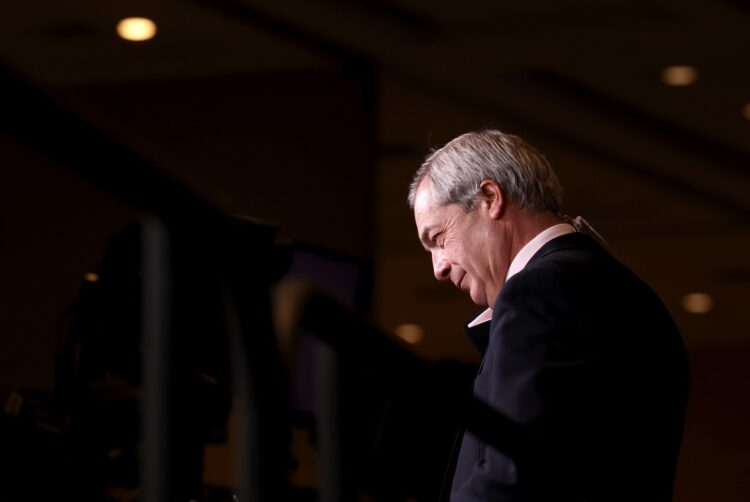
Under the new iteration of broadcast rules, Nigel Farage, MP for Clacton and leader of Reform UK, the party currently leading in the opinion polls, can continue to present programmes for GB News in some form.
Some extra constraints are imposed after detailed consultations, but there are also weasel words that lawyers can exploit.
The Ofcom approach seems clear and tough: “No politician may be used as a newsreader, interviewer or reporter in any news programme in whatever form unless, exceptionally, it is editorially justified.”
Good as far as it goes, and the prohibitions, such as they are, have been extended from MPs and the Commons to members of the House of Lords and representatives of political parties.
In addition, political allegiances must be made clear, and Ofcom insists that news must be presented “with due accuracy and impartiality,” whatever the form of the programme.
It also emphasises that exceptional must mean precisely that, as in occurring infrequently.
The problem is that while it is clear that politicians cannot be used as newsreaders, interviewers or reporters in any news programme “in whatever form”, for some reason the word “presenter” is not categorically ruled out.
Then there are problems with the concept of a news programme “ in whatever form.” What exactly does that mean? Are current affairs programmes included or not?
Farage’s broadcasting career continues
After all, Ofcom lost to GB News in the High Court when the regulator was accused of eliding news and current affairs programming.
Although Ofcom will clearly pay particular attention to due accuracy and impartiality in the future, the decision is a big win for Farage, who will be able to continue his lucrative broadcasting career.
The Reform leader may have to be less contentious in the future, although further complaints and lawsuits cannot be ruled out.
Yet even if the Farage views are watered down, which seems unlikely, there are still problems with Farage being allowed to appear in a position of authority on a regulated news channel rather than as an interviewee.
It gives him presence, visibility and an aura of normality when he is anything but normal.
The Reform leader also benefits significantly from the context. Whatever he says, he will be addressing viewers on what is, by definition, a news channel, however constrained his views are by broadcasting rules.
The argument that such appearances could make Farage and Reform more accountable seems weak because, in such a position, he is less likely to be challenged.
Above all, Nigel Farage, despite his many other non-Parliamentary gigs, is being heavily subsidised by lucrative GB News fees from an organisation that has probably run through £100 million in losses so far.
These are not matters that Ofcom could do anything about.
They are matters for Parliament and the Culture Secretary if she really believes that it is completely unacceptable for serving politicians, and party leaders in particular, to present programmes on news channels in whatever form.
The BBC materially misled audiences
Ofcom was much less ambiguous over the BBC documentary Gaza: How to Survive A War Zone. It found that the BBC had “ materially” misled audiences because they had not been told that one of the teenage narrators involved was the son of a senior Hamas official.
The BBC has apologised, removed the programme from iPlayer, fully accepted the Ofcom ruling, and will broadcast a statement from the regulator.
However, although the documentary was flawed and the audience was indeed misled, here too, context is essential.
The Israeli Government still does not allow foreign journalists into Gaza to report with their own eyes what is happening there, and more than 270 local Palestinian journalists have been killed. It is alleged that some of them were deliberately targeted. If true, this would amount to a war crime.
Whether it’s GB News, the journalistic interrogation of Reform, or the continuing tragedy of Gaza, impartiality, its definition, and where the limits of that definition should lie will be increasingly important in the future. So will the BBC’s independence from government.
According to a vast new survey on the BBC, viewers are worried about political interference in the Corporation. The concerns emerged from questionnaires answered by more than 870,000 members of the public on the BBC and its place in society.
Only 44% thought the BBC was effective at being independent from government, while 38% said it was ineffective.
BBC director-general Tim Davie denied that the Corporation was “unduly influenced” by government and that the Corporation’s independence was “absolutely sacrosanct.”
However, the survey, which inevitably involved self-selection, also had a lot of good news for Davie and the BBC.
Around 80% of respondents said it was important for the BBC to offer high-quality digital services, and 78% also said the Corporation should offer something for everyone.
Some 76% said the BBC should be an asset for the UK around the world, while 83% thought it important for the Corporation to continue its traditional mission of informing, educating, and entertaining.
Davie’s task now is to persuade the Government to continue to fund such an ambitious mission.
 Raymond Snoddy is a media consultant, national newspaper columnist and former presenter of NewsWatch on BBC News. He writes for The Media Leader on Wednesdays — bookmark his column here.