



How to solve the crisis in advertising (part two): I don’t agree with Nick
Opinion
Nick Manning takes issue with Nick Clegg’s views on the web, and explains four ways that agencies can help drive change.
I have a theory that Nick Clegg didn’t actually work at Meta.
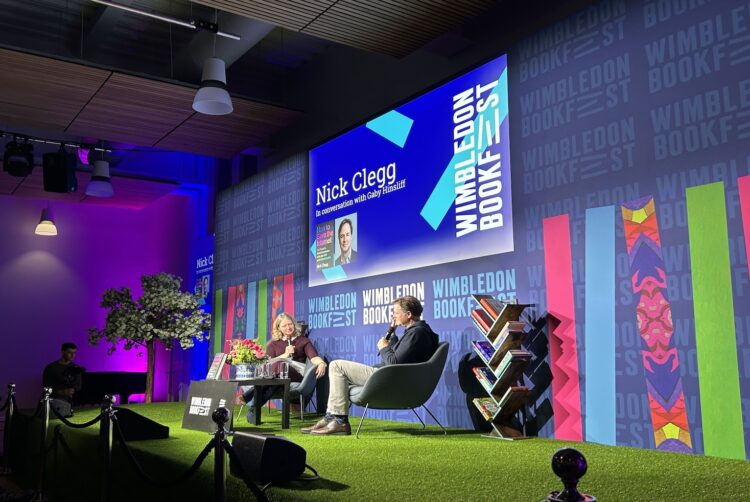
Yes, he may have been paid royally for seven years, but there is little obvious evidence of his contribution and acquired wisdom, especially following his recent session at the Wimbledon BookFest, and his book ‘How To Save The Internet’.
This can be summarised thus: the Internet is a wonderful invention that brings people together and connects nations and communities.
But that noble purpose has been disrupted by vested interests and profiteers.
He thinks that the Internet’s original mission can be restored by concerted global, pan-government collaboration, regulation, transparency and accountability. In other words, good behaviour from everyone.
It’s hard to see how you could spend seven years at Meta and not know that the despots of the world are going to use Meta’s platforms to stay in power in their own country and have virtually no interest in protecting their public.
In former times, incoming authoritarian rulers would occupy the TV stations on the first day of the coup, North Korean-style. Now they make sure they control the internet, China-style.
It’s also difficult to know how Clegg has remained so starry-eyed, given the evidence of how much malfeasance has been perpetrated online, including rampant crime, and the perpetrators aren’t going away.
It’s even harder to believe that Clegg failed to notice that the primary purpose of the platforms is self-enrichment (including his), a subject dealt with at length in ‘Careless People’, the astounding whistleblower book by Sarah Wynn Williams. The sections on China are most telling.
Perhaps Clegg also didn’t spot that the First Amendment is used as a fig leaf for letting lots of ‘bad stuff’ appear on Facebook and Instagram in the interests of more traffic. Meta is not alone in this.
Evidence point three
In his book, Clegg devotes seven pages out of 300 to advertising, Meta’s source of revenue.
He says that “the targeting of audiences that is possible on Facebook and Instagram is undoubtedly more sophisticated than anything that has come before, but it is essentially the same activity that has defined advertising since the industry was born…advertisers are just doing what they have always sought to do-get their adverts in front of the people most likely to buy their products.”
Clegg is lumping direct response marketing in with other forms of advertising.
This is the reductive view of the role of advertising that predominates in Silicon Valley, and one that ignores the wider role of advertising in category expansion, as described in ‘How Brands Grow’ by Byron Sharp and the network effects of shared exposure, memory and availability.
In Menlo Park, and other parts of Silicon Valley, it’s ‘monkey see, monkey do’.
Clegg goes on to state that Meta supports mild and uncontroversial content because advertisers don’t like being associated with the bad stuff, as if the algorithmic amplification of sensational content to maximise traffic wasn’t real, and didn’t attract more advertising dollars via the auction.
How to solve the crisis in advertising: Start at the beginning
I found myself thinking that I didn’t agree with most of what Nick Clegg said, unlike his fellow politicians in 2010.
The impression that Clegg leaves is part naïveté, denial and omertà.
Meta will take nearly $200 billion in ad revenue this year, so it’s worked well for it, but it has led to the present-day obsession with micro-targeting, immediate results and dashboard fever.
The advertising process for small businesses selling direct is now also favoured by big brands that traditionally used mass media. Still, they now find that one-to-one Meta-style advertising doesn’t deliver the scale effect needed for brands in mass distribution and cluttered categories. Apparently, Influencers are the way ahead.
The rush into channels, fuelled by first-party, location, behavioural, transactional, and cohort data, is entirely understandable if it leads to a well-balanced mix of collective and one-to-one targeting. But that isn’t what is happening right now.
The result is stagnation, as Michael Farmer convincingly pointed out at the ‘Advertising: Who Cares?’ summit in 2024. Advertising effectiveness for bigger brands is in freefall, while other media channels are being strangled as the platforms clean up.
An egregious imbalance in the advertising market
‘Advertising: Who Cares?’ aims to address the decline in advertising’s triple role of informing, educating and entertaining the public, growing businesses and funding the media eco-system that makes the first two happen.
One factor in this decline is the egregious imbalance in the advertising market and the emergence of one-to-one, platform-led marketing.
This year, 50% of the world’s ad spend will have gone to the big five platform operators, and 70% of all growth, according to WARC.
With the Open Web stuttering as LLMs (especially Google’s) divert traffic referrals to publishers, the power of the Walled Gardens reaches new heights, with ad growth of 15-20% in the last year.
The plain truth is that Meta and its peers, Google, Amazon, TikTok and Alibaba are now the true power-brokers in the world of advertising.
David didn’t have to fight five Goliaths at once.
They are described as tech companies, but they are more accurately described as advertising and sales businesses, as that’s where their revenue comes from.
They have an iron grip on the public’s attention and the advertising market, and by extension the advertising industry.
They dominate public exposure to advertising via their properties, with billions of users worldwide using them all day, every day, and increasingly buying directly from them.
They have also effectively co-opted the big advertising groups as resellers through incentives and the fear of losing ‘favoured nation’ status.
The introverted advertising industry is obsessed by the fortunes of the Big Six Holding Companies, when in fact the advertising market is controlled by the stock- and bond-holders, fund managers, analysts, financiers and professional advisors to the platforms and software companies, most of whom are wholly or partly funded by advertising.
The day after the Department of Justice exonerated Google from anti-competitive practices, its parent company’s market cap grew by $280bn, four times the size of the Big 6 advertising Holding Companies combined. Alphabet is now worth $2tn.
The public appeal of the big platforms is undeniable, as is the fact that many businesses have benefited enormously from advertising on them.
They’ve made advertising easy, fast and cheap with the immediate potential for responsiveness.
Their user-friendly self-serve tools, use of data (controversial as it may be), and closed-loop systems have brought success to a long tail of enterprises, with impressive-looking dashboards that may even show real data, if only anyone could tell.
None of this is news, but our industry tries to pretend that advertisers and agencies still control advertising. They don’t, because the platforms have the audience and the data, and this is what everyone else wants, and why they follow the platform playbooks.
The juggernaut growth of YouTube is just one example of this. People can pick and choose their preferred content, but not the advertising within it, which is often low-quality, irrelevant, and intrusive.
We’re not advertising to people. We’re trying to ensnare them.
Over half of the world’s advertising money is funding the platforms that produce virtually none of their own content.
No wonder there is a crisis in the funding available for high-quality entertainment, sport, factual, drama, and other genres on free-to-air TV.
‘We are in a crisis’: Advertising: Who Cares? suggests media business models must change
Low-grade barbs
We’ll get to the solutions shortly, but it’s time to address the tired old accusation that ‘Advertising: Who Cares?’ is ‘anti-digital’ (as if that meant anything), ‘anti-platform’, and ‘out of touch’ (a nice euphemism), and anyone reading thus far could be forgiven for thinking exactly that.
These low-grade barbs are surreal given the size of the platforms, the relative lack of scale of everyone else and the diaphanous nature of ‘Advertising: Who Cares?’.
We are not against anything or anyone. We are in favour of effective advertising that informs, educates and entertains the public in high-quality, benign environments that are conducive to advertising.
And the platforms don’t do much of this.
The facts are the facts, and it would help if the advertising industry acknowledged that the wealth and power of the platforms have skewed the entire advertising market, even before the full effects of AI are felt, and that they should care about it.
I suppose WPP is gambling that it is better to be in the cuckoo’s nest than without, but WPP is worth only 0.2% of Alphabet, and it is reportedly paying Google $400 million, so it’s a pretty unequal relationship. I suppose it had no choice.
Other side bets include Google Ventures’ investment into Scope 3 and therefore the new Ad Context Protocol, not to mention Google Ads, its display network, Ad Manager, AdX, DV 360, GA4, Tag Manager and ancillary services that power the Open Web. But it seems that Google’s dominant position is not threatened following the DoJ decision, patronage and maybe a bit of political wrangling.
So, to the solutions.
The main one was outlined in my column last week, and the active voluntary willingness of advertisers is vital. But we have to recognise that advertisers don’t care about advertising, only their own.
We can only change one advertiser at a time with their trade associations’ help, but change will have to come with a business case and a clear plan. Agencies can help by adopting their own change management programme.
They can play a key role in four main ways:
1. With a relentless focus on effectiveness for the specific advertisers, brands and situations they manage.
Agencies have to be subject matter specialists in the content and channel combinations that work hardest in the advertiser’s market and against their audiences, taking into account the 7Ps and the advertiser’s specific needs at any given time.
They should apply human as well as machine learning by adapting the great generic thinking we are fortunate to have to individual cases, continuously, tweaking the dials of collective and individual audience targeting in content and channel choice.
2. This means high-level thinking and brilliance of execution in integrated creativity and use of media, paid and organic.
Agencies should help their clients navigate the unprecedented complexity of today’s ecosystem, leading with people’s attitudes and behaviour, not just the first-party data we have on them.
No one sensible would claim that the platforms are not important in the mix, and their cohort-led targeting is useful (if it’s actually accurate), but an over-reliance on a narrow set of channels is not likely to maximise success.
3. The combination of technology and talent is crucial, of course, and so is the constant pursuit of innovation in the new tools and techniques for the task at hand.
Agencies should recommend the best AI engines and not just the ones their parent company has just developed, and therefore must be sold.
They should squeeze effectiveness first and efficiency second out of the correct set of tools, building integration bridges where needed.
4. Agencies should create, capture, and deliver value to their clients at every stage, with total transparency in every respect —not just in media.
They have to live or die by the value they bring and develop new products, tools and techniques that are priced individually without recourse to hidden margins, work on a shared risk, co-investment basis and be measured against the client’s integrated data framework.
We live in tumultuous times. There is a crisis in advertising, which is creating a crisis for the advertising industry.
Tough times call for innovative thinking and radical honesty. If the advertising industry continues to be naïve and in denial, with a dose of fear, greed and silence, it’s fighting a battle it can’t win.
They say fortune favours the brave, so we may see the emergence of courageous agency entrepreneurs who will seize the opportunity to rewrite the rules.
 Nick Manning is the co-founder of Manning Gottlieb Media (now MG OMD) and was chief strategy officer at Ebiquity for over a decade. He now owns a mentoring business, Encyclomedia, offering strategic advice to companies in the media and advertising industry, and is non-executive chair of Media Marketing Compliance. He writes for The Media Leader each month.