



FTVA Global in review: The movement has started
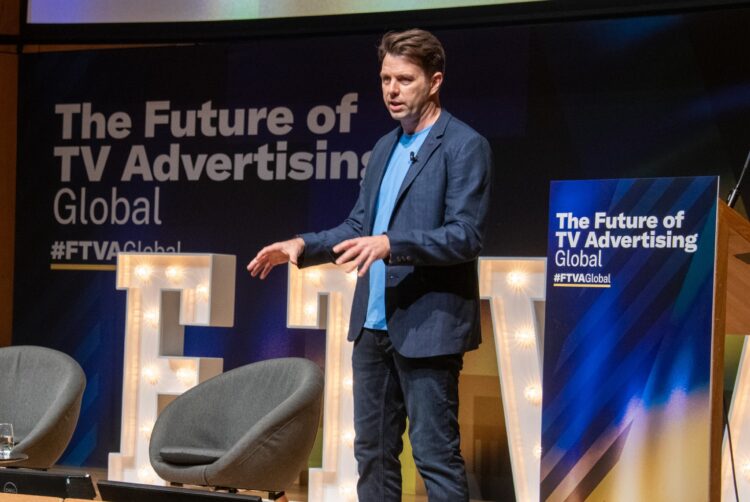
The Future of TV Advertising Global 2025
Adwanted Events’ co-founder shares his thoughts on the raised challenges and outcomes from last month’s FTVA Global conference.
The Future of TV Advertising Global once again delivered a clear, direct message about what is required for the television industry to move forward. The message wasn’t subtle, and delegates left knowing exactly which path to take.
I believe the next stage, following realisation, is the difficult part: execution.
Let’s set a little background
The premium TV industry — it’s always difficult explaining what that actually means, but here’s how I define it: television or video held to TV standards, governed by regulation, and somewhat measured independently.
Read between the lines: that’s not YouTube. And I’m not knocking YouTube or arguing whether it is or isn’t TV (it isn’t), but it does play a huge role for consumers, TV companies, and advertisers. I believe YouTube should be part of the premium TV industry, but YouTube doesn’t want to be.
That premium collection of TV companies and streamers is generally flat in viewership. From an advertising perspective, demand is flat, but supply is surging. More competition puts pressure on rates, and while streamers are exciting, they are largely taking share from traditional TV companies.
There are strategies to address this: moving into short-form, investing in kids’ content, expanding reach and building fandom on social platforms, and pursuing new distribution models. I also liked Sorin Patilnet’s point from Pepsi that the industry overemphasises the 15–34 demographic, when the next two older demos, who watch a lot of TV, have most of the money and are less brand-loyal, arguably deserve more attention from advertisers.
I digress. The point is this: the domestic TV landscape is challenged by oversupply while global giants are taking share. Combine that with flat overall demand, and you have a very challenging environment for growth.
The first job for all TV companies in 2026: make it simple to buy
James Rooke stole the show with a line that reverberated throughout the conference. He has a knack for that. His argument was simple: if you don’t make TV simple to buy, exactly as the platforms do, you’re not even playing the same sport as them.
If TV remains complex to buy, inefficient, and unscalable, it will fail. All the other USPs of TV — that it’s trusted, actually watched by humans, has emotional context, and is independently measured and regulated — don’t matter one bit.
Rooke cited the rapid growth of platforms among major advertisers as evidence. And he’s absolutely right.
Further evidence was presented by Sameer Modha of ITV and Tony Regan, who showed how less and less ad inventory is being traded through independently measured channels.
Advertisers may say they care about transparency, but they vote with their wallets, and the data illustrates they don’t give a shit. Or that it’s not a high priority.
I know that’s aggressive, and I know it’s an inconvenient truth, but please tell me I’m wrong so I don’t have to type it. I’d love that.
On stage, I couldn’t even get three leading advertisers to publicly support the institutions that underpin trust, despite Peter Field stating that trust is the number-one driver of impact and effectiveness.
Where does TV sit within brand marketing strategies? With Unilever, PepsiCo, ex-Kraft Heinz
Field’s view is clear: the more trusted the environment an ad appears in, the greater its impact and effectiveness. Surely advertisers should support these environments and perhaps the survival of them?
So what should TV do about it? Easy to say, hard to do.
The answer is to build automated buying platforms at the country level that mirror what the platforms offer. I don’t believe there’s any point starting this process unless everyone is on board. Fix the politics. Define the north star. Build towards it. And do it now.
Premium and the messy middle
Premium shows will always sell out. The media marketplace is horribly fragmented, and tentpole shows and events will always succeed. The problem is that sometimes these events aren’t actually profitable for TV companies. So it’s time to fix the messy middle and drive demand.
This is typically advertisers buying “audiences”: dog owners, households with or without dishwashers, and so on.
Broadcasters, on their own, simply don’t have the scale to offer these segments consistently. Meanwhile, hundreds, possibly thousands, of advertisers are spending extraordinary sums on digital because they can buy national audiences, test and learn, model impact, and build compelling arguments for continued or increased spend.
For TV companies, at a minimum, they need to match that level of data and insight just to be in the room. The message was loud and clear: you cannot do this alone in your markets. You have to work together to achieve scale and efficiency.
Cherry Tian, marketing director at Workspace, and David Lucy, MD of indie agency December19, explained how difficult it is for mid-sized brands to buy audiences consistently across UK broadcasters and prove effectiveness — in their case “ROI” — using data that board-level decision-makers understand.
They were clear: TV is critical to their growth, but it’s simply too cumbersome and time-consuming when competitors offer a one-click solution that includes everything they need.
What to build — and how to build it
This is the awkward bit.
For those of you who watched it (side note: I thoroughly enjoyed watching the audience’s faces during Simon Peel’s brilliant presentation) he articulated many of the things we’ve long suspected about programmatic, and which others have already called out in a detailed, evidence-based way. For those unfamiliar with Simon, he is arguably one of the world’s leading voices on how media is traded and the impact technology has had on the advertising ecosystem.
His core point was: the premium video industry (otherwise known as TV) cannot afford to play these games. Too much money is being extracted from the market by behaviour that is extractive rather than additive.
More importantly, the premium elements of the industry risk being devalued through trading chains — via arbitrage and blending — where high-quality inventory is mixed with questionable supply. This is already happening in most markets globally.
As a result, insufficient funds end up where they should, in working media.
The solution is equally clear. Broadcasters need to control how TV is traded, where it appears, how it appears, and how (and if) it is arbitraged and work collectively on solutions that reduce the number of “hops” or technology touchpoints.
Broadcasters already collaborate on many of these aspects within their respective markets, so bringing this together in a unified way is not primarily a technology challenge. It’s political.
This is the bit the industry keeps dodging. Collaboration isn’t about who is right. Collaboration means aligning on one thing: simplifying and supporting each other to monetise.
If we don’t wake up from this drama, we lose to the platforms and miss the opportunity for linear TV (and premium video more broadly) to compete from a position of strength.
2025 in review: TV barks back amid consolidation — but will it bite?
I’ve spent a lot of time working on and reporting on this topic. Markets like Canada and Australia are actively looking to reinvent and unwind their tech stacks to clean up the process. They look enviously at the UK, specifically Planet V, which is an owned-and-operated technology solution for booking ITV’s VOD inventory. It gives ITV control over pricing and data integrations and, as Rhys McLachlan from ITV pointed out, the ability to monetise inventory and data directly.
Planet V may not be the best technology in the world, and it has its flaws: notably that Sky and Channel 4 have yet to fully embrace it. But what it has proven beyond doubt is that agencies and advertisers will embrace it, and that unnecessary middlemen are not required.
ITV now has 2,200 Planet V buying accounts and has sold more than 5,000 custom addressable segments to advertisers. Not bad at all.
I’m not suggesting everyone should build their own solution, far from it. But Planet V proves that broadcasters can build solutions that generate revenue and that buyers will adopt.
What broadcasters shouldn’t do is build these solutions in silos. A collection of separate entry points simply creates more fragmentation and hands the advantage straight back to the platforms. Without doubt, broadcasters can control the process, make more money, avoid an arbitrage-laden ecosystem, and agencies will still buy, despite their constant requests to use their own tech and buying mechanisms.
The north star should be aligned at the national level through a single entry point. If Reddit can build its own DSP, why can’t broadcasters?
Outcomes: The next frontier for TV advertising
I think a consensus was reached on this topic. Sameer Modha from ITV delivered a masterful session, and the theme resonated throughout the two days. The reality is clear: platforms are extremely good at selling outcomes to advertisers, and advertisers love it. It’s easy to understand why. I need this or that (web traffic, store footfall, etc.), and the platforms build plans and deliver against those objectives.
Buyers are often incentivised on these outcomes, so it makes perfect sense to trade that way. And, of course, it’s simple. There’s a theme here. I’m not saying buyers are lazy, but they do like getting paid their bonuses.
There’s an ongoing debate about the role of JICs: whether they should manage business outcomes at a country level and whether buyers truly value the transparency they offer.
An excellent panel moderated by Laura Chaibi examined the future of JICs, and the reality is uncomfortable. They need more investment to build for the future, yet funding is under pressure, while advertisers are buying more and more inventory based on outcomes.
My view is that in a world of unlimited impressions, there is value in combining business outcomes with audience transparency.
One thing we didn’t discuss at the event is how easy it is to “game” outcomes — where the media takes credit for outcomes it didn’t create. Without audience data or evidence that campaigns were delivered to humans, you can’t be entirely sure what you actually bought.
But if the outcomes are achieved, does it matter? (Yes, it does — but it’s worth posing the question).
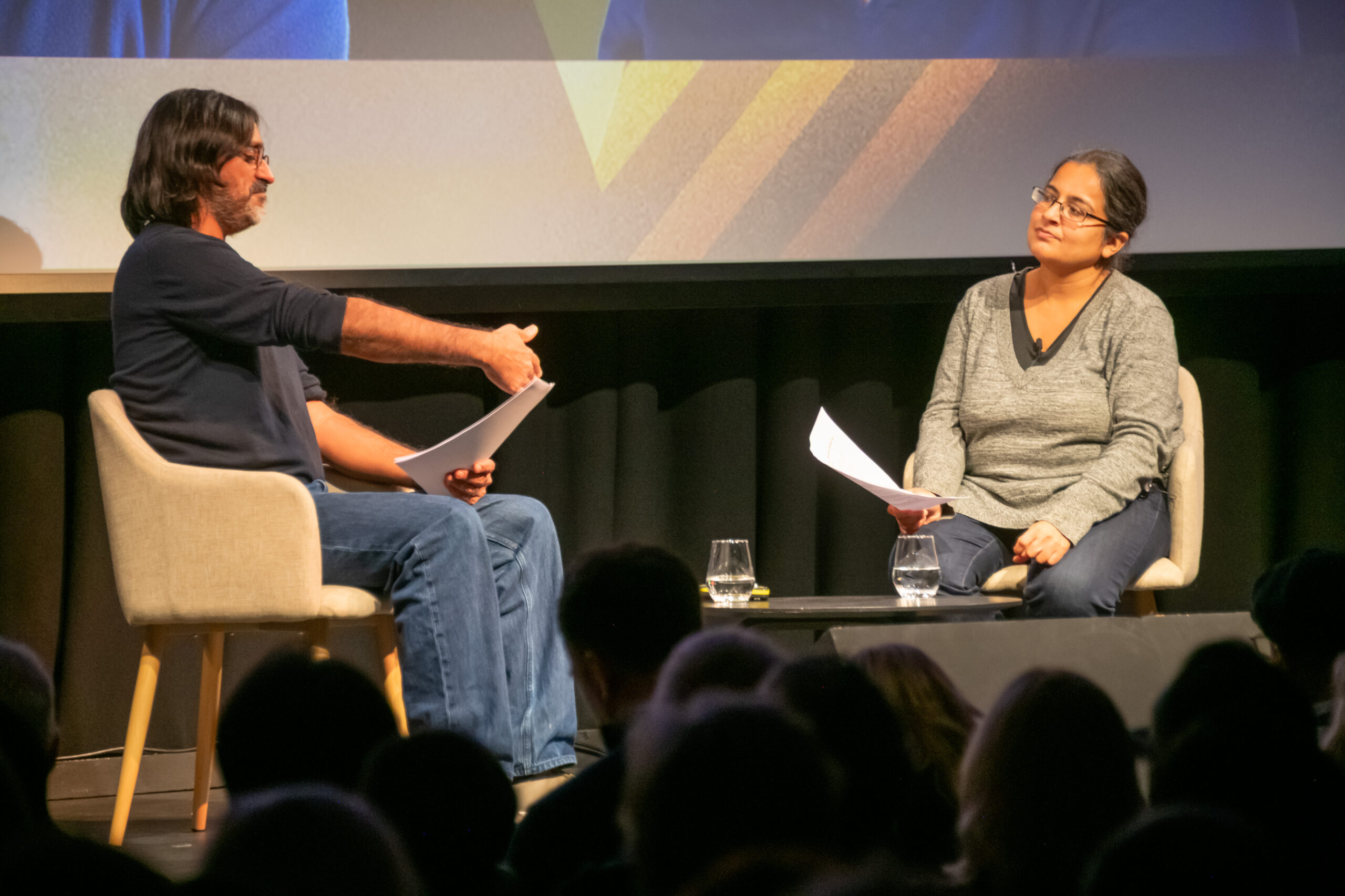
Sameer Modha (left) with Nimmi Shah.
Despite the debates around mechanisms, control, and the future of JICs and MOCs, the message was loud and clear: build outcomes into your offering, work together, and mirror what the platforms are doing. It really is that simple.
I’m fully aware this is technically complex, expensive to build, and requires a significant mindset shift away from competing with fellow broadcasters towards genuine collaboration.
I’ve worked in the measurement space with Adgile in Australia, which is building a unified outcomes platform for all broadcasters there, presented by Mark Frain, CEO of Foxtel Media. There are models that allow broadcasters to build effective, basic outcomes tools (for example, around web traffic) without leaping straight to something as ambitious as Lantern.
The point is this: don’t be put off by complexity or cost. Work together and deliver it. The platforms are eating your lunch, and they’re only getting better at it. Modha showed where ad investment is heading, and it’s not encouraging if you can’t offer outcomes. The game is changing, and TV has to respond.
Positive momentum
What struck me most was that this no longer feels like a deer-in-the-headlights moment. There is a clear and proven path forward for broadcasters. Fix the politics and work together; there is no alternative.
This is happening globally, which is genuinely encouraging. Fix the buying, mirror the platforms, make it simple, make it scalable and sell it collectively.
Strip out unnecessary technology and bad actors. This is essential to maintaining control, pricing, and positioning. And finally — and I know I’m repeating myself, but it’s important — anything done in silos will fail. We already know that. Scale is essential.
There were also real positives about the future of commercial broadcasting at the event. TV4 is now the largest streamer in Sweden, marking extraordinary growth.
Free-to-air viewership in Australia is growing, as highlighted by Channel 9’s Nikki Rooke.
NBCUniversal is set for a standout year with the Olympics and the Super Bowl, while learning how to leverage audience growth through fandoms and social buzz.
TF1’s presentation by Laurent Bilaut was spot on, outlining a clear strategy to modernise sales and drive audience growth through partnerships with Netflix and others.
It was also pleasing to hear that the industry has realised linear remains a major revenue source for broadcasters. It isn’t dying at the pace it was projected to; it’s still growing in many markets, so the conversation has shifted to how to sell and package it like digital. That’s refreshing, and it’s the right conversation to be having.
There were many more examples, so please forgive me for not mentioning everyone.
TV has exactly what advertisers want as a consumer-facing media product: scale, attention, emotion, and trust. TV just needs to start playing the same sport as its competitors.
 Justin Lebbon is a consultant and co-founder of Adwanted Events