



Brands are still funding harm, putting children at risk
Opinion
Calls for a ban on social media for under-16s are rooted in ideology, not impact. That truth does nothing to diminish the urgency of addressing the impact of social media on children’s mental health, writes Nicola Kemp.
Trigger warning: this article contains references to suicide, which some readers may find distressing.
If I launched a brand of cookies often littered with shards of glass, would you argue against a product recall?
If I were the chief marketing officer of that company, would you platform me across our industry’s pages and stages? Would you give me awards and include me on lists of the industry’s brightest and best?
When faced with endless images of children’s mouths full of blood, would you still be comfortable perpetuating the myth that there was no trace of blood on my hands?
This is the brutal reality of the media industry’s unforgivable inaction when it comes to addressing the devastating impact of social media on children’s mental health.
The online harm caused by social media platforms is, at its heart, a product safety issue. Brands are funding the terrorism of children at scale in their own bedrooms. While we continue to perpetuate the myth that social media companies are devoid of responsibility for what appears on their platforms.
The case for social media’s product recall
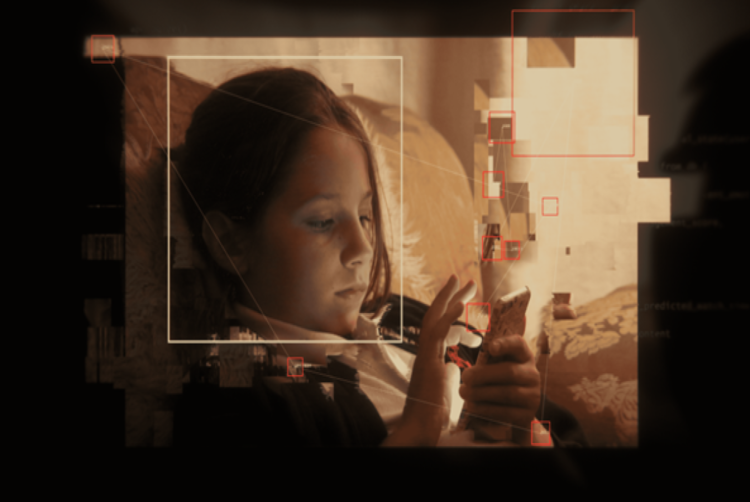
In Molly vs The Machines, director Mark Silver powerfully joins the dots between decisions in Silicon Valley boardrooms and a vulnerable child alone in her bedroom.
In 2017, Molly Russell had dinner with her family, watched TV, and went to bed. The next day, at around 7 am, her mother, Janet, went to her bedroom and found her daughter’s lifeless body. The locked front door of their family home provided the illusion of safety, while a phone was opening the floodgates to an avalanche of harmful content.
In the six months before she died, Molly saved, liked, or shared 2,100 pieces of content related to suicide, self-harm and depression. A consultant child psychiatrist told the coroner’s hearing that he could not sleep for weeks after viewing the Instagram content seen by Molly just before her death.
I am sure I am not alone in not being able to sleep after watching Molly vs The Machines, which will air on Channel 4 next month.
The documentary underlines how her father, Ian Russell, faced this unimaginable tragedy with a barbaric level of bravery and an unwavering commitment to ensuring no other family has to endure such pain. Yet research from the Molly Rose Foundation, entitled Pervasive-by-design, underlines the ‘deep and systemic set of failures in how TikTok and Instagram are designed and run’.
The research also finds that TikTok has significantly increased its risk profile by introducing new AI-generated search prompts.
Suicide-related internet use has been reported in 24% of deaths by suicide among young people aged 10 to 19, equivalent to a young life being lost every single week.
The commercial imperative to care
The Media Leader is an outlier in its thoughtful and consistent discussion of this issue. While organisations such as the Conscious Advertising Network have continued to campaign tirelessly. Yet the wider industry press continues to dodge advertising’s responsibility to children’s wellbeing. Conveniently sidestepping the fundamental truth that media placement matters.
On a personal level, a fundamental fault line has emerged between what leaders are willing to say publicly and the anguish they express in private. The way we use words has power. The effect of this industry-wide silence not only allows this harmful content to flourish but also allows leaders to endlessly sidestep accountability.
A stance which goes some way in explaining the baffling media ecosystem in which Nick Clegg, former vice president and president of global affairs at Meta, can promote a book called ‘How to Save the Internet’. Laughable.
You don’t need to be perfect to care
In those private conversations with media leaders and CEOs, another trend has become clear. In judging the social juggernauts, often their instinct is to first turn the lens on their own products and services.
Whether a fast-food brand or an airline brand, the unifying theme in these conversations is leaders seemingly seeing their brands’ shortcomings as a reason to sidestep the industry’s most pressing crisis.
Yet, the truth is we do not need to be perfect, as individuals or organisations, to call for change.
We must take action and speak out to safeguard children’s mental health online. It does not make you sanctimonious. It should not put your livelihood or your reputation at risk to say ‘enough’. You can pull advertising from these platforms until policies change. Your voice, your actions matter.
We may not agree on the path ahead. You may, like me, believe that a call to ban social media usage amongst under-16s is rooted in political point scoring, not meaningful impact.
You may also agree that this crisis has been exacerbated by the lack of lived parenting experience among media leaders.
Or maybe you don’t. Perhaps you barely raised an eyebrow at the fact that 120,000 women have left the creative industries over the past two years.
You might not agree that the wisdom of media’s missing mothers, squeezed out of the industry due to maternity discrimination, is exactly what we need to be harnessing right now.
But the simple truth is, we do not need to agree on everything. The industry would be immensely less interesting if we did.
But please, please, we must agree that legal but harmful content being recommended to kids in the perceived safety of their bedrooms, to drive advertising revenue, cannot ever, ever be an acceptable way to do business.
We must now realise that saying nothing and doing nothing is an act of moral cowardice that is still costing children their lives.
Youth suicide charity Papyrus can be contacted on 0800 068 4141 or by email at [email protected]. In the UK and Ireland, Samaritans can be contacted on freephone 116 123 or by email at [email protected] or [email protected]. Advertising industry charity NABS can be reached on 0800 707 6607 from 9 am – 5.30 pm, Monday to Friday.
 Nicola Kemp has spent over two decades writing about diversity, equality and inclusion in media. She is now editorial director at Creativebrief and writes for The Media Leader each month.