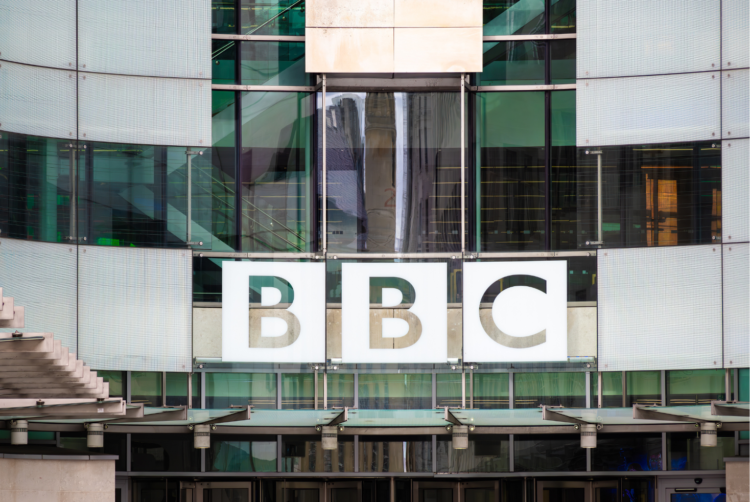
The commercial radio industry has called for advertiser funding of BBC services to be ruled out, as the government outlines its vision for the future of the public broadcaster.
The Department for Culture, Media & Sport has published a Green Paper: Britain’s Story: The Next Chapter, today as part of the Charter Review, which sets out the next 10 years of the BBC from 2028.
This comes as US President, Donald Trump is suing the BBC for alleged defamation over its Panorama edit, seeking up to $10bn in damages.
As part of this wide-reaching consultation, the government is assessing funding options for the broadcaster, with inclusions being to allow the BBC to run adverts and the launch of a Netflix-style subscription service.
This would see it charging for access to more commercial programmes, including entertainment shows such as The Traitors and Strictly Come Dancing.
Last year, Radiocentre, the industry body for commercial radio, commissioned competition economists at Compass Lexecon to conduct a study on the impact of advertising-funded BBC radio and audio services on audiences, advertisers, commercial radio and the BBC itself.
It concluded, a BBC that is funded by advertising “would be bad for everyone.”
The economic modelling, based on confidential industry data, suggested that advertising “would not support” the majority of BBC radio stations in their current form, with most BBC radio services making losses and likely to be forced to close.
In addition, if the BBC decided to introduce advertising across radio, the financial impact on commercial radio would be “devastating”, with a 36% forecast decline in revenues.
The conclusion is that the BBC “in its current form is not commercially viable” — and this is down to the fact the BBC currently serves “a very different audience” to that in commercial radio and this audience is “less commercially attractive” to advertisers. The costs of BBC services was also cited as a factor.
Matt Payton, Radiocentre CEO said: “While we understand the desire to consider all the options on funding, the fact remains that ad funding of BBC services is a fundamentally flawed approach.
“It could devastate commercial media businesses, undermine the viability of BBC services and leave audiences with a narrower choice of UK content.
“This approach should be ruled out at the earliest possible opportunity.”
Radiocentre will continue to work closely with the government during the Charter Review, and will reiterate how an ad funded BBC is not a viable option within the UK radio and audio industry.
In response to the publication of the Charter Review, News Media Association, chief executive, Owen Meredith, said: “We look forward to engaging fully with the Charter renewal to ensure that the process results in a BBC which can continue to deliver value for the British public while complementing, not competing with, a thriving commercial news ecosystem, which includes ensuring any attempts to generate more commercial revenue do not have a detrimental impact on the wider market.
“The suggestion that the BBC could carry advertising online or across its platforms would be hugely damaging and distort the commercial marketplace. It should be ruled out.”
This review marks the biggest overhaul of the BBC’s funding model for a generation and aims to make the BBC more “sustainable” by diversifying income revenues.
Reportedly ministers are keen for the broadcaster to reduce the amount of money paid by licence fee payers, currently £174.50 per household per year, and grow BBC Studios, which generated £2.2bn, just over a third of its total income last year.
The licence fee has seen a steady decline in households who are signed up, which has dropped to around 23.8m down from 25.2m in 2020.
The initial consultation will run for 12 weeks before a white paper is published, in which feedback and discussions will be heard from the public, businesses and the wider industry.
Editor’s note: This article has been updated with comments from News Media Association.
Adwanted UK are the audio experts at the centre of audio trading, distribution, and analytics. We operate J‑ET - the UK’s trading and accountability system for both linear and digital radio. We also created Audiotrack, the country’s premier commercial audio distribution platform, and AudioLab, the single-point, multi‑platform digital audio reporting solution delivering real‑time insight.
To scale up your audio strategy,
contact us today.