



Ads in premium media drive higher purchase intent and positive association
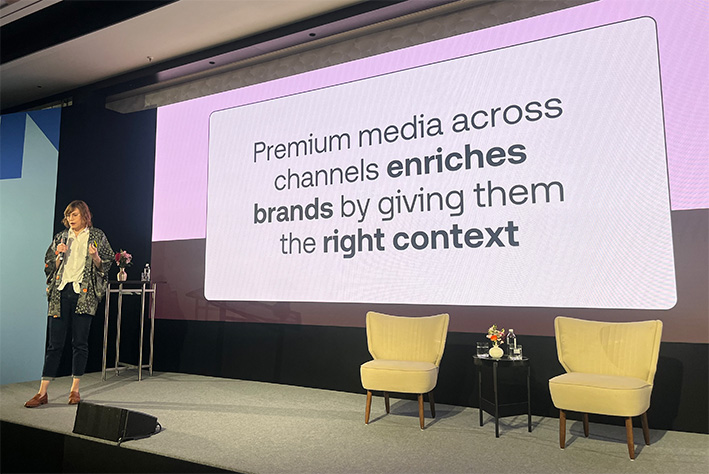
Advertising on “premium media” drives a 40% uplift in purchase intent, according to new research from The Trade Desk and PA Consulting.
Sara Picazo, The Trade Desk’s research director, presented the findings at an event, The Rise of the Premium Internet, in London on Thursday.
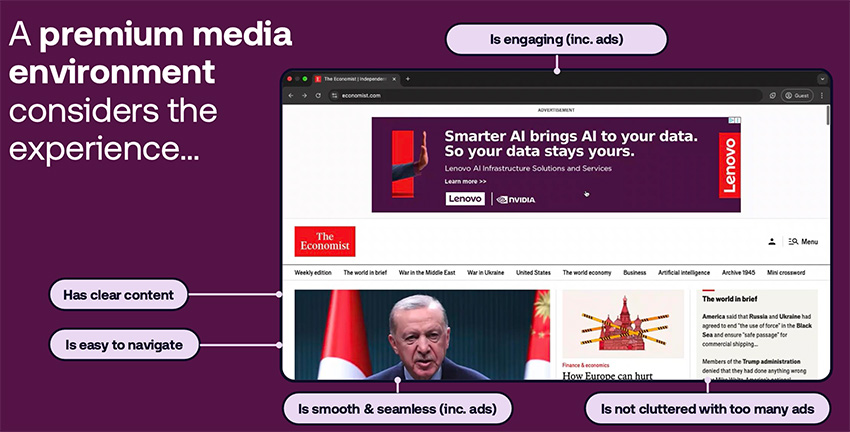
The research defined “premium media” based on what consumers experience in these environments, including the quality of advertising, user experience, ease of navigation and the quality of the content.
Disney+, Spotify and The Economist are among brands that fall into this category, according to the study. In contrast, despite its reach, Amazon Prime Video was found to be perceived as less trustworthy or high-quality by consumers, and therefore was considered a less premium environment.
While advertisers have shifted their media spend to invest more in performance than brand advertising, Picazo stressed that reach does not equal value.
As she noted: “We rarely perceive value in this way in other things we spend large amounts of money on.”
Premium media brands also lead to a 30% higher emotional and cognitive association for advertisers, the study found.
In fact, consumers who see an ad in a premium outlet were found to be 1.5 times more likely to associate the brand with quality and trustworthiness than if it appears in a less premium setting.
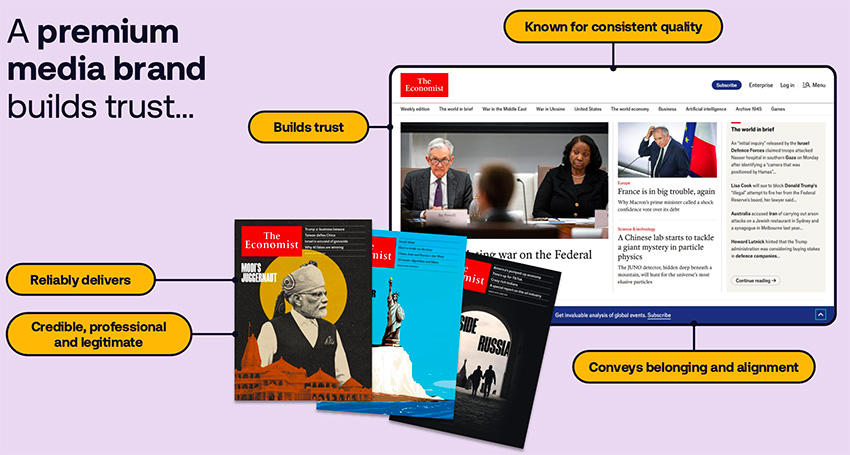
This means advertising in a premium environment is a “win” for all parties, Picazo suggested. According to the research, 67% of consumers find seamless, clutter-free environments more enjoyable, 85% are more likely to trust brands that advertise in these environments and 86% are more likely to spend more time on these channels, apps or websites.
Picazo ended her talk with a call to action for advertisers to buy media more like one would buy wine: invest in the best, ensure a baseline quality and, if you opt for the cheap option, “beware of the hangover”.
“Our research confirms just how important where marketers invest their media budgets,” Picazo explained. “Even a brand with the most engaging and original creative will lose engagement and impact if it’s showing up in a media property that audiences don’t trust.”
Robert Jones, professor of brand leadership at University of East Anglia, added: “In an industry where advertisers are demanding value, being able to make them ‘look good’ is an assured way to shore up investment and protect ad revenues.”
The study involved in-depth interviews with brand and marketing experts, a semiotic meta-analysis of more than 70 media brands across digital, connected TV and audio to define “premium media” and a survey of 4.500 people across France, the UK and the US.
In a final stage, testing involved 4,650 people across the same markets to explore the impact of premium and non-premium media experiences on perception of advertisers.