



Be a brand that helps, not hinders
Opinion
Are you helping your audience, or are you just getting in the way? Helpfulness and empathy provide the ultimate cut-through in advertising, says Transmission’s head of client services.
Annoying. Distracting. A waste of time. That’s how most British consumers describe advertising.
In fact, seven in ten people in the UK say digital ads are annoying or unpleasant – and worse, the majority claim they feel less positively about the brands that bombard them. That’s more than irritation – it’s active damage. Which begs the question: are you helping your audience, or are you just in the way?
Brands often get lost in the metrics and performance of their ad, constantly asking, ‘Is this generating sales?’ While it’s a valid question, there needs to be a balance between performance and audience consideration. If your brand isn’t making someone’s day easier, quicker, or lighter in some small way, then you’re probably hindering more than you’re helping.
Stop interrupting, start assisting
Nobody wakes up hoping to see your ad.
They wake up worrying about energy bills, planning dinner, juggling childcare, or dreading their commute. If your marketing ignores that context, you’re just another distraction. If it respects it, you might actually get noticed.
That’s why helpfulness is the ultimate cut-through.
Sainsbury’s Nectar Prices built value into the shopping experience by lowering the price of thousands of essentials right where people needed them. But helpfulness isn’t only about saving pounds. Channel 4’s “Complaints Welcome” turned criticism into cultural clarity, helping viewers navigate what the broadcaster stands for in a messy media landscape.
Tesco Mobile’s “Supermarket Mobile” campaign, meanwhile, did the unexpected. By using supermarket language, signage and humour to simplify a notoriously confusing category, the brand made phone plans actually feel understandable.
These are more than ads, they’re entire branding moments. UK consumers cut discretionary spending by 6%, helpfulness is brand-survival.
Attention is borrowed
Even the best creative only buys you a few seconds. What you do with those seconds is what makes the difference.
And brands often misuse them. We’ve all had the experience when you buy something online, only to be stalked for weeks with ads for the same item – sometimes even at a lower price.
Or the holiday company that emails you relentlessly, even when you’ve already booked elsewhere. With no option to pause until next year, your only choice is to unsubscribe entirely.
Instead of designing like a creepy stalker, brands should design with empathy.
Using data correctly means excluding recent buyers from retargeting and replacing sales messages with value-added content – think tips, hacks, styling ideas, care instructions.
Being channel-native means creating bespoke content for each channel – the same creative doesn’t belong everywhere. Social needs speed and subtitles, CTV needs stories, and paid search needs clarity. Flex the format, keep the essence.
Adding small acts of usefulness, such as Trainline’s SplitSave tool, which literally saved passengers money by surfacing cheaper ticket combinations, is precisely how brands need to be thinking. It’s a microservice disguised as a marketing edge.
And here’s where TV gets its own pass: Thinkbox research shows that people are more willing to accept TV advertising because of a perceived “value-exchange” – they give up a bit of time, but they expect more than a hard sell.
Studies have found that ads embedded in professionally produced TV content are seen as significantly more trustworthy and entertaining than those on user-generated platforms.
When you respect your audience’s time, you earn their trust.
But how can you balance this with effectiveness?
We talk about effectiveness like it’s a metric.
Yes, click-through rate and views are great numbers. But true effectiveness can’t be measured by data alone.
The IPA has long advised the 60/40 balance – 60% brand building, 40% activation. Because short-term spikes without long-term memory won’t last. And long-term memory without short-term conversion doesn’t pay the bills.
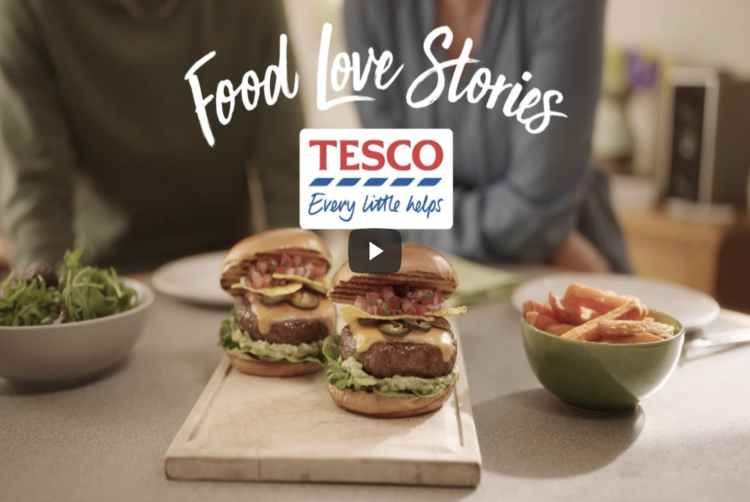
Tesco’s TV ad, Food Love Stories, is an excellent example of this. It’s classic brand building – heartfelt, human, emotional. But it also shifted products off shelves, with recipes featuring items you could buy in store that week. Heart to cart, in one idea. That’s effectiveness baked in from the start, not tacked on at the end.
So, stop splitting brand and performance into silos. Orchestrate them together so one reinforces the other.
From output to orchestration
The UK public isn’t anti-advertising. They’re anti-bad advertising. So, the solution isn’t fewer ads, it’s better ones.
Real effectiveness occurs when every second of creative work diligently evokes emotion, drives action, and embeds your brand into memory. Not when you’ve reached frequency 7 on Meta.
That means shifting the mindset. Instead of “we need to make a film”, it should be “we need to create relatable moments.” Instead of interrupting, start assisting.
And since the UK digital ad market spend is constantly increasing, there’s always going to be a lot of noise. So, imagine if more of it felt like help instead of a hassle.
That means being smart. It means creating experiences people would genuinely miss if they disappeared tomorrow. That’s how you move from being seen to being sought out.
So next time you brief a campaign, ask: Is this going to help someone? Or will it just get in their way?
 Andreas Ohlbach is head of client services at Transmission