



Bring design thinking back to media strategy
Opinion
We are missing an opportunity to create work that truly appeals to the flesh and bones and beating hearts of the human.
“Design thinking” as a term goes back to the dawn of modern marketing in 1930s and emerged as a distinct process in the 1990s, supposedly coined by Ideo. McKinsey & Company describes it as a way of solving problems by focusing on people’s human needs, using creativity and testing ideas to find better solutions.
It now features prominently in the way brands test and design products, experiences and services — anything from Airbnb, which revolutionised travel with its peer-to-peer platform, right through to how pill packs made taking medication easier.
While the advertising and media industry flirted with design thinking about five years ago, we only really dipped our toes into it. Some agencies rebranded strategy teams to “journey designers”, any kind of qualitative research rebranded to “ethnography” and agencies embraced “prototyping” and “empathy” to make us sound like we had something new and sexier.
Then, as with many things in our industry, the momentum was lost and ultimately it fell out of fashion. In doing so, we missed an opportunity to take a step towards creating work that truly appeals to the flesh and bones and beating hearts of the human.
And as product design and brand experiences adhere to design thinking (an industry set to be worth $30bn), advertising and media lost a tool in our armoury to drive stronger growth for businesses in today’s tech revolution.
More empathy
So what can we do?
At the core of design thinking is empathy.
Ipsos testing data and Effie case study data show that campaigns that combine fresh creative ideas with empathy are more likely to be effective and perform 20% better on short-term sales lift potential.
Ethnography is the engine for empathy. It is where you unearth the gems that make brilliantly empathetic campaigns that answer people’s emotional needs.
Using ethnography to explore the role of not only the brand but what problem its communication could fix is an untapped area. It would take us out of our urban ivory towers and into lived lives and on to streets, giving us real insight into humanity.
Yet I’m unconvinced clients are seeing the benefit of using it in advertising and media as much as they do in product and service design or even policy generation by the UK government.
While others invest in ethnography for the long term — the Born in Bradford series is an outstanding piece of research running since 2007, for instance — such long-term projects are absent from our industry.
Instead, we skate on the surface of society with one-off ad hoc projects that we lose patience with and forget. Too often, media agencies think channel or media consumption first. We neglect the human problem — the real unmet needs of the brand and, importantly, its communication.
If we fix our minds on making people’s lives better through what we put out into the world, we can make communication that is a utility or entertainment or, simply, life-improving.
Novel solutions
The proof is in the pudding. Campaigns such as Pampers’ large-format commuter canvases demonstrate absolute empathy. The work isn’t just about appealing to parents’ desired objective. It goes much deeper.
Pampers is speaking to them as commuters, not just parents, with lives beyond the nursery. This is work that would arguably never have happened had agencies not spent time in parents’ homes — with design thinking-led ethnography research.
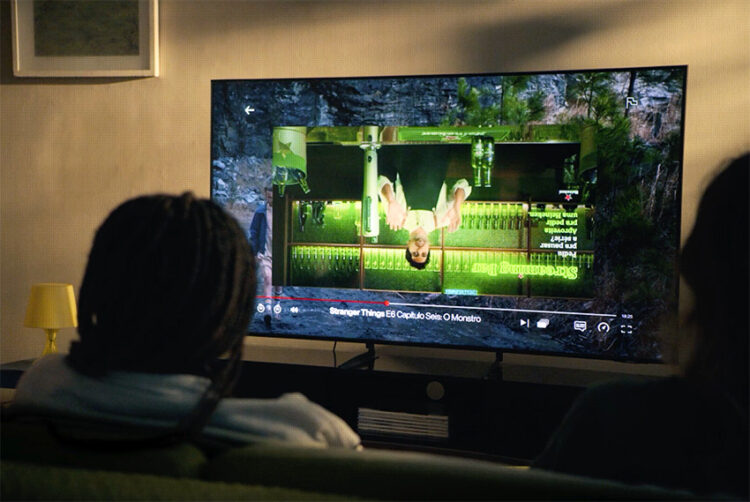
Other brands are using design thinking in their media strategies with great success. Heineken “Streaming Bars”, for example, took over the Netflix pause button to allow viewers to order beer directly from their sofas. Fun, funny and useful in one hit.
Telstra’s amazing “Call Santa” phone boxes provided value through joy in media and message at Christmas time across Australia.
Design thinking brings together people from different disciplines — creative, data, technology and strategy — to encourage them to collaborate, share insights and solve problems together. This process helps break down silos and surfaces diverse perspectives, leading to novel solutions.
And it allows a shift in mindset away from solving an annual planning or campaign brief and towards exploring solutions that evolve over time. We need to make time to capture the kind of serendipitous collisions of coffee houses, at a time when specialism and matrix structures are against serendipity.
With the acceleration of AI, synthetic qualitative work opens the door to fast, frictionless cost-effective research — but it must be used with real-life research.
My hope is we’ll begin to see more design thinking making its way into strategic media plans. And, in doing so, we will produce less landfill communication and more work that resonates with beating hearts.
 Emily Fairhead-Keen is group head of strategy at Havas Media Network UK