



How to approach media as a challenger brand in the FMCG space
Opinion
Build the right media strategy for your challenger brand and resist the temptation to hedge bets by pursuing multiple approaches or copying other brands, says MNC’s director.
When executed correctly, a strong media strategy can be the rocket fuel in a challenger brand’s growth story. It’s the difference that allows a brand to pull away from its competition and become a clear category leader, and so often achieve the elusive exit that founders inevitably chase.
The advertising challenge
I see time and time again early-stage brands burning through precious capital by copying the wrong marketing playbooks. For big brands with mass awareness and mass distribution, the game is relatively simple, but for challenger brands, there is no such thing as a cookie-cutter approach. It’s always nuanced and specific to the exact conditions you may find yourself in.
A few recent examples I think land this point…
Wild built its business in the early days through a digital-first strategy. Performance-focused, its unit economics as a high-value subscription product allowed for this.
Only once retail distribution became meaningful did it branch out to more top-of-funnel awareness-driving mediums such as OOH and TV. It layered this in and built a full-funnel, channel-agnostic marketing machine that ultimately culminated in a reported £230m exit to Unilever.
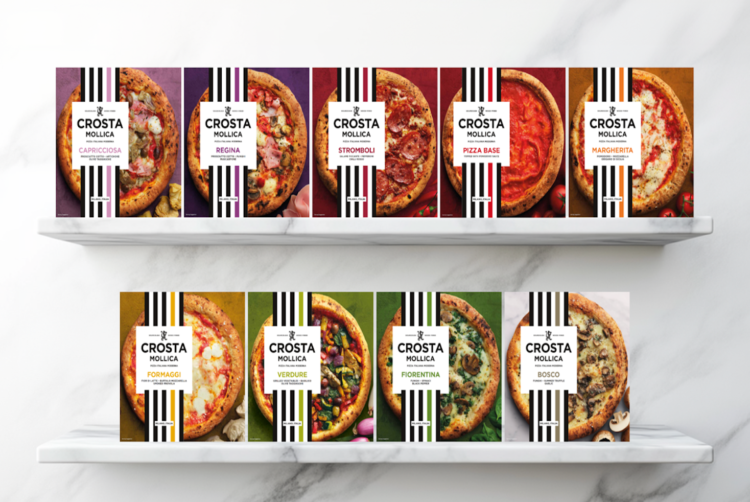
Crosta Mollica, on the other hand, has always been a grocery-first brand, with a lower price point and very high product awareness (pizza is delicious, and we all know it!). A performance-first approach would have made no sense here.
Instead, it has leaned into a mass awareness-driving approach with very distinctive assets, and a targeted approach utilising things like sponsorship of ‘Food’ on Channel 4 to focus entirely on driving that all-important grocery ROS.
As such, it has hit £90m+ RSV in the UK grocery sector, just a decade into the business.
Jubel is an interesting outlier. It has never spent a penny on traditional media.
It has focused on building community and activations in its on-premise stockists to drive its impressive grocery ROS (although, I would argue that it is getting to the stage where it will be hamstringing itself if it doesn’t begin to layer on a well-thought-out media strategy, given its impressive growth).
What to watch out for
There are so many potential pitfalls for challenger brands. A few of the classics we see come up time and time again and catch people out:
Creative – everyone wants to do the most ‘cutting edge’ creative and win awards. But early stage ATL spend should be focused entirely on getting your distinctive assets out into the world…no point being clever and thought-provoking if no one knows who you are and what you do. People may have seen the recent LinkedIn debate about Tenzing’s latest campaign that encapsulates exactly this.
Focus on ‘frequency’ over ‘reach’ – most of us don’t see ads. To get someone to notice something, they need to see it repeatedly. I see too many media budgets stretched too thinly as brands chase ‘reach’. If you have low brand awareness (as most challenger brands do), focus and concentrate your media spend as much as possible to ensure it has a genuine impact.
Media for equity – these deals can seem like a no-brainer – offering media in exchange for equity and enabling startups to gain mass exposure without upfront costs. The reality is, there is usually no guaranteed ROI and little understanding of the pricing/value of the media you are receiving, or what it should achieve. It’s not fair to say they never work, but I do firmly believe that often SMEs would be better placed to build the media plan they really need, rather than accepting a media-for-equity deal that likely won’t pay off in the long term.
Channel specialists – if you work with an OOH-only agency, they have a vested interest in pushing an OOH narrative and securing as much of your marketing budget as possible. Likewise, for digital-only agencies or any siloed specialist. All media plans need to be looked at holistically and agnostically.
Cowboy operators – there are a lot of people out there promising ‘cheap media’. The reality is that it’s only cheap because the formats, placements or timings mean no one else wants it. So, as a challenger brand with low brand awareness, it’s very unlikely to be right for you either.
The solution
What challenger brands really need is to understand where they sit across a range of key indicators, including awareness, consideration, conversion, price point, distribution, and many other factors.
Most brands move too early, launching awareness campaigns before distribution can support them, or too late, missing growth opportunities because they’re afraid to move beyond performance marketing.
It’s important to be proactive and watch for the signals: when distribution reaches broad coverage, consumer awareness campaigns stop being wasteful and become essential.
When your DTC unit economics improve, you can afford more aggressive acquisition strategies. When retail momentum builds, trade marketing can take a back seat to consumer marketing.
The biggest mistake is trying to operate in multiple areas simultaneously without the scale to support it.
Build the right media strategy for your brand and resist the temptation to hedge bets across different approaches or copy other brands. The brands that survive the current downturn will be those that acknowledge their constraints and build media strategies around them, rather than pretending those constraints don’t exist.
 Joe Benn is a director at MNC