



How to brand ‘branding’ and sell business outcomes
Opinion
WPP Media’s David Wilding would like to see ‘near future sales’, ‘company value’ and ‘circular value’ added to measurable business outcomes.
There’s a lot of agency talk at the moment about the need to move from selling “time” to selling “business outcomes”.
Of course, this in turn raises an important question – which “business outcomes” should we be selling and which ones actually matter?
The logical and very commercial-sounding answer to this is “sales”, which very often is then measured in the form of short-term attributable sales.
We’ve never had so many data points and proxies for sales available to study and optimise every day (or have AI do it for us, if we’re really lucky). Seeing these proxies point upward helps create a reassuring sense that what we’re doing to “drive sales” is working.
But an excessive focus here risks missing a much bigger picture and opportunity. I’m suggesting three other “business outcomes” I’d like to see the media industry measure and tell a better story about.
Near future sales
It’s funny how, as “brand” people, we still haven’t cracked how to brand “branding”.
Despite volumes of research and econometric evidence showing how effective brand advertising is (your Honor, I direct your attention once again to the excellent Profit Ability 2), the language we often use day-to-day somehow allows performance marketing to be viewed as the rational, sensible and efficient way to drive sales, with “brand” too often seen as a “fluffy” indulgence to be considered only once we’ve convinced ourselves we’ll reach our sales target.
This has to stop. A solution we can all adopt today is to simply replace the word “brand” with the term “near future sales”.
That’s exactly what we deliver when we do our jobs well, and it’s not something a CMO, CFO or CEO looking to grow their company this year will want to jettison.
Company value
Combining short-term and near-future sales (see how easy it is to say!) gets us to a sales volume, but the really interesting conversations start when we begin measuring sales value.
In other words, we don’t necessarily have to sell more to be successful if we’ve convinced enough people to pay a higher price when they do buy.
A focus on sales value quickly leads to conversations about margin resilience, pricing power, business growth, and company valuation.
This is the language of the boardroom and requires us to understand media and advertising’s role in driving a product’s (and ultimately a company’s) value.
For a great, but all too rare, example of this, do check out McCain’s IPA Effectiveness winning Grand Prix.
The good news for media planners is that value perception can be significantly influenced by media planning decisions.
WPP Media’s Signals research shows that ‘costly signalling’ (generally achieved via media placement in large scale, public and shared media) works to successfully increase the perceived value of a message.
Podcast: Signal strength in a changing media world, with EssenceMediacom’s Richard Kirk
Newsworks’ recent study reflected these findings, showing that high-attention media channels make advertisers more visible and memorable and actually deliver greater profit.
Put simply, investing in credible, public and shared media can reframe what a product is worth in the minds of consumers, which is a potentially transformative conversation to be having with a CFO.
Circular value
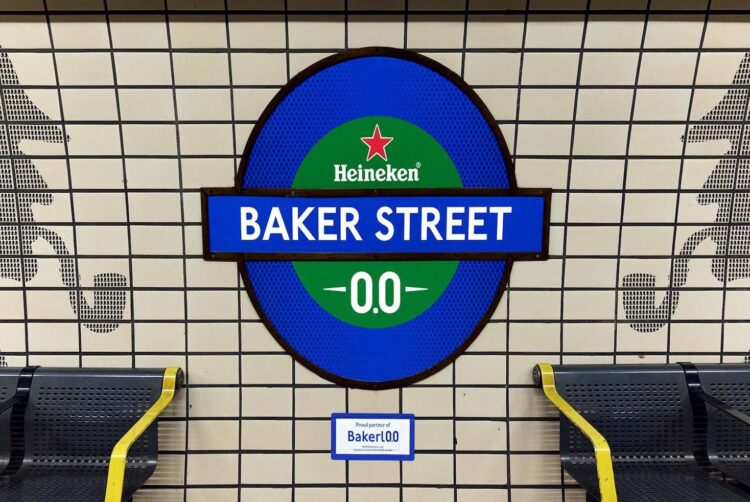
Did you see the Heineken 0:0 takeover of the Bakerloo line in January?
One reason I liked it is that the money spent goes to Transport for London (TfL), which, as a not-for-profit organisation, reinvests it to improve its service for customers.
This is objectively a good thing for serving the common good, but it won’t necessarily resonate in the boardroom. So what if we instead considered the ‘circular value’ of a media investment for the company that made it?
What do I mean by circular value?
Well, it’s somewhat intangible and hard to measure, but if your media investment with TfL helps TfL run a good service and, as a result, your potential customers can travel on that service without delays to spend their time and money with you, that’s circular value.
If you invest in Out of Home, and 46% of the money spent in the medium makes its way back into the community (which it does), to fund greater community cohesion and, in turn, that cohesion leads to a more positive environment in which to build your business, that’s circular value.
If your investment in (responsible) journalism helps people feel well-informed, reassured, empowered, and inspired to make buying decisions, that’s circular value.
If your investment in the UK’s TV companies helps them to make the content that makes people’s days a little bit better and creates a bit more positivity and shared identity, which in turn leads to a greater sense of consumer optimism, that’s circular value.
Not every media channel has as much circular value. Not every business will care about it.
But as it’s often in a business’s own (circular) self-interest to help ensure that people are physically, financially, and psychologically in the right place to spend money with them, we could do worse than consider the circular value of our media investments.
 David Wilding, is EVP strategy at WPP Media and writes a monthly column for The Media Leader.