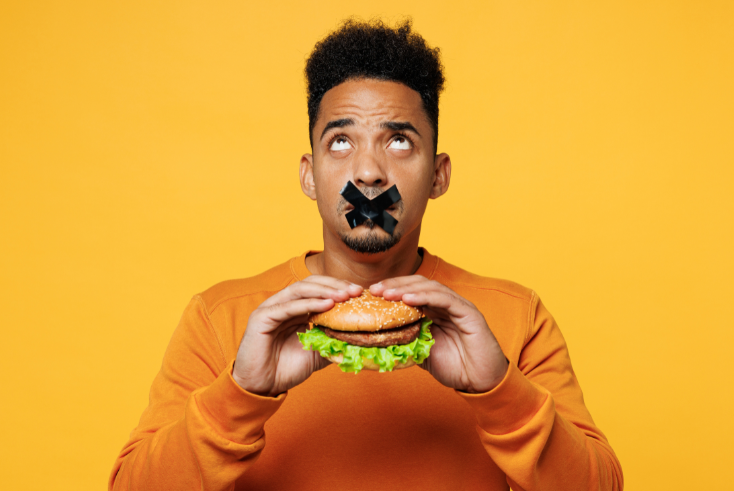
Legislation restricting less healthy foods (LHF) advertising is fast approaching, with industry voluntary compliance starting on 1 October.
Radio is entirely out of scope, whereas digital audio and podcasts, while within the scope, were explicitly exempted within the legislation.
For TV and streaming services, LHF ads will be banned from before the watershed.
Additionally, all paid online advertising is banned, regardless of time.
For audio channels, arguably the ban presents an opportunity. However, advertisers need to be proactive to capitalise on this.
The “Countdown to October 1” campaign from the Advertising Association, Isba, the IPA and IAB UK aims to offer guidance around what LHF products are and which channels fall within the scope of the restrictions.
Ad industry trade bodies launch LHF awareness campaign
The Media Leader understands that part of the reason traditional radio and audio is out of scope is due to its difference as a channel in terms of targeting children compared with TV, VOD and platforms like YouTube.
However, at this stage it is not clear if video podcasts published on digital channels fall within scope, meaning brands utilising multimedia output for their LHF campaigns may be disallowed.
Brand advertising, meanwhile, is still allowed, provided no LHF products are shown. This should instil some confidence in marketers planning Q4 campaigns and budgets, while previous uncertainty around this nuance had impacted planners.
Analysis: Standout moment for audio
With audio being the only major channel untouched by the upcoming restrictions, its place within the media plan will shift.
As Andrew Goldsmith, president at Adelicious, said: “Audio has become the last major safe haven for these brands.”
He continued: “Podcasts and streaming are no longer a nice-to-have, but a strategic growth channel where they can continue to build reach and reach audiences creatively.”
As a segment of audio, podcast advertising is underlined by its ability to reach wider audiences and deliver meaningful results.
Josh Woodhouse, regional managing director for UK and Ireland at Acast, echoed this: “Podcast advertising is already incredibly powerful, reaching nearly half the adult UK population every week.
“Now, it’s also one of the few remaining ways for brands in this space to consistently connect with adult audiences at any time of day.”
According to YouGov data, most weekly podcast listeners play a role in grocery buying at home, with 94% either solely or partly responsible for household grocery shopping.
Woodhouse outlined how this further strengthens the medium’s position in relation to LHF brands and products.
“Podcast advertising is not just compliant under the new rules, but a smart and strategic choice,” he added.
LHF ad ban delayed to 2026 as government commits to explicitly exempt brand activity
Act now or risk losing out
Delayed action may lead to missed opportunities.
Goldsmith explained: “Over recent months, Adelicious has experienced a sizeable shift in the volume of briefs, type of brief and type of advertiser. So if a brand waits until January to act, they could be left fighting over scraps.”
Ad inventory for podcasts and radio will undoubtedly see a surge in demand. But with limited space, costs are expected to be inflated.
At the same time, agencies will need to consider campaign planning holistically and reflect on how audio fits with other channels within the context of LHF-impacted brands.
Meanwhile, the legislation marks an opportunity for advertisers to develop their sonic brand.
Sue Cullingham, head of audio at Adwanted UK (parent of The Media Leader), cited McDonald’s as a brand that has utilised audio well. “Their sonic brand is instantly recognisable,” she pointed out.
Vodcasts: Is it the future of podcasting?
A balance to be struck
Despite the clear advantage audio channels will inherit as a result of the LHF restrictions, a careful balance is needed.
Simply put, audio cannot become the focus of spend for all LHF brands that will no longer use TV and online channels, as this could potentially result in changes to legislation to include linear radio and audio more widely.
A balanced approach is required by media owners, which need to ensure their top advertisers don’t become an influx of LHF brands. Bauer and Global declined to comment on this feature.
Brands should consider an omnichannel approach, with post-watershed TV slots, digital OOH and retail channels all providing more diversified offerings.
Ultimately, advertisers must think strategically about their campaigns and how they fit overall within the new legislation.
Adwanted UK are the audio experts at the centre of audio trading, distribution, and analytics. We operate J‑ET - the UK’s trading and accountability system for both linear and digital radio. We also created Audiotrack, the country’s premier commercial audio distribution platform, and AudioLab, the single-point, multi‑platform digital audio reporting solution delivering real‑time insight.
To scale up your audio strategy,
contact us today.