



Navigating the new media landscape, insights from the MRG conference 2025
Opinion
Ipsos’ associate director reflects on the takeaways from three action-packed days at the MRG conference.
The dust has settled on another MRG conference (the Media Research Group’s annual gathering to share the latest insights and trends), and now we’ve all made it back from Utrecht (I assume!) I’ve had a little time to reflect on the tremendously insightful journey into the evolving media landscape and its measurement.
Over three action-packed days, we were treated to a host of industry leaders and researchers who shared their insights and expertise.
Looking through my notes from the 39 sessions, a couple of themes emerged that struck me as both important and impactful for the media industry.
First is the rapidly changing nature of media consumption, both in how audiences feel and behave and in how we measure.
Second, the opportunities (and challenges) these shifts are creating make audience measurement and understanding more important than ever.
Before I get into more of my deeper thoughts on these themes, I also have to give a shout-out to the much-deserved best paper from Movember’s Sarah Sternberg and Saul Parker (The Good Side).
Their presentation went beyond the headlines, talking about young men, to actually talk to them and explore the Manosphere and how this content transforms men’s behaviours and attitudes.
Change and evolution in media consumption and measurement
The media landscape is experiencing a seismic transformation, as traditional boundaries blur and new platforms emerge at the forefront of consumer interaction.
Doug Whelpdale and Jim Jarrett shared one example of these shifts from Barb, highlighting how YouTube has become a key viewing channel for some audiences, but not just on our smaller screens – with around half of all viewership now on traditional TVs – exemplifying the broader cultural shift in how media is consumed.
Alison Preston from Ofcom echoed this sentiment, underscoring how utility and the pervasive influence of social media are fundamentally altering consumer behaviour – one particularly alarming illustration of this is the impact on perceptions of some of our traditionally most trusted institutions.
Renuka Gupta from the BBC provided a stimulating analysis on how algorithms play a pivotal role in determining content visibility on platforms like TikTok, posing both challenges and opportunities for reaching diverse audiences.
In response to these sweeping changes, measurement methodologies are evolving to better meet changing contemporary demands.
For example, Euan Mackay from Route demonstrated innovative enhancements to the JIC’s methodology, aiming to deliver more nuanced insights that align with today’s media ecosystem.
Meanwhile, because this is a 2025 conference, AI had to be mentioned. And Tim Brandon from OMD introduced the concept of synthetic insights, highlighting the burgeoning role of AI in simulating consumer responses to optimise research efficiency and accuracy.
Understanding opportunities in diverse younger generations
Amidst this change, there are opportunities (and challenges), but these are also within an ever-more diverse group of younger generations, who are having different life experiences too.
As BDRC’s James Myring and Max Willey highlighted in the data they shared on the impact of delayed milestones and unmet expectations on generational mindsets shaping modern media consumption patterns.
These Gen Z and Gen Alpha are also not homogeneous – rather, they possess a wide array of preferences and distinct attitudes, as explored by Katya Des-Etages from Channel 4.
Gen Z, for example, is known for its eclectic approach to consuming information, often exhibiting a sceptical stance towards traditional news outlets. This characteristic necessitates innovative engagement approaches from brands.
Fergus Navaratnam-Blair and Holly Hewlett further illuminated the duality present in Gen Alpha, a generation well-versed in digital environments but increasingly valuing tangible, face-to-face interactions.
This dichotomy offers brands unique opportunities to craft strategies that genuinely resonate with these younger audiences, making authentic connections pivotal.
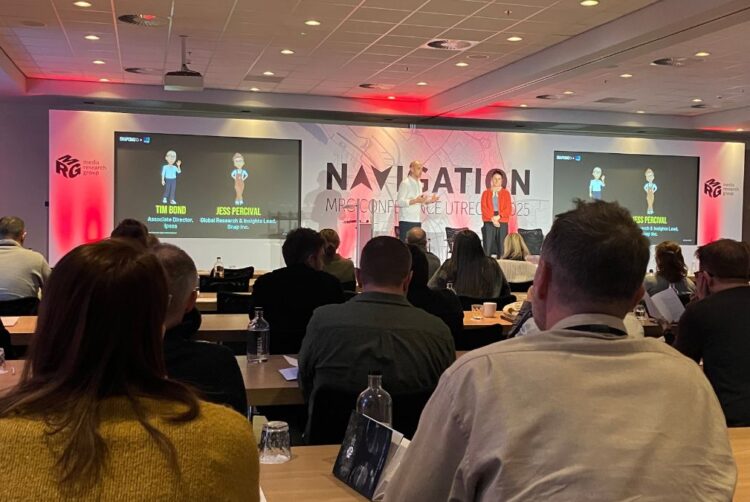
This is also connected to one of the reasons I was at the conference: To present the work we’ve done with Snap alongside Jess Percival, spotlighting the accelerating growth of “The Women’s Sports Era”.
In our research, we see this is more than a mere trend, but a robust movement ripe for authentic brands to engage new audiences.
In a similar vein, Amanda Wigginton and my colleague Amanda Woodley emphasised the pivotal role of trust in creating impactful connections with audiences, underscoring the importance of using trusted editorial brands to turn consumer interactions into meaningful journeys.
Understanding the role of moods and mindsets in driving media engagement was a recurring theme, highlighted by speakers such as Anthony Jones from Thinkbox, who explored how mood affects ad recall, and Ruth Reynolds from Azerion (and colleagues), who emphasised the importance of measuring mindset to create meaningful brand connections.
In conclusion, the MRG Conference underscored that as media consumption patterns evolve, so must our measurement methodologies to capture these dynamic shifts effectively.
Simultaneously, comprehending the intrinsic diversity of younger generations unveils rich opportunities for brands eager to innovate and connect with modern audiences.
For businesses aiming to leverage these insights, fostering interdisciplinary research methodologies and integrating advanced technologies such as AI are essential to staying ahead. But at the heart of success in these changing times is people, and understanding your audiences is key.
 Tim Bond is associate director at Ipsos