



Quality representation in ads boosts loyalty and short-term sales
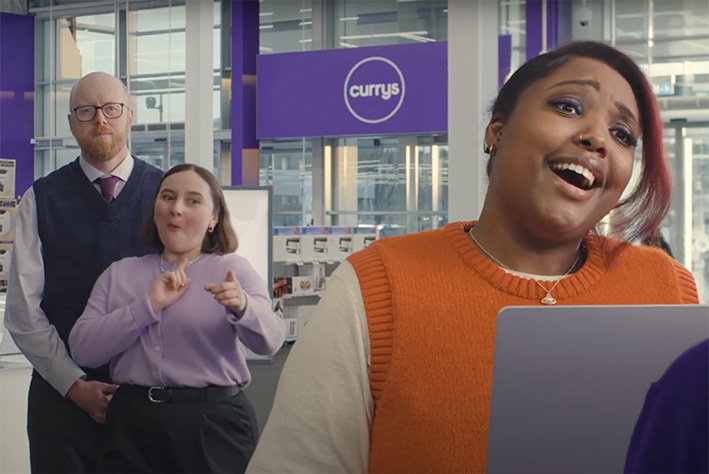
Brands that focus on inclusive advertising saw a 3.5% increase in short-term sales and there was an 8% uplift in brand affinity for Diversity in Advertising award-winning campaigns.
This shows how quality representation should be a commercial driver for brands, according to Channel 4’s latest Mirror on the Industry report. The study marks six years since the broadcaster began this series, which explores diverse representation in UK TV advertising.
The report, revealed on Tuesday at an event hosted by Channel 4 in partnership with Isba, found that 77% of people agree DEI is important in advertising.
However, despite some improvement since the first report in 2019, representation of some minority groups has stagnated, with some missing entirely and portrayals remaining limited.
Under-representation
While overall people feel representation has improved, certain groups do not feature in UK TV ads proportional to their make-up within the population.
For instance, only 2% of ads include LGBTQIA+ people, even though they make up 3.2% of the population as per the 2021 Census. This is down from a 3% average during 2018-2023.
Disabled people only feature in 4% of ads, despite making up 17.8% of the population. This has not changed from the 4% average during 2018-2023.
Notably, just 0.3% of ads show neurodivergent people or those with neurological or mental health conditions, while pregnant people only feature in 0.1% of ads.
Tokenistic portrayals
Montage-style ads have been a key driver in featuring a range of characters. However, as outlined in the study, individual characters receive significantly less screen time and 87% of “tokenistic” portrayals occur in montage-style advertising.
LGBTQIA+ people and disabled people play a lead role in half of the TV ads they appear in, but the former group tend to appear in less serious roles, while disabled characters are typically portrayed as more serious.
Ads featuring those aged 70-plus typically appear in ads focused on health or charity, despite 63p of every £1 spent coming from a person over 70, highlighting an audience with strong spending power.
Representation of different body types has seen a significant drop, with ads featuring those defined as “plus-sized” down to 5%, from 13% in 2023.
Discrimination persists
While representation of ethnic minorities has improved overall, only 23% of black people, 6% of South Asian people, 2% of East Asian people and 4% of people of mixed heritage have a leading role in ads.
The report also found colourism remains present. Those with darker skin tones are least likely to appear in ads and the average screen time for all ethnic minorities is 6.5 seconds.
Depictions of ordinary life are also skewed, with working-class characters being less likely to be presented as confident or happy, even though 50% of the population view themselves as working class.
This highlights how it is essential for brands to maintain authenticity and quality storytelling so that inclusion does not turn into a tick-box exercise. In fact, when representation is intentionally built into advertising, the effectiveness of the ad is not diminished.
Recommendations for brands
There is a clear opportunity for brands to connect with audiences through DEI portrayals. However, when done poorly, the reputational and capital risk is high.
In light of this, the report recommended that brands push the boundaries to tell stories that are rarely told.
Researching audiences is also underlined as key, with campaigns rooted in informed, lived experiences cited as the safest course of action. Testing executions and considering the role of format within storytelling is also recommended.
Finally, it is advised that brands should strike a balance between aspirational characters/storylines and relatability, with audiences wanting to see themselves in advertising.
During the event, a panel discussed the report further to offer guidance to brands implementing DEI in campaigns.
Dom Hyams, global client director at Purple Goat, reflected on the commercial opportunity for brands: “Let’s make it a very powerful commercial conversation.
“There is absolute commercial drive if you are a brand and if you are not doing this stuff, you are making a mistake.”
The report was produced in collaboration with Tapestry.