



Return of the single-minded media plan
Opinion
Every media channel is seemingly a Swiss Army knife that can do everything now, but we’ve forgotten that channels have their own special set of superpowers. Let’s look at OOH to understand the problem.
There has never been a better time to be a media planner than today.
Media consumption has doubled over the last decade to an incredible 16 hours a day. New players (commerce), new economies (creators), data wizardry (clean rooms), evolving measurement (AI holdouts), exploding cultures (gaming) and fresh buying routes (PMax) have all transformed the UK ad marketplace.
You’d think that this new wave of media would create greater choice and diversity in planning, yet paradoxically we’re seeing greater homogeneity.
Every media partner today (old or new) offers the same range of reasons to buy: full funnel, data-driven, broad reaching, narrow targeting, brand-building, growth driving, mainstream and niche communities, quality placements, AI-powered, people-based, waste-free and value added.
Every media channel is a Swiss Army knife that can seemingly do everything and anything.
News, analysis, comment and community — Join The Media Leader
What happened to single-mindedness?
Yet strategy is about sacrifice. Channels have their own special set of superpowers — the thing that made them famous, successful and effective in the first place. In our rush to embrace possibility, are we forgetting the power of single-mindedness?
Let’s take OOH as a case in point.
The latest effectiveness data suggests there is a notable decline in OOH that needs to be addressed. According to Profit Ability 2’s £1.8bn econometric database, OOH’s contribution has dropped since the pandemic, with a profit return on investment (ROI) now at £2.78 — 32% below the all-media average.
Within the data collected, it accounts for 5% of all media analysed, but only contributes 3.1% when you include immediate, short-term and sustained payback windows — an index of 68.
OOH used to be a brand-building powerhouse, but today’s brands are no longer being built like they once were in OOH. I believe some areas of the industry have lost sight of its unique strengths.
Advertising generates profit, but not all media channels are equal
A public medium, now bought piecemeal
Brands are public constructs and OOH has always been a stage for brands to reach the public en masse.
It remains the only medium that can still achieve 90%-plus weekly reach among adults (according to IPA TouchPoints) and has huge power to excite and engage.
Yet, while the rapid digitisation of the channel has opened up greater targeting and precision capabilities, it also means it’s increasingly being bought piecemeal.
Creatively, less is more
OOH’s creative challenge has always been its brevity: the average dwell time for static posters is only two seconds (according to Lumen), therefore “10 words or fewer” remains a creative mantra — but adherence is slipping.
System1 data shows OOH underperforms on long-term brand-building (-8.3%), short-term spike (-8.1%) and distinctive fluency (-31%) compared with TV. In fact, 36% of all OOH ads tested by System1 scored just one star: the lowest level of predicted long-term effectiveness.
From WPP Media econometrics, the variance of ROIs are some of the widest across all media channels — pointing to both the creative problem and the potential. When done right, OOH can land bold messages and elicit emotion — but this is currently not achieved consistently.
Large-format DOOH garners five times more attention than digital formats, study shows
A share of time, not just place
Historically, outdoor bookings lived and died by fixed two-week postings — tens of thousands of panels were changed nationally in a matter of days. This production rigidity was a strength, ensuring advertisers commanded a guaranteed slice of audience exposure.
Today, the shift to buying people over places aligns with the times, but as WPP’s Chris Binns puts it: “The individually precise is culturally invisible.”
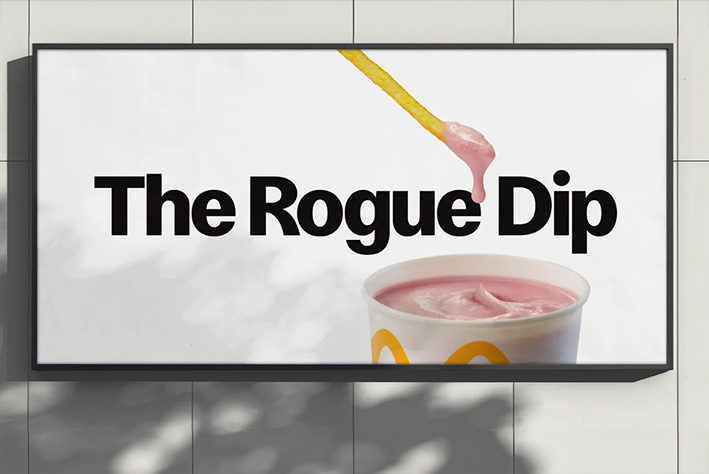
One of OOH’s greatest virtues is its ability to culturally imprint. Just look at recent campaigns from Tesco, McDonald’s and British Airways — all showing merely a snippet of their brand’s distinctive assets — as a case in point. A channel that was unashamedly part of audiences’ lives now risks being too smart and potentially under-seen.
The single-minded solution
Like all media channels today, OOH has a portfolio of buying options and targeting capabilities. But with recession and regulation looming, now is the time to remember what made OOH successful in the first place, rather than fixate on the art of the possible.
That doesn’t mean that OOH (or any other channel, for that matter) should only ever play one role, but it should have a clear, single-minded role on each plan.
It starts today with OOH, but let’s make all channel planning single-minded again.
 James Parnum is head of planning at EssenceMediacom UK