



Somewhere under the rainbow
Opinion
Right now, a long-term, insight-driven approach to comms planning around LGBTQ+ publishers and creators could pay even greater dividends for brands.
This year, it has been reported that eight in 10 advertisers have pulled out of leading LGBTQ+ publication Gay Times since 2024.
Three-quarters of Pride events have seen a decline in corporate partnerships since 2024. One in four say their sponsorship revenue has dropped by more than 50%.
And this is having a real-world impact — this year’s Liverpool Pride was cancelled due to significant financial pressures and it’s a fate UK Black Pride was grappling with on its 20th anniversary.
This is amid a tripling in the number of students reporting mental health issues since 2018 (42% of bisexual and 29% of lesbian students in 2024). Trans students’ rates have jumped from 25% to 40% in just one year.
Alongside the devastating impact of declining brand support, now more than ever a long-term, insight-driven approach to comms planning around LGBTQ+ publishers and creators could pay even greater dividends for brands sharp enough to see the opportunity.
From celebration to silence: the great Pride disappearing act
Dip-in, dip-out approaches don’t drive results
“Rainbow capitalism” continues to be a truly ineffective vehicle for change for the LGBTQ+ community and recent years have seen public perception shifting backwards.
The percentage of British adults who claim that they are “not prejudiced at all” towards transgender people dropped from 82% in 2019 to 64% by 2023, thanks to an upswell of negative attention on the community.
“Dip in” advocacy strategies are often inaccessible to the very communities they’re aimed at. According to a 2023 survey by Glaad, 41% of LGBTQ+ consumers felt Pride-themed collections were not accessible or relevant to them. According to author J Bryan Lowder: “Queer identity is being sold as an aesthetic.”
These campaigns are not only morally questionable but are generally ineffective for brands and can erode trust.
A 2024 SurveyMonkey study with more than 4,000 respondents revealed that 64% view most Pride efforts as performative. And while 58% believe companies should advocate for LGBTQ+ rights, 48% prefer no effort over a disingenuous one.
Instinctively, one may posit that pulled spending is a sign of reduced opportunity for revenue. Quite the contrary: there are an ever-growing number of people identifying within the community (50% of Gen Z do not identify as 100% heterosexual). And as brands are exiting partnerships with them, viewership and engagement with LGBTQ+ publications is increasing significantly.
Advocacy is a win-win
The pink pound now has a global purchasing power of approximately $3.9tn. And some brands have seen real success from truly embedding advocacy into their comms strategy.
Absolut Vodka, the first advertiser to run in an LGBTQ+ publication (The Advocate) in 1981, saw a 7.2% lift in brand affinity among LGBTQ+ consumers during sustained campaigns since 2021.
Long-term ally of racial, climate and sexual equality Ben & Jerry’s has cited a boosted brand trust score of 15% post-2020.
Pink News research has shown that brands embracing inclusion see a 16% boost in long-term sales and three out of four ads with a LGBTQ+ theme outperform generic ads in driving brand recall.
Success for advocacy brands is rooted in long-term strategic choices, much of which begins with internal policies. According to the Glaad 2024 inclusion report, companies with LGBTQ+ representation in senior leadership were 45% more likely to launch campaigns that scored highly on authenticity and effectiveness.
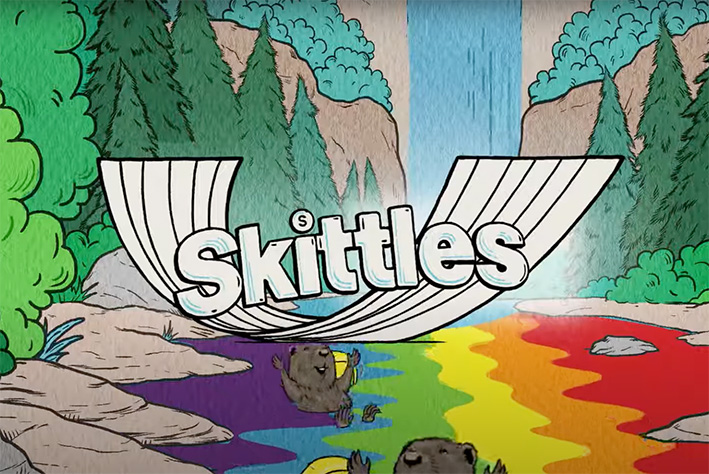
Successful inclusion campaigns including Skittles “Give the Rainbow” have been directly credited to LGBTQ+ creatives.
This campaign also proves the real business and marketing results advocacy campaigns can drive: 3.93bn earned impressions in the US and 98% positive/neutral sentiment.
News, analysis, comment and community — Join The Media Leader
Part of the conversation
As advertisers, we do have a role in this. We are part of the conversation — more so than we may realise.
Resources like Outvertising are a great place to upskill and learn how to make marketing and advertising more inclusive, both internally and externally.
We should consider how you can begin engaging with protected groups. While it may not (and should not) become foundational for all brands, there’s a clear opportunity for some.
Ultimately, the tension between decreasing brand presence in queer spaces and increasing consumer engagement highlights an opportunity — an opportunity that is farther-stretching than simply “more people = more impressions”.
Brands that are seen to be aligning their efforts with the community at this pivotal time will be recognised — more so than those that have seemingly turned their backs (even if not permanently).
While some brands may choose to be this way, “hope will never be silent”, as Harvey Milk said.
 Freddie Price is planning manager at Craft Media