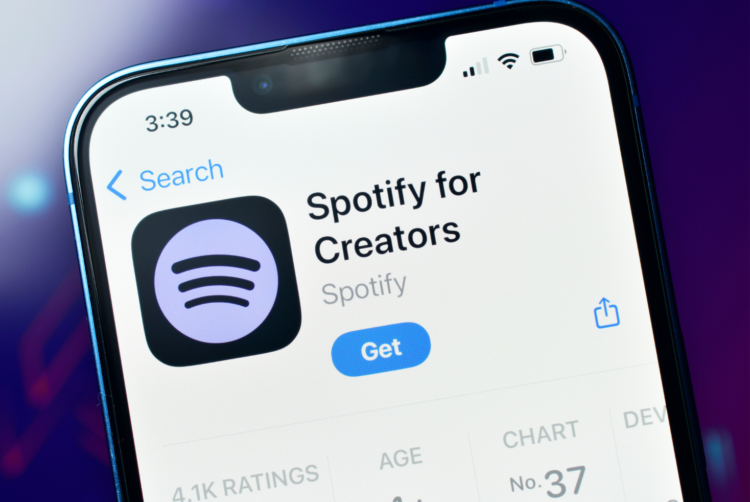
Spotify is expanding eligibility for its Partner Program by lowering the entry threshold for video podcasters. In addition, the platform will now allow creators to monetise video podcasts on Spotify, even if they are hosted elsewhere.
One year on from the launch of the Spotify Partner Program, the entry threshold will be reduced from 2,000 engaged audience members to 1,000; from 12 published episodes to three; and from 10,000 hours consumed over the past 30 days to 2,000 hours.
The streaming giant has partnered with Acast, Audioboom, Podigee, Libsyn, and Omny to offer a new distribution API that will allow creators to monetise video podcasts on Spotify even if they are hosted via another platform, without changing workflows or re-uploading content.
Starting in April, across the Spotify for Creators and Megaphone platforms, creators will also be able to update, schedule, and measure host-read sponsorships in video episodes more easily, giving them greater control over baked-in ad placements.
According to Spotify, monthly video podcast consumption has nearly doubled since the launch of its Partner Program. Spotify measures video consumption by total watch time rather than views.
Analysis: A bid for creators
These announcements are arguably intended to provide creators with greater autonomy. Acast CEO, Greg Glenday echoed this: “Acast has always believed in giving podcasters choice, empowering them to be heard and make money wherever their audience is.
“As the industry evolves, we’re bringing the same flexibility to video.
“Our partnership with Spotify is built on that principle of creator autonomy: providing the tools to scale and earn on every platform without compromising control. This is a major milestone in our mission to support stories, wherever they’re told.”
However, there is evident growing competition within the creator space. For instance, last February, Bloomberg reported 1bn people were watching podcasts on YouTube every month.
The question of which platform is more valuable to a creator remains contested. Spotify’s return per minute (RPM) is higher than YouTube’s; however, as podcast strategist Harry Morton noted, the platforms’ roles for podcast creators differ.
Spotify listeners are more loyal and more likely to complete an episode, but discoverability is lower. YouTube is a better platform for brand building and visibility, as its algorithm can drive incremental viewership, but loyalty is not guaranteed.
Speaking on a panel during Spotify’s news briefing call, Chris Williamson, host of the Modern Wisdom podcast, said: “The RPM on Spotify is double or triple compared to YouTube — it’s more attractive to creators.
“YouTube needs to up its game if it wants to compete.”
These updates also follow the partnership between Netflix and Spotify announced in October last year, which will bring sports, culture, lifestyle, and true-crime podcasts from Spotify and The Ringer (owned by Spotify) to Netflix screens, and will bring full podcast episodes off YouTube.
Adwanted UK are the audio experts at the centre of audio trading, distribution, and analytics. We operate J‑ET - the UK’s trading and accountability system for both linear and digital radio. We also created Audiotrack, the country’s premier commercial audio distribution platform, and AudioLab, the single-point, multi‑platform digital audio reporting solution delivering real‑time insight.
To scale up your audio strategy,
contact us today.