



Tell a different story in 2026
Opinion
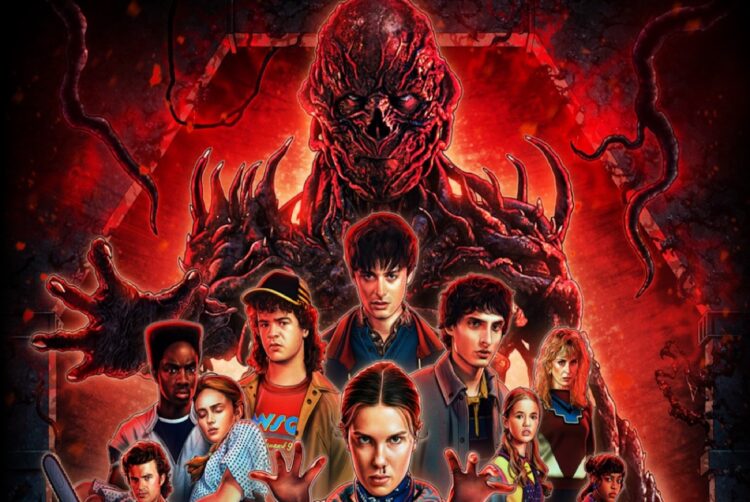
The year ahead may not provide the opportunity to work on a Stranger Things brand extension, but stories that puncture stereotypes and drive creativity will matter greatly, says Nicola Kemp
New Year’s resolutions might be vastly overrated, but there has never been a better time to commit to leaving the media industry better than you found it.
Happy New Year to everyone, apart from the sleep robbers at Netflix. While parents know that Christmas Day is always an early start, in 2025, the excitement of three new episode drops from Stranger Things meant Boxing Day began at 5 am. Don’t even get me started on the New Year’s Day finale.
The truth, of course, is that those episodes and the excitement of those early starts were in themselves a gift. Netflix played a blinder. Core memories were made. Tears were shed.
Brands showed up with generosity, too. The Stranger Things-branded Christmas tree at Waterloo Station added 10 minutes to every festive journey. While unscheduled KFC stops were down to the fact that its restaurants were wrapped in Vecna’s tentacles.
Elsewhere, Chupa Chups successfully sprinkled the Stranger Things magic into Thorpe Park’s Fright Night and limited edition lollies. This was a final series that showed the power of marketing to create experiences consumers actually enjoy interacting with.
Yet none of these brilliant experiences would exist if it weren’t for the simple and enduring creative art of great storytelling. Stories which can create entirely new worlds and give us powerful new platforms to view the world through a lens other than our own. Great storytelling gives us the courage to ask bigger questions.
Stranger Things sparks plenty of those. Its final season was a sensational reminder of the enduring power of mass-market mainstream media to shape culture and build powerful, enduring fandoms.
Diversity drives creativity
These stories can also provide a powerful window into others’ experiences, cutting through stereotypes to drive understanding and empathy.
While the pushback against Will Byers, played by Noah Schnapp, coming out as gay to his friends and family was inevitable, it does not diminish the power of his story. IMDb bombers or a forever frothing Elon Musk can do nothing to dilute the power of a character we grew up with for decades, bringing their full self to the screen so powerfully.
Purpose may have become something of a dirty word in the media and advertising industry in 2025. The ever-increasing number of column inches dedicated to decrying purpose risk serves as a collective eye roll to the organisations and individuals who continue to push for progress on the issues that really matter.
Yet the simple truth remains that the media industry holds immense power. For all the ‘go woke and go broke’ noise, the fundamental truth remains that diversity drives creativity.
Now is the time to challenge the cynicism that shames people for showing up with the drive and determination to leave this industry better than they found it.
Stereotype smashers
Stereotypes matter because they stop people from achieving their full potential. As an industry, we have the opportunity and immense privilege to persistently puncture those harmful stereotypes, both in our work and within the organisations we work for. Work, which isn’t just the right thing to do for society, but a cornerstone of successful brand building.
As the tireless work of the Unstereotype Alliance continues to underscore, showing women as mute, humourless, and in the kitchen is not the way to build brilliant, commercially effective brands.
Research from the Unstereotype Alliance in partnership with the Saïd Business School at the University of Oxford shows that brands with more inclusive advertising practices sell more (3.46% higher shorter-term sales and 16.26% higher longer-term sales).
The data does not lie. We can comfort ourselves with the narrative that diversity has ‘all gone too far’ before meaningful change has even got off the ground. We must recognise that consumers simply aren’t buying into one-dimensional and damaging stereotypes.
Small stories matter
The year ahead may not give all of us the opportunity to work on a Stranger Things spin-off, but the scale of our platforms does not diminish the strength of our stories. Your story matters.
As an industry, we must do a better job of telling those stories. From Genevieve Tompkins, chief executive at GoodStuff, who is successfully redefining what success looks like as a leader working four days a week. To Emma Harris, whose LinkedIn post after a stress-related cardiac arrest has sparked an industry-wide movement on the importance of slowing the fuck down.
To Chloe Davies, who consistently pours her bold energy into making the industry more inclusive. While Marty Davies is pouring her heart into bringing back Trans+ History week in 2026. The media industry is not short of sensational role models, so let’s not scrimp when it comes to showing our support.
Ask better questions in 2026
In 2026, let’s not see our industry’s problems as too big to solve. Let’s not be collectively content with a toxic status quo. As Simon Gilby, MD of Bauer Media Advertising, proved when he sat down with Esther Ghey, the mother of murdered teenager Brianna Ghey, at the Future of Media London, we can have the courage to ask bigger questions.
We can do better. As organisations and individuals, we can consistently support organisations that make a positive difference in our industry, such as Media for All, Outvertising, BRiM, NABS, the Conscious Advertising Network, TimeTo, WACL, and SheSays.
Media owners and agencies who continue to contribute their time, expertise and inventory to charities and changemakers must value the time and energy of their employees leading the charge. The invisible, yet immensely powerful labour of the employees who commit their finite time and energy to running employee resource groups.
The simple truth is that our workplaces and our work are infinitely better when we care about what we do and the people we do it with.
Kindness matters, and I do not care if you roll your eyes before you get to the end of this sentence. The truth is, kindness is a consistent and daily choice. It is the single most important tool we have for making a meaningful difference. For true kindness demands that we continually strive to view the world through a lens other than our own.
New Year’s resolutions might be built to break, but let’s make a collective commitment to ditch the cynicism. Let’s invest in elevating the people who are making a positive difference. Let’s tell the stories that matter in 2026.
 Nicola Kemp has spent over two decades writing about diversity, equality and inclusion in media. She is now editorial director at Creativebrief and writes for The Media Leader each month.