



The $7.3bn blind spot: Why are brands ignoring the most powerful audience in media?
Opinion
As more advertising pounds flow into the high-trust, high-impact, high-action medium of podcasting, why are female-hosted shows being ignored?
There’s a particular flavour of corporate cognitive dissonance that feels uniquely 2020s. The sort where boardrooms commission extensive research, nod sagely at the findings, then proceed to do the exact opposite of what the data suggests. It’s like hiring a personal trainer and then eating crisps in front of them to establish dominance.
Welcome to podcasting in 2025, where the numbers are screaming one thing and the media spend is whispering something entirely different. Yet this industry – which is worth $7.3bn, by the way – isn’t something to be ignored.
Let’s start with what we know
Acast’s freshly released Podcast Pulse 2025 confirms what many suspected: podcast hosts are now trusted as much as journalists, and significantly more than influencers or celebrities.
At a time when trust is the scarcest currency in media, podcasters have somehow accumulated a fortune of it. Nearly four in five podcast consumers now watch as well as listen, making video podcasts the format equivalent of having your cake, eating it, and posting the whole thing to YouTube.
And for brands wondering if anyone actually pays attention to podcast advertising, 85% of listeners report taking some form of brand action after hearing an ad. Not “vaguely remembering it existed” but actually doing something.
So here we have a high-trust, high-impact, high-action medium. It’s the advertising equivalent of finding a parking space directly outside the restaurant. You’d think brands would be falling over themselves to get this right.
You’d think.
Here’s where the maths starts to feel like satire
Women drive 80% of household purchase decisions. This is not new information. This has been true for decades. It’s the sort of statistic that gets trotted out at every marketing conference, nodded at appreciatively, and then apparently filed under “interesting but inconvenient.”
Meanwhile, 80% of podcast hosts are men.
I’ll wait.
The medium that’s reshaping how we build trust, form opinions, and make purchasing decisions is overwhelmingly voiced by people who represent 20% of purchasing power. It’s like opening a florist and deciding to cater exclusively to people who hate flowers.
The Edison Research data tells the same story. So does virtually every diversity report that’s crossed a marketer’s desk in the past five years. The gap isn’t hidden. It’s not even subtle. It’s just… there, like a massive pothole everyone’s agreed to drive around rather than fix.
And lest anyone think this is improving, Spotify’s Podcast Wrapped 2025 told the same dreary story: roughly 80% of the top shows are hosted by men. Of the two shows featuring women, one was a co-host situation with a man.
YouTube’s end-of-year roundup? Similarly bleak. In some categories, women were entirely absent. Not underrepresented. Absent. Which takes a particular kind of effort.
This is not a talent problem. There are thousands of epically talented women making podcasts right now, building audiences, creating work that deserves to be seen.
This is an economics problem. A funding problem. A “who gets the resources to scale” problem.
It’s the same structural nonsense we see in venture capital, where women receive approximately 2% of funding despite consistently delivering better returns on investment and stronger growth. The money isn’t following the merit. It’s following a habit, relying on familiarity, and using a Rolodex that hasn’t been updated since 2003.
And yet, as more advertising pounds flow into podcasting, the question gets louder: where is the female-led content to meet them?
It’s not that women aren’t creating podcasts
Women are making podcasts brilliantly and prolifically. But they’re doing it without the infrastructure, investment, and support that their male counterparts often take for granted.
The ecosystem hasn’t been built for them. Which means brands seeking to reach diverse female audiences across a broad range of topics, interests, and lifestyles are fishing in a pond that’s been systematically understocked.
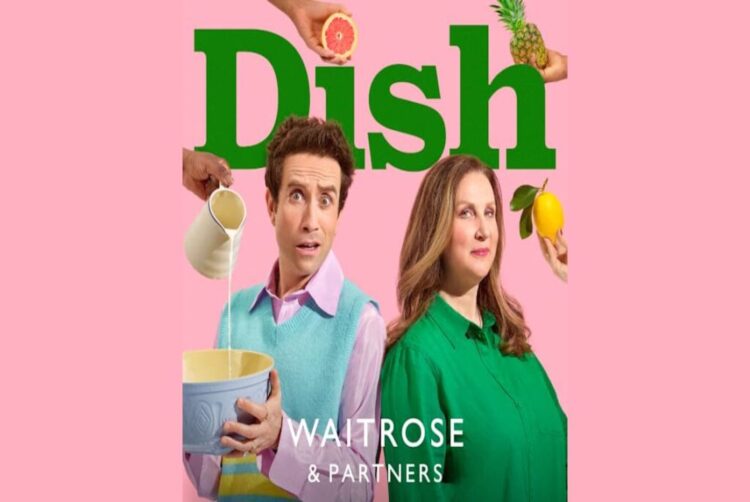
The smart money is already noticing. Look at Dish, the Waitrose-supported podcast that’s become a textbook brand partnership done properly. What started as a show has evolved into a multi-year relationship featuring product placement, recipe development, and the sort of authentic integration that makes listeners actually want to buy the chorizo. It works because it understands a fundamental truth: trust isn’t transactional. It’s built through genuine connection, consistent quality, and voices that resonate with the audience you actually want to reach.
This is precisely why we launched HERA Media, the UK’s first female-founded video podcast network. Not because we thought the industry needed another lecture about representation, but because we could see a gap the size of a cathedral and nobody seemed to be building anything to fill it.
Start talking to the 80%
HERA exists to help more women share their stories, connect with audiences, and give brands new ways to meet those audiences in a space that’s both commercially valuable and creatively authentic.
Because here’s the thing about representation that occasionally gets lost in the discourse: it’s not just the right thing to do, though it is. It’s not just about fairness, though it should be. It’s about whether you want to keep advertising to the 20% or start talking to the 80% who are actually reaching for their wallets.
We know, with the confidence of decades of research, that when women are heard, seen, and leading, everyone benefits. Men and women. Audiences and advertisers. The entire ecosystem gets smarter, richer, and more interesting. The alternative is continuing to pour money into a space that systematically ignores the people you’re trying to reach, which feels less like a strategy and more like an expensive habit.
So, consider this a polite invitation. 2026 is the year to stop nodding at the data and start acting on it. Support female-hosted shows. Fund the content that matches the audience you actually want. Be the brand that figured it out early rather than the one scrambling to catch up in 2028.
If any forward-thinking sponsors are reading this and feel inspired, my show launches in Q1 2026. I’m just saying. The diary is open. The tea is on. Opportunities for visionary brand partnerships are entirely welcome. Wink.
 Nishma Patel Robb is the co-founder of HERA