The Future of TV Advertising Global 2025
Social media ad spend is projected to account for over a quarter of all advertising spend in 2025, but SVP and managing director of Media Pulse, Deborah Gurofsky, highlighted that the negative impacts of social media are affecting brands as much as consumers.
Speaking at The Future of TV Advertising Global 2025, Gurofsky pointed to the addictive, yet unmemorable nature of ads viewed on social apps and described them as “one-night-stand brands.”
Pointing to some of her own purchases made through social media, Gurofsky suggested that “doom scrolling” inevitably leads to “doom spending.”
She added: “I bought these products, but I have absolutely no relationship with these brands — these purchases meant nothing to me — they were simply one and done, checkouts I immediately forgot about.
“A quick thrill, followed by an even quicker sense of regret.”
Attention armageddon
Social media is increasingly damaging attention spans, with a 2015 Microsoft study showing they have decreased from 12 seconds in 2000 to eight seconds today.
Gurofsky said: “It’s not even remotely controversial anymore to say that social media is eroding our attention span.
“This is a full-blown neurological crisis; our brains are being constantly rewired for instant gratification, instant access to information, and instant dopamine.”
However, Gurofsky questioned why, given social media’s impact on attention, advertisers continue to use it as a source.
Facebook’s data study, “Capturing attention in feed: The Science Behind Effective Video Creative,” reveals that people spend an average of 1.7 seconds with a piece of content on their mobile devices.
“Talk about a quickie,” responded Gurofsky.
Whereas on TV, people are engaged for an average of 13 seconds, 12 seconds for streaming, and 4.5 seconds on YouTube.
TV’s stickability
Gurofsky highlighted the dangers to brand reputation and equity, appearing in social feeds next to these “one-night-stand” brands can have.
“When you show up to the party with one of these waking red flags on your arm, what is that saying about you?” she asked.
“Or in other words, advertisers, when you show up in your audience’s social feeds, alongside these one-night-stand brands, what is that doing to your brand? Is it safe?”
Conversely, TV’s role in trusted, impactful storytelling that resonates with consumers is well established.
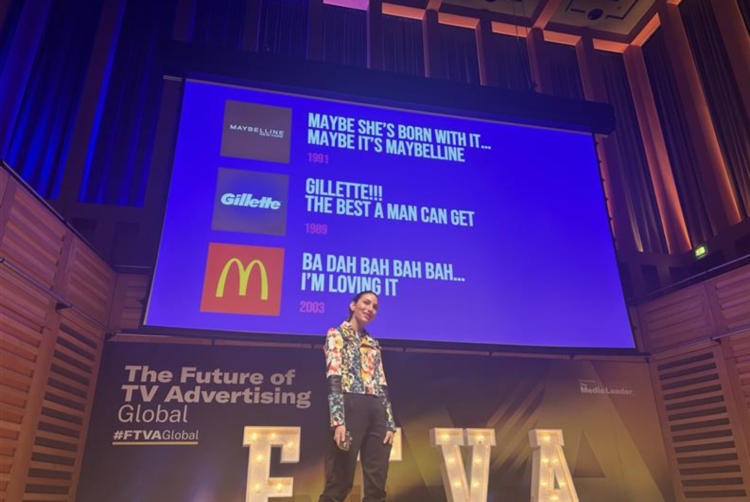
Underlining Maybelline, Gillette, and McDonald’s, brands which have existed since before social media, Gurofsky argued that long-term success comes from telling “stories people actually care about,” and building a connection with consumers, as opposed to solely focusing on outcomes.
“TV and streaming are in it for the long haul; they are the perfect marriage of attention, which builds memories and emotional resonance and leads to purchase, and drives long-term profitability,” she added.