



Welcome to a new golden era for journalists
Opinion
There are many opportunities these days for journalists to carve out a following as traditional news outlets face a myriad of challenges.
We are all used to bad news about journalism. Declining print sales, falling share, staff hollowed out in those local papers that have managed to survive and the work of media organisations being ripped off to power the AI systems of billionaire tech giants.
But there is one class of journalists who can float above the gloom and become ever richer and more independent of the stranglehold of conventional proprietors.
It helps, of course, if you are famous already. And if you can’t be famous, notorious will do. A couple of decent firings helps enormously and, if you haven’t even bothered to become a journalist at all, you can still persuade enough subscribers and advertisers that you are an influencer.
The next generation
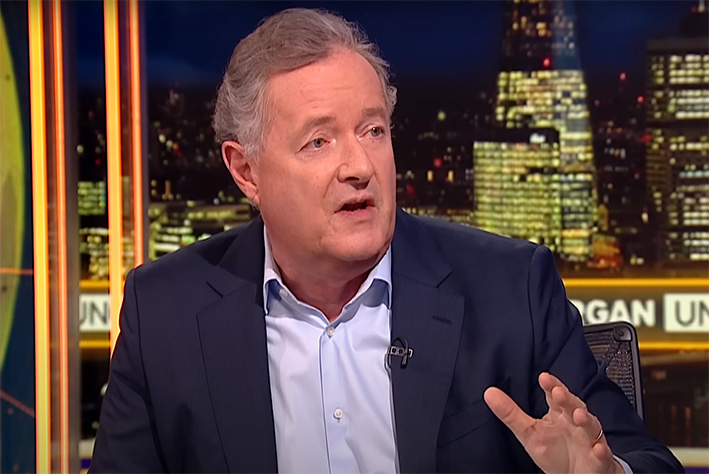
The scale of such new, lucrative opportunities for appropriately qualified journalists was highlighted this week by an interview with Piers Morgan in The Sunday Times.
Morgan is superbly suitable for his new distinguished role as a “YouTuber” — absolutely not, no way, a mere television presenter, he insists.
He is undoubtedly famous and also notorious for his dalliances with Donald Trump over the years, and he has been fired by two former employers, the Mirror and CNN, while also managing to leave ITV in controversial circumstances.
Morgan has all the essential credentials, then, for his new role, after buying the rights to his own show, Piers Morgan Uncensored, from TalkTV owner News UK. He also has the required levels of modesty.
“I’m probably the best-known journalist in the world right now. I can’t think of anyone who comes close globally,” he told The Sunday Times.
It may even be true, because the former Mirror editor has 4m subscribers for his YouTube show featuring political debates and celebrity interviews. Morgan adds that the videos he posts attracts more than 1m views.
Time for journalists to do their job properly when it comes to Reform
Competitive set
Who is the biggest beast in this jungle depends on definitions.
Joe Rogan has more than 20m subscribers, although he is very US-centric and is a comedian, actor and TV presenter rather than a journalist.
Despite that, it can be argued that Rogan has had more political influence than Morgan — ironically because of Trump.
The Joe Rogan Experience interview with Trump before last year’s presidential election may have made all the difference. It gave Trump access to millions of young men not overburdened with educational qualifications — a key demographic without whose support he might not have won.
Morgan is a little bit behind Tucker Carlson in the ratings game. Carlson was of course famously fired by Fox News for allegedly “getting too big for his boots”. The departure inspired him to set up the Tucker Carlson Network.
But again, few — other than Carlson himself — would consider the uncritical Vladimir Putin interviewer a journalist.
As for Morgan, it looks like he is only just getting going as he talks about buying and creating other shows and personalities.
His model, it seems, is Ben Shapiro, whose company produces The Ben Shapiro Show and a number of “personality-fronted” outlets that have created a $1bn business in 10 years.
That, Morgan believes, is the way the wind is blowing and he would obviously like to be blown along in that direction too.
News, analysis, comment and community — Join The Media Leader
Challenge to traditional news
The rise of the YouTube mega-stars — although they are ultimately dependant on maintaining a good relationship with the system and the algorithms that sustain them — is yet another strand of competition for the traditional media.
As Morgan, who would never be found guilty of underselling himself, points out, many news networks would be very pleased to get the number of eyeballs he attracts.
It’s all increased pressure for audiences and advertising revenues at a time when legitimate news outfits are facing everything from audiences turning away from news altogether to younger generations abandoning broadcasts in favour of the unverified information swamps of the likes of TikTok.
But there is another problem with the rise of the new independent moguls of the media: few will have anything like the journalistic sensibility, knowledge or scruples of Morgan, who has taken a recognised tradition in a new direction.
More opportunities
There are now so many opportunities out there for journalists with independence and expertise to carve out a following and earn a living without the need to shelter in a large, established media organisation. It has never been easier to be what in the past would have been called a freelance journalist.
Systems like Substack, which provides a platform for journalists, podcasters and newsletter publishers to reach subscribers around the world, is only seven years old but already claims more than 20m monthly active subscribers.
Major writers who use Substack include Pulitzer Prize-winning journalist Glenn Greenwald, Nobel laureate and economist Paul Krugman and investigative journalist Seymour Hersh.
In a pre-Substack world, when The Guardian did not renew the contract of one of its most famous investigative journalists, Carole Cadwalladr, and The Observer decided not to offer her a new one following its Tortoise acquisition, that could have been career-ending.
Now, Cadwalladr is perfectly content building a new following and subscribers on Substack.
Meanwhile, the rise and rise of podcasting, and with its new areas of employment usually outside corporate straitjackets, continues apace.
According to Backlinko, podcasts are already attracting more than 544m listeners worldwide — mainly on smartphones. By 2027, the number of podcast listeners is forecast to hit 651.7m.
More competition for linear media, but absolutely more opportunities for journalists to make a living in less-than-orthodox ways.
In the olden times in Fleet Street, many made lucrative livings by getting regularly fired in the certain knowledge that they could walk across the street and get another job as soon as they had finished celebrating their pay-off.
Those days have long gone, but it is equally clear that a firing or redundancy need no longer be the end of the road — even if you do have to be famous, and also probably notorious, to earn as much as Morgan.
 Raymond Snoddy is a media consultant, national newspaper columnist and former presenter of NewsWatch on BBC News. He writes for The Media Leader on Wednesdays — bookmark his column here.