



What actually makes global media planning work: Speed, agility, understanding
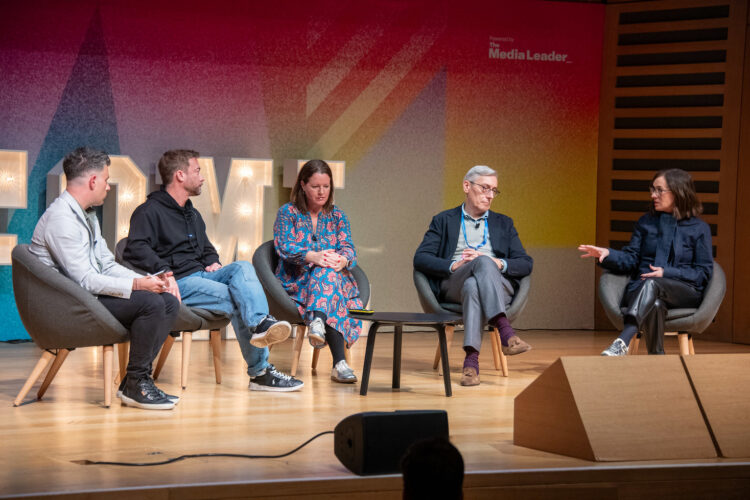
The Future of Media London 2025
The former VP of Global Media from P&G, Gerry D’Angelo, told last week’s The Future of Media London audience that speed is the biggest challenge any global planner faces today.
D’Angelo, speaking during the session What Actually Makes Global Media Planning Work, emphasised that success isn’t just about understanding cultural nuances or differences in mobile adoption across markets; it’s about being able to respond and adapt quickly.
He said: “Everyone talks about moving at the speed of culture, but you need to be much more reactive in the marketplace.”
Alongside panellists Ruth Cartwright (MD UK, Active International), Ross Sergeant (global media director, Allwyn), and Louise Martell (global head of strategy, OpenMind, Mindshare), D’Angelo remarked that he would replace lengthy 60-page PowerPoint presentations with “one really high-level media driver for the business,” tailored to core objectives.
Cartwright agreed, noting the importance of adapting and evolving. She highlighted the value of prioritising a “globally inspired, local-first approach,” suggesting this strategy can accelerate decision-making and yield more effective outcomes.
Responding to a question from moderator Omar Oakes about common myths in global planning, Martell highlighted that one key misconception is treating global planning as a rigid framework. Instead, effective global strategies should focus on establishing clear guidelines and priorities while remaining flexible and inspiring, ultimately reflecting “that is what clients want.”
The nature of the beast
However, D’Angelo cautioned against a one-size-fits-all approach when trying to instil a global approach to your marketing mix, urging a greater understanding of “the nature of the beast” and of each client’s unique characteristics.
He recommended that the most effective approach is to gain a clear understanding of the client’s P&L structure. “That is the central nervous system that runs through any organisation and where the money flows, the decision making flows,” he said.
For instance, he explained that during his time at P&G, the P&L was consolidated within a large global business unit, while at other brands, “it could remain at big country or zone levels.”
Cartwright highlighted that achieving harmony between global strategies and local execution often hinges on understanding unique local dynamics, a challenge heightened by the rapid pace of change within individual markets.
“In the world we live in, there isn’t a lot of stability,” Cartwright said. “Whether it’s political, economic, cultural – all of that changes far quicker than from a global standpoint.”
The importance of local market dynamics
Sergeant expanded on this point, noting that it would be inaccurate to treat the individual countries within the UK identically. He also referenced the United States, where Allwyn’s media strategies differ from state to state, and observed that “The idea of what is global and what is local doesn’t make sense [anymore].”
Despite these complexities, Sergeant expressed confidence in his view that approximately 95% of media professionals concentrate on local media, emphasising the advantage of having deep insight into local market dynamics.
Cartwright concluded the panel by highlighting the strategic value of trading within both global and local media plans. She said that leveraging global commercial and trading frameworks enables teams to capitalise on local opportunities as they arise, delivering greater value and flexibility for advertisers.