



When it comes to advertising, old school has its merits
Opinion
When was the last time you heard someone talk about an online ad? We need to get comfortable not being able to measure everything and focus on powerful creative messaging.
Barely a day goes by without a new algorithm or platform or “the next big thing” we all have to get to grips with. But has that taken us away from the core principles of advertising? Namely, engaging with real people?
Before the turn of the century, advertising was very much about finding that creative idea that would resonate with audiences. The methods of delivering those ads were tried and tested, and results were probably based (a little less scientifically) on whether you heard people talking about it down the pub and how many feet came through the door.
But that was the point: people did talk about them down the pub. Everyone remembers Renault “Papa, Nicole”, McCain “Daddy or Chips?” and Budweiser’s viral “Whassup?” campaign. Talkability was key.
Nowadays, if people do talk about an ad, you can guarantee it’s nearly always a TV ad or a billboard. Do you ever hear people talking about an ad they saw online? Rarely.
Algorithms are leading us awry
Marketing has become ruled by algorithms and numbers. And that has dictated how we advertise — and taken us away from connecting with real audiences.
Measurement is great, but is it always what it seems? Have we forgotten that impressions seldom directly equate to eyeballs? In our bid to always have numbers to justify everything we do, it has led to some businesses buying blindly when it comes to advertising spend.
Ad fraud on digital platforms was estimated to be over $80bn in 2023, according to Juniper Research — a number that is estimated to reach $170bn by 2028 (23% of all spend). What’s the point in celebrating reaching 5m people if 1m of them aren’t even real?
How many of the other 4m noticed your ad as they scrolled anyway and how many got annoyed by accidentally clicking on it as they tried to navigate the page (we’ve all done it)?
These ads aren’t positive things we talk about down the pub — they’re annoyances.
Talking to the same people
The love of an algorithm has also led to over-targeting of narrow audience sets that match your existing customer base or ideal customer.
Very few businesses, particularly consumer-facing ones, have such a niche target customer that they only need to speak to a very specific demographic. Most could and do appeal to a broad brush of society and miss the opportunity to find incidental audiences or new customer types by such a focused approach.
How do you grow your customer base if you’re always speaking to the same people?
That’s the benefit of using a wide range of media in your marketing plan. It allows you to reach new people. But, most importantly, it ensures you reach real people.
News, analysis, comment and community — Join The Media Leader
If you have a billboard, there’s no way customers can skip it. It’s there, larger than life, waiting to be seen, day after day. It doesn’t feel intrusive.
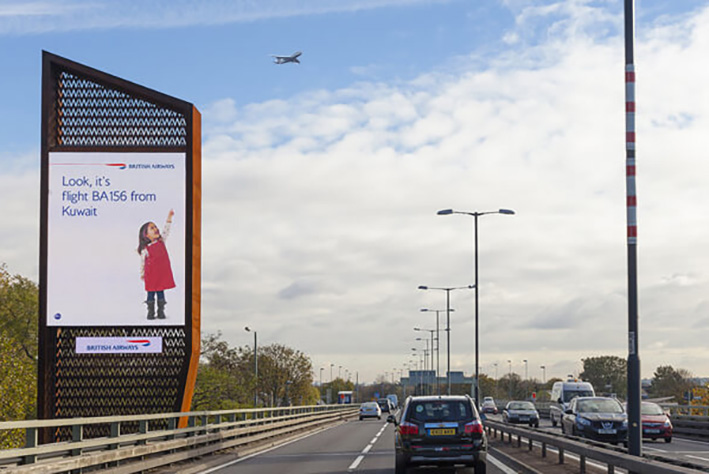
There’s a reason so many of the ad campaigns that have been talked about over recent years have been billboard-based. Take British Airways “Look Up” from last year or Specsavers’s deliberately wonky classic ads.
“But no-one can click straight to the website from a billboard,” data obsessives worry. That’s true. But statistics show that OOH advertising remains one of the most effective channels for audience engagement.
According to the Out of Home Advertising Association of America, OOH advertising drives a 46% increase in online activity. Nielsen reports that 66% of smartphone users have taken action after seeing an OOH ad, such as searching for more information or visiting the advertiser’s website.
And what happened to good old brand awareness? Surely we need to acknowledge that not all genius marketing delivers an instantaneously measurable response.
Confirmation bias
It’s easy to have confirmation bias. But we work in marketing; there’s no denying we consume media in different ways than Joe Public.
For example, the dialogue over recent years has been that linear TV is dead. But is it really, if you look at the data? That general noise around it being a dying industry has consequences — it becomes a self-fulfilling prophecy.
Brands invest in it less, meaning it has less money to create good-quality output, meaning fewer people watch it. But that’s all based on a false premise that right now people aren’t watching terrestrial TV — and that is plainly not true.
In fact, Ofcom data from 2023 reveals that traditional TV still accounted for 60% of video consumption for viewers over 35 and 44% for those aged 16-34. Furthermore, TV ads are reported to have a 20% higher brand recall rate compared with digital video ads, highlighting their enduring relevance.
Going old school
The rise of privacy-aware consumers is also shaping the effectiveness of digital marketing.
Users aren’t going to be as trackable and data is going to be harder to come by. This means, as marketers, we might need to take a step back towards those more traditional skills.
There needs to be a refocus away from numbers and assumptions, and back towards genuinely understanding the merits of different channels and formats.
An algorithm can’t do it all and we can’t get complacent. We need to get more comfortable not being able to measure everything and instead focus on how powerful creative messaging, coupled with broadcast reach, can grow brands and categories. That way, the real audiences will follow.
 Joel Turner is managing director at 75Media