



Who will fight to save advertising from extinction?
Opinion
To ensure the survival of our sector, stop funding actors whose actions are as corrosive to society as to professional advertising, says Bob Wootton.
Nick Manning’s superb if rather terrifying roundup of where we’ve got to needs no qualification. Succinctly, comprehensively, and clearly, he sets out a scene which pretty much everybody has had some hand in authoring.
It’s a world in which more and more advertising money is pouring into platforms that show scant interest in it or in the society in which it operates, beyond profit.
The UK’s professional media sectors face parallel and often connected existential threats: BBC Charter renewal, ownership, consolidation, and sustainability.
However, it needs a counterpoint.
Nick’s piece tells me that neither the moderation nor the optimism for which our country and industry are known has frankly served us well.
He absolutely rightly avers that the future is in the hands – and wallets – of advertisers.
I’ve spoken to many who, like me, attended the excellent and significant Advertising – Who Cares? event in October.
All were stimulated and energised by it, but were variously depressed by some comments in the concluding session, which confirmed an alarming sense of advertiser detachment from the industry and the catastrophe it now faces.
No conscience whatsoever, super worrying. Whether they intend or even realise it, advertisers have in effect become the platforms’ bitches.
The key to survival
The trade bodies crucial to turning things round are at best conflicted, as each is beholden to the platforms, whether their coin props up membership revenue or dominates funding for key workstreams (e.g., Origin, itself still nascent and contentious).
Our industry press also plays a key role, and, to its credit, it’s not doing a bad job.
But the way things are heading, there will be no need for trade bodies, JICs, Origin, or effectiveness culture (probably the ASA too, though some might foolishly welcome that).
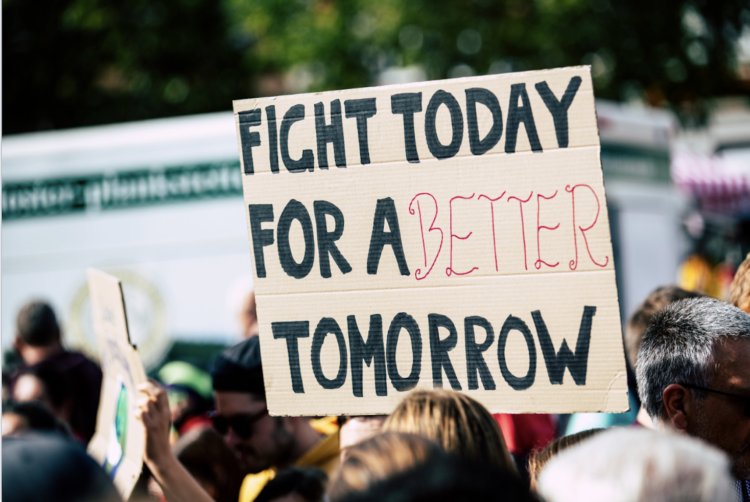
Survival will necessitate much more immoderate behaviours and vigorous actions. We often bandy the phrase “the gloves are off” around. Not enough. It’s time to don armour and pick up cudgels.
Whether Madison Avenue or, as Nick says correctly, Wall Street, it’s time to stop funding actors whose actions are as corrosive to society as to professional advertising.
Reasoned argument alone isn’t working. Activism, especially and most likely from the still robust independent and professional media sectors, is needed.
Expect little from the holdcos; they are now different businesses in their own race to the bottom.
Advertising is an important industry. Governments of all stripes begrudgingly know this, as they are consistently among the biggest advertisers, and their ad contracts are fiercely contested.
Without it, the platforms would barely exist, let alone be the modern-day equivalent of the Pharaohs.
The UK has long created some of the best and best-loved advertising ever seen. Our historical effectiveness culture, led by the IPA, has led the world.
Yeah, yeah, it’s easy to cast this as another rant about how things aren’t what they used to be. But Nick reminds us objectively that things have gone way beyond that.
For current vectors, professional advertising could be all but gone in a couple of Christmases, along with the jobs. The current Omnicom cull is just another step on this forced march.
I don’t have, need, or could perform a proper full-time role anymore. Most of you reading this do. There are only so many supermarket shelves to stack, and DIY sheds to staff, and those won’t cover your mortgages on charming period homes in the Southeast.
So my challenge to our industry, its trade bodies, regulators, and the Government itself is as simple as it is big. “PROVE ME WRONG”. I’ll do anything I still can to help you.
For starters, everybody (except the platforms) should join, support and actively participate in the Advertising – Who Cares? movement. Yes, advertisers too.
The eventual future is indeed automated, agentic. Machines talking to machines. In that world, decision-making will be entirely rational, and there will be no need for persuasion, salesmanship or advertising.
That world might even come to pass sooner than we might hope. But not yet. In the meantime, there’s something worth protecting enough to fight a lot harder for yet.
For the avoidance of doubt (and mindful of Mark Palmer’s great piece here), I’m talking about protecting effective, professional advertising itself, not feathering the beds of any particular parties.
I wish you a peaceful and safe Christmas, especially if you’re among the displaced and wondering what your next job will be and where it will be.
 Bob Wootton spent 40 years working in advertising, first as a media buyer at some of the UK’s leading agencies before joining the trade body ISBA in 1996, where he was advertising and media director for 20 years. He is also the founder of Deconstruction, a media and tech consulting business.