



Why now is the time for brands to be investing in women’s sport
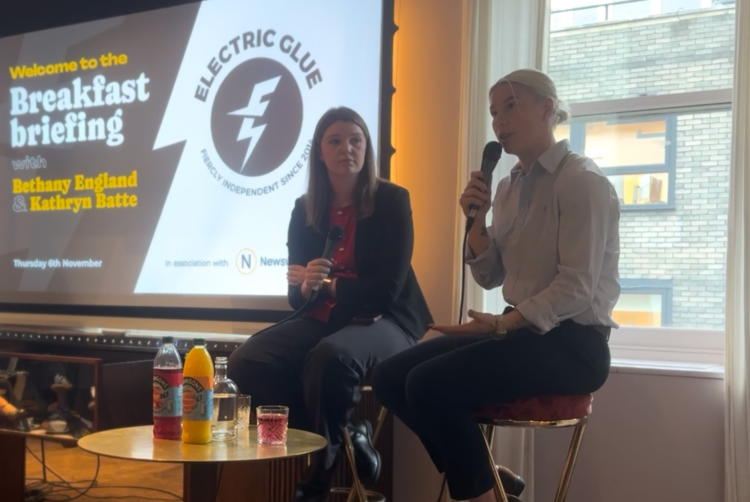
Women’s sport, especially women’s football is increasingly growing and the main message from Electric Glue’s breakfast briefing to brands and advertisers was — now is the time to get involved.
The event, held on 6 November at the Groucho Club in Soho, in partnership with Newsworks and The Telegraph, highlighted the significant opportunities for brands to connect with audiences through women’s football and the importance of long-term investment in progressing the sport.
In 2024, women’s football was the most valuable women’s sport in the world, generating over €500m and making up 45% of total revenue of women’s sport worldwide.
Chief executive of Electric Glue, Pippa Glucklich, said: “It’s a real movement.
“Women’s teams are experiencing an influx of investment and interest from lots of different types of brands who want to capitalise on the unique and expanding audiences that we see in the game.”
During the briefing, it was highlighted how women were banned from competitive football in England until the 1970s and the consequential impact this has had on the growth of the game in comparison to the men’s.
Almost three quarters (70%) of women’s football fans believe sponsors help boost the visibility of the sport.
Brands and advertisers are in a position to be able to invest, which also carries the advantage of raising visibility and being central to cultural moments.
How Bundesliga is ‘expanding the field of play’ through distribution of sports rights to creators
The role of brands
Commercial revenue was cited as the biggest proportion of revenue growth for clubs and leagues in women’s football, with industries investing so far including food, drink, financial services, retail and sport.
Glucklich said: “We think brands can play a much greater strategic role in the momentum and harness the magic of the game and incredible role models, particularly female role models that we see.”
It was further outlined the role of agencies in encouraging and helping their clients to understand the investment opportunities in women’s sports.
What’s in it for brands?
Speaking at the briefing, Bethany England, professional footballer and captain of Women’s Super League club Tottenham Hotspur exemplified the returns new sponsor, e.l.f. Beauty, has seen.
“They’re seeing a return on their investment by seeing the visibility of their brand in every game we do,” said England.
The Lioness also underlined the strategic move e.l.f. made in sponsoring Tottenham’s Carabao Cup shirts, which means the brand gets visibility across both the men’s and the women’s games.
England reflected: “A brand like e.l.f. which I wouldn’t say is one of the biggest makeup brands, but is definitely growing, has found a way into the market and not only helped the women’s side but also shown the women’s side in the men’s game as well.
“That visibility is hugely important and has a continuous knock-on effect not just for the brand but it works well for both sides.”
However, despite enthusiasm, the nature of delayed returns in investing in women’s football, compared to men’s may impact decisions to invest.
England stated how “women’s football tends to work in a deficit” and continued commercial opportunities and two-way cohesive agreements is what will drive growth and ensure this return on investment for brands.
Being a big fish
Notably, for smaller brands there is greater opportunity and less barrier to entry in women’s football than there is in the mens.
The partnership between Chelsea Football Club and period brand Here We Flow was given as an example of a smaller brand capitalising on this space.
It was argued that branding within the women’s football would be picked up on at a higher rate than in the mens — which is oversaturated and can sometimes get lost.
England said: “It’s almost like you’re a little fish in such a big pond, you’re likely to be a bigger fish on the women’s side.”