



Why understanding a small blue dot could help us improve wellbeing and productivity
Opinion
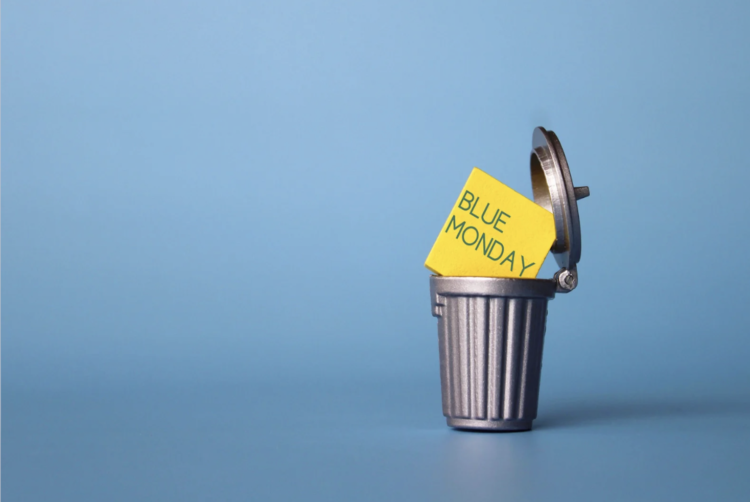
Understanding evidence on how the brain functions can help leaders design roles, schedules, and workspaces that consign Blue Monday to the bin.
It’s easy to throw a load of pseudo-science down when opening an article aligned to Blue Monday, but you probably don’t need another wall of numbers to know how you or those around you feel on a grey January day.
So-called Blue Monday may well be a media construct – for a travel campaign – but as we all know in the marketing world, the more you say something, the more it becomes ‘real’. Despite the fact that the science wasn’t peer reviewed, Blue Monday has taken on a life of its own over the past 20 years.
You might argue this is unhelpful for people for whom the start of the year is already an anxious time, but it’s also good to have a reason to talk about mental health at this time.
Mental health affects everyone, though in different ways and at different periods in their lives, and certainly not just for one day of the year. Some people are hit harder, some cope better, and most of us build our own ways of dealing with its challenges. We try what works, we learn when to change tack, and we often share what we know with others.
I draw on and share lots of strategies myself, many of which might be described as being ‘of the heart’ – which would be in-keeping with the first part of my agency’s name – Hearts & Science.
But what about the second part? How might we use science to understand our brains better and help us at work, not just to better regulate feelings like stress, but to get the most out of ourselves?
A small, blue dot…
There is a lot we could delve into here, but let’s focus on one tiny cluster of cells – only around 30,000 neurons in total – that each of us possesses. The locus coeruleus, which looks like a small blue dot, is found in the upper brainstem and is the brain’s main source of norepinephrine. This chemical acts like a wake-up call, sharpening attention, supporting memory and helping us respond to stress.
New research, outlined in this excellent article in New Scientist and explored in detail by neuroscience researcher and writer Mithu Storoni, shows the locus coeruleus works like a mental ‘gearbox’, shifting us between modes of focus and relaxation.
The right balance allows us to stay alert without tipping into stress and can set the brain’s pace to suit different cognitive engagements. When the locus coeruleus is in the right ‘gear’, tasks feel pleasant and manageable.
Going through the gears
In broad terms that even non-neuroscientists can understand, there are four ‘gears’: gear zero represents deep sleep, when the brain consolidates memories. Gear one is a low-arousal waking state prone to mind-wandering. Gear two is the sweet spot of focused engagement and flexible thinking, and the place we want to be for difficult cognitive tasks. Meanwhile, gear three is high alert, a state of intense stress or fight-or-flight, and the state people with anxiety or PTSD easily lock into.
Interestingly, people with ADHD tend to move too quickly between gears, making it difficult to focus on one task.
Knowing these gears exist and that the brain moves between them throughout the day underscores how finely tuned attention really is and why balance matters.
Understanding these gears certainly challenges the idea that every waking minute must be optimised for productivity. Indeed, constant pressure can choke creative thought and cloud mental clarity by forcing us to do tasks when our brain is, quite literally, in the wrong gear.
Bringing this science, even at its most basic level, into the workplace can reshape how we think about employee engagement and mental wellbeing, and hopefully lead us to produce more creative work in the process – afterall, research shows it may be possible to train the locus coeruleus to improve cognition.
Shift gears to sustain energy
The first step is to help people move between mental gears with ease. The brain is not built for unbroken focus, but our working lives sometimes force things otherwise.
Light exercise, breathing routines or even a short walk can help people transition between tasks and recover from intense effort.
Managers have a duty here to set the tone by allowing these moments and building them into daily routines. Far from lost time, they help keep the mind in its most productive gear.
Work with natural attention cycles
The brain’s capacity to focus is not constant. Creativity often peaks early in the day, while detailed analytical work may be easier mid-morning or in the late afternoon after the common post-lunch dip.
By aligning tasks with these natural rhythms, managers can help teams use their sharpest hours for their most demanding work and save meetings or lighter duties for periods of lower alertness.
We should also pay closer attention to what counts as a true mental break.
Are you stepping away from a difficult task yet still stimulating your brain’s reward system by scrolling through social media? That kind of constant novelty can keep the mind in a state of alertness and make recovery harder. A short walk, ideally without a phone, is more effective because light movement and a change of environment help the brain reset and restore focus.
Use structured variety
Monotony can push the brain down into a daydreaming state, while too much intensity can lead to fatigue. Alternating between deep work and simpler tasks helps maintain mental freshness.
Regular, planned breaks act as resets, allowing the locus coeruleus to stay in its optimal range rather than slipping into overdrive or underuse.
Create space for flow
People do their best work when they are immersed in a task that is challenging but not overwhelming.
This flow state, linked to the sweet spot of the brain’s mental gearbox, is easier to reach when interruptions are minimised, and autonomy is respected. Protecting quiet time, avoiding unnecessary meetings, and trusting teams to manage their own focus are therefore essential to productivity.
Build self-awareness
Finally, encourage colleagues to notice when they are under- or over-stimulated. Simple reflection, such as noting energy levels at different times of day, can guide when to tackle complex work or step back for recovery.
Over time, this self-knowledge becomes a tool for sustaining performance and avoiding stress.
Every brain is different
Attention spans, creative peaks and stress thresholds vary not only between individuals but across life stages and generations.
Neurodiverse colleagues may have very different patterns of stimulation and focus. Cultural background and personal experience also shape how people respond to pressure and change.
By weaving these habits into everyday work, organisations can create environments where mental well-being and productivity support each other.
The science of the little blue dot inside our brains shows that high performance is not about relentless effort; it comes from respecting the natural rhythms of the mind and helping people stay in the gear that lets them think clearly, create freely and recover fully.
Understanding the evidence about how the brain functions can also help leaders design roles, schedules and workspaces that respect these differences rather than trying to iron them out.
Indeed, a culture that recognises diversity in working patterns, supports flexibility and values individual needs is more likely to unlock the best in everyone.
So, if we can take anything positive from Blue Monday, let’s use it as a catalyst to review our working habits and reset daily patterns to get the most out of ourselves and our colleagues.
And that actually is science.
 Amy Matthews is Hearts & Science’s chief experience officer