



Will HFSS regulations mean a new era for Christmas advertising?
Opinion
HFSS restrictions may be voluntary this Christmas, but it’s a perfect time to lean into creative approaches that will be the perfect gift for next year, says Teads’ David Spinner.
In an HFSS regulations era, many food brands are rethinking their advertising and this Christmas – a time when more is usually more, and diets can wait until the New Year – we’re already seeing a shift.
While the UK Government’s long-awaited regulations on advertising high-fat, sugar and salt (HFSS) foods are still voluntary, they will be legally enforced by 5 January 2026.
But this doesn’t have to mean a shrinkflation crisis for festive advertising. Yes, brands will be restricted on how they show certain foods, but this needn’t be a setback. Indeed, savvy marketers are taking the opportunity to lean into fresh creative approaches and will treat HFSS rules as a craft brief for their Christmas ads, not a constraint.
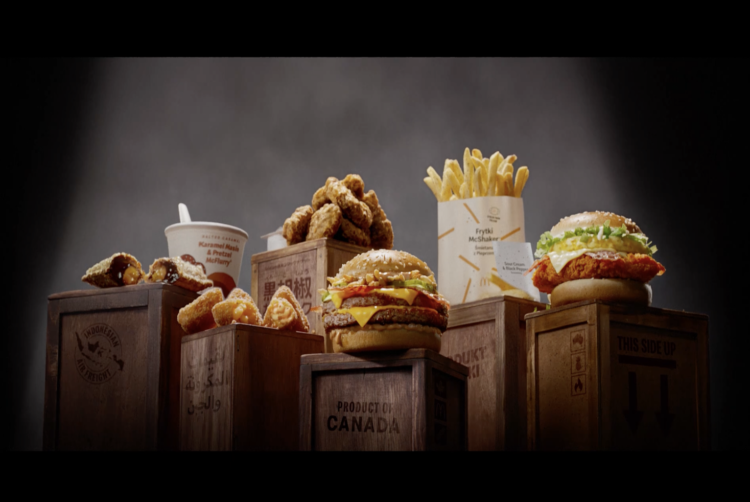
For example, McDonald’s latest limited menu includes four items which are considered less healthy food and drink products (LHF), so the brand has focused on storytelling in its advertising, dramatising the idea of a heist in the style of an action film.
Finding the guardrails
So, how should brands navigate this new HFSS world?
The first step will be to add an extra element to the festive planning stage. Brands should first map their portfolio in a living SKU matrix, with each product having its own HFSS status against role, penetration driver, trade-up, seasonal hero, etc. This will be key no matter what time of year, as brands will then be able to clarify which products can be advertised freely and which fall under new constraints.
A two-track system makes this process easier.
The first is brand-led – or compliant anytime – meaning it can involve storytelling around a masterbrand or range without showing a restricted product. Instead, the focus can be on the occasion itself – Christmas – and the storytelling around this.
The second track is product-led – or conditional – for specific HFSS items, planned around permissible windows, such as TV or BVOD post-watershed.
Focus on how to tell the story
We can expect to see fewer overt product pushes before the watershed this festive season and beyond, with more brand storytelling and evening-weighted plans – think ‘brand by day and product by night’.
Quality editorial moments around food, holiday planning, gifting and entertainment will combine relevance with brand safety, helping brand-only assets carry equity during the day and product variants land at night.
Pre-9 pm, premium context will matter more. Brands should be creative with their advertising. In fact, creative strategy has never been more crucial than in a post-HFSS world.
Like a family game of Taboo where you have to describe something without saying its actual name, there are many creative ways brands can advertise restricted products without actually showing them on screen.
Then, post-watershed, it’s time to bring out the Christmas snacks and focus on HFSS product-led advertising, building on the work done through storytelling during the day and championing key assets to generate the maximum possible impact in a short timeframe.
How to measure for success
The proof is in the (Christmas) pudding; success can only be determined if results are measured, but what success looks like needs to be determined up front.
In terms of key goals, brands should focus on deduplicated reach, incremental reach points, attention/quality exposure, and brand lift. These goals should also be connected to retail outcomes or MMM inputs where possible.
Measurement of cross-media outputs will show the value each channel truly adds, particularly CTV and premium open-web, alongside walled gardens. And to validate the mix of brand vs product-led executions, A/B testing or geo designs should be used.
When something works, it should become woven into a brand’s fabric for future success. Finally, governance matters, so brands should maintain a compliance log of creative sign-offs, channel and timing approvals, and screenshots of live placements, making approval processes frictionless for the legal and agency partners navigating HFSS regulations.
HFSS restrictions may be voluntary this Christmas, but it’ll be important for brands to take note and see who’s already risen to the challenge ahead of next year’s festive season.
Those who have seen regulations as part of a creative brief rather than a hindrance will be the brands that avoid being a (Christmas) turkey.
 David Spinner is industry director of CPG at Teads.