



No-one knows whether YouTube is TV or social — not even YouTube
Opinion
TV has earned trust because its numbers are verified, scrutinised and benchmarked. Social media? Not so much. Google needs to decide where YouTube stands.
YouTube turned 20 this year, making it older than TikTok, The Apprentice and even Love Island. And, still, this industry can’t agree on what it actually is.
Is it TV? Or social media? A streaming platform? A cultural megaphone? I’ve been interviewing people for an upcoming report on connected TV and it’s amazing how you still get different answers to this depending on who you speak to.
You know who else doesn’t know? YouTube.
Because while YouTube has spent this year trying to convince advertisers that it’s the future of TV, it’s been acting like something else entirely: a social media company dressed up in a TV costume.
The measurement mirage
Let’s talk about measurement. Because you can’t claim to be TV if you keep behaving like Facebook.
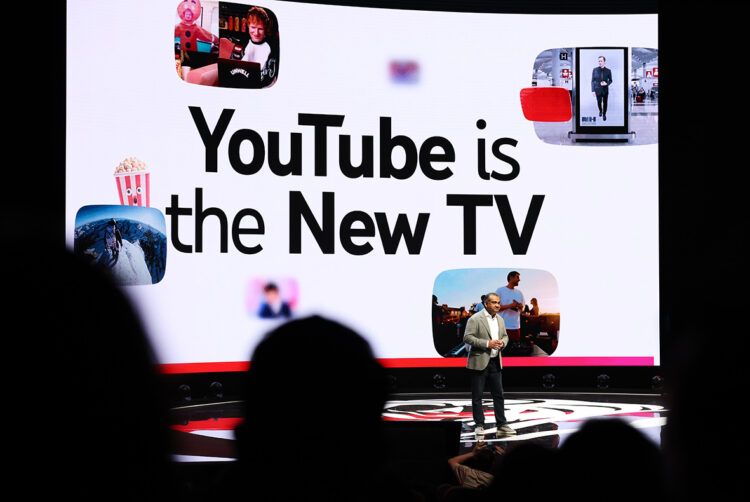
In June, YouTube CEO Neal Mohan stood on stage at Cannes Lions and declared that YouTube was “the epicentre of culture” and the future of TV. Meanwhile, back in the UK, Google had already made a very different decision.
As The Media Leader revealed last week, YouTube had decided to exit Barb, the UK TV industry’s gold-standard measurement system. Google had only rejoined Barb last year in what looked like a good-faith effort to be taken seriously alongside streaming giants like Netflix, Disney+ and Amazon Prime Video.
But the decision to rejoin didn’t even last a year. My understanding is that Google decided as early as March that it would pull out.
So we know that, despite claiming YouTube is “the future of TV”, what YouTube says in private is: “We don’t want to be measured like TV.”
Which is a shame, because — I have to declare an interest here — I love YouTube. I watch YouTube videos all the time. I even have a phone holder above my bathroom sink so I can watch videos while I brush my teeth. And I don’t just watch broadcaster cut-downs. I mostly watch independent content creators putting out amazing videos about news, culture, sport, comedy — you name it.
So we know YouTube is big. Genuinely, culturally, commercially big. So why won’t it just co-operate with third-party measurement?
Could it be because… first, it doesn’t want to tie itself down to a standard it’ll be held to forever? Second, it has a reach problem: view numbers may be big but they’re nowhere near as broad as TV?
Who wears short shorts?
That first point helps explain something odd that happened early this year with its TikTok-style Shorts format.
In March, YouTube quietly changed how Shorts views are counted. Previously, a “view” only counted after a video was watched for a “certain number of seconds”. (You’ll struggle to find exactly how many seconds anywhere official.)
Now, a view counts the moment a Short displays on screen — even if the user scrolls past without watching.
It’s a weird definition, but it’s now in line with how TikTok counts views. So, yes, it’s still nonsense, but at least it’s comparable nonsense. That’s at least something.
Are all ‘views’ created equal? With TikTok, DCM, Total Media and Mindlab
But at the same Cannes speech, Mohan claimed that YouTube Shorts are now averaging over 200bn daily views.
That number’s been widely reported. What hasn’t been reported is how ludicrous it is.
There are about 8bn people in the world. That would mean each person is watching 25 Shorts per day. Every day.
That’s not viewership. That’s exposure. That’s claiming credit for something the audience may not even have noticed.
What’s next? Netflix claiming I’ve watched Love is Blind 30 times because it shows up in my carousel and I’m too slow with the remote? The Daily Mail claiming I’m a loyal reader because its homepage flashed up on BBC News? Ocean Outdoor saying I spent 30 minutes staring at the Piccadilly Lights because I was technically within 50 metres — even if I was whizzing past down below on the Underground?
This is why independent third-party measurement matters. Not just to prevent fraud, but to maintain trust.
The second point was laid bare at a conference in March. Thinkbox’s Anthony Jones said the quiet part out loud: YouTube’s reach is skewed by heavy users like me, who can’t even brush their teeth without a bit of video distraction, and the very long tail of light users who only ever log on to search “how to sew a button on my jacket”.
This matters because YouTube continues to feed the industry questionable performance claims and our industry lets it: the trade press, agencies and the marketers whose budgets (be they TV or social) pay for all of this.
TV has earned trust because its numbers are verified, scrutinised and benchmarked. That’s why it’s been a successful commercial medium for decades. Netflix gets it. Disney gets it. Amazon gets it.
Why doesn’t Google?
Big numbers, no benchmark
The most dangerous numbers in advertising aren’t the ones that are wrong. They’re the ones you can’t verify.
Because when platforms get to self-certify, they inflate. We’ve seen this story before.
Remember when Facebook told advertisers it could reach more people than actually exist in certain countries? That was 2017. Or when X (formerly Twitter) claimed 500m users, but wouldn’t define what “active” meant?
When there’s no third-party measurement, there’s no benchmark. And without a benchmark, there’s no way to sense-check what’s real.
If ITV claimed Coronation Street had 40m viewers a night, you’d raise an eyebrow. You’d compare it with EastEnders or Channel 4 News or Barb’s overnight ratings.
But when YouTube drops a 200bn figure with no methodology? Most people just copy and paste it.
This isn’t harmless. It’s corrosive.
It erodes trust in campaign reporting. It feeds the illusion of performance. It pressures marketers into chasing fake scale instead of real results.
And, worst of all, it wastes money.
News, analysis, comment and community — Join The Media Leader
Real progress means real accountability
There’s no point investing millions into advertiser-led initiatives like Isba’s Origin if the world’s biggest video platform won’t even commit to the same measurement standards.
There’s no point debating “attention” or “engagement” if platforms can redefine what a view means whenever they like.
There’s no point in pretending YouTube is “part of the TV plan” if it keeps behaving like social media.
Marketers, agencies, trade bodies — we all need to stop indulging the costume.
TV is more than just a screen size; it’s a system. It comes with creative risks, regulatory obligations and shared cultural standards. If YouTube wants the spend, it needs to accept the scrutiny.
Because if we keep letting platforms grade their own homework, we’ll keep getting inflated stats, eroded trust and fake benchmarks.
And one day soon, a chief marketing officer will walk into a boardroom and ask: “Why are we still spending all this money on numbers we can’t prove?”
We’d better have an answer that isn’t “because they said so”.
 Omar Oakes was founding editor of The Media Leader and continues to write a column as a freelance journalist and communications consultant for advertising and media companies. He has reported on advertising and media for 10 years and was previously media and tech editor of Campaign. His column on The Media Leader was nominated for the BSME’s B2B Column of the Year in 2024.