



Journalism and creator economy ‘converge’ at The Independent
The Media Leader Interview
The Independent is leaning in to “talent-led media”. Al Brown, head of content at its new studio arm, discusses the merging of interests between publishing brands and personal brands.
News publishers aren’t just looking to emulate the success of the creator economy — they’re converging with it.
That is according to Al Brown, head of content at The Independent’s new development, production and distribution Studio, which launched in April as a “talent-led” enterprise aiming to expand the publisher’s audience on audio and video platforms.
To do so, the publisher is not just elevating its journalists into multimedia roles, but partnering creators on new intellectual property.
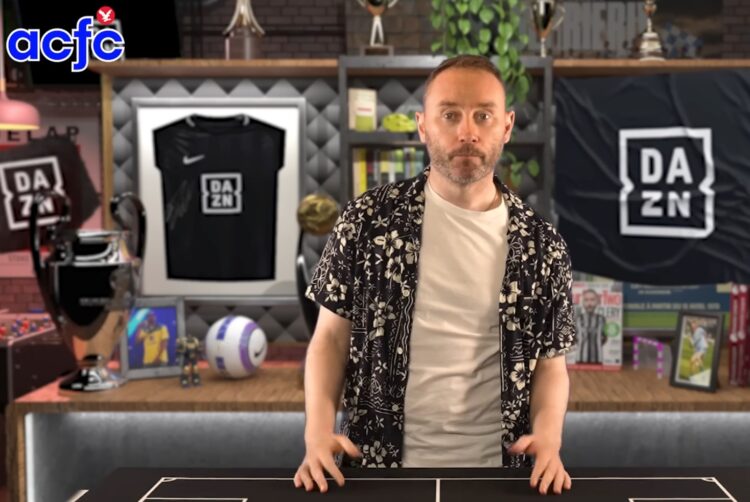
While The Independent has long produced video (in long, short and documentary formats) and podcasts, the studio offering was launched to align with the debut of The Adam Clery Football Channel (ACFC) on YouTube. It follows other publishers, like Reach, similarly building new studio models to explore alternative revenue streams and audience acquisition strategies.
The new development reflects The Independent’s approach to multimedia “towards brand-building and show-building”, Brown explains: “Audience habits have changed; that meant we’ve had to change up our approach to bring our stories to people.”
Since its launch, ACFC has already accrued 138,000 subscribers with strong engagement numbers. According to The Independent, 75% of viewers watch beyond the 30-second mark, with the average view duration of ACFC videos standing at seven minutes and 25 seconds.
“The pace of growth for that channel has outstripped every other Independent channel we’ve ever launched,” Brown says.
The success of ACFC has “crystallised” Independent Studio’s strategy: work with established creators to launch multimedia brands that fit within core coverage areas at The Independent.
“We want to start creating new brands built around our key verticals — current affairs, entertainment, culture, travel, health and wellness, etc — that are focused around personality,” he explains.
Apart from ACFC, Independent Studio has also produced two new podcasts: Well Enough, a forthcoming health and wellness show fronted by journalist Emilie Lavinia, and Like This, Love This, a culture show hosted by journalist Lucie McInerney that launched last month.
Brown tells The Media Leader that another series is currently in development on the topic of personal finance and Independent Studio has “a creator in mind” to lead it.
Independent Studio’s current headcount is 18 and, according to Brown, there is an expectation of continued investment from the news title, with the goal of building each brand it develops as its own “diversified and sustainable business”.
Good Housekeeping MD: ‘The language of the internet is video’
Editorial alignment
The Independent is not alone in leaning in to personality-led output. Recently, The New York Times made controversial changes to its Culture section with the aim of bringing in new talent to produce more video-first content. More generally, publishers are pushing journalists to develop their personal brands in order to better compete for attention with creators on social platforms.
“Because of the growth of the platforms — especially video-led platforms — and the audience behaviour on those platforms, journalists have had to act more like creators,” says Brown, who joined The Independent last year after a stint at Future and, before that, a decade at Vice Media.
There is an appeal for some creators looking to work with more traditional brands too.
 “There’s an element of convergence,” Brown (pictured, left) explains. “Solo creators love the freedom that they have and they love the direct connection they have with their audience and with revenue.
“But at the same time, it’s really hard and it’s always on and you’re doing it with no support. There’s a lot of burnout in creatorland. They can’t all be MrBeast, right? It’s hard.
“Creators are starting the see the benefit of working in a team and having the support of a company like us, that can aid with distribution, monetisation, commercial contracts and run a development and production team.”
For Brown, when considering which creators to partner it’s important that they align with The Independent’s brand. Clery, for instance, was someone he’d worked with previously and who is “at his heart an educator”.
“It’s not just to go in and pick superstar creators or people that are getting less views than they could and trying to accelerate that,” says Brown. “It’s about alignment in terms of voices that we feel like work for us.”
Sometimes that means using existing talent. Chief football writer Miguel Delaney, for example, has already collaborated with Clery on podcasts.
But creators can “show the art of the possible”, according to Brown, by helping lead on editorial strategy suited for different AV formats.
Developing ‘mini media companies’
While Independent Studio’s content is “editorially led”, the early strategy has been to create for “key commercial verticals” like wellness and travel. Brown admits that current affairs and documentary productions, while still vital to the studio’s output, can be “hard” to monetise, given perceived concerns over brand adjacency.
Commercial opportunities will look different depending on the programme. Generally, The Independent will look to sell sponsorship. Dazn, for example, became the first major partner for ACFC by supporting Clery’s Club World Cup coverage this summer. Accordingly, the show is already profitable.
The opportunity for brands, Brown suggests, is they get the benefit of working with popular creators with strong community-based audiences, with the relative ease of dealing with an established publisher’s sales team.
“We also have the ability to sell the network,” he notes. “We have the power of The Independent and all its reach, combined with the retention and engagement of these talent-led products that we’re creating. That’s the ideal secret sauce — that isn’t particularly secret and isn’t just our sauce.”
Substack is warming to advertising. Will brands warm to Substack?
While The Independent’s core focus is thus on leveraging direct advertising opportunities, Brown also says he wouldn’t downplay revenue through platforms like YouTube.
“All these brands need to function as their own diversified revenue businesses; that advertiser revenue that we receive on YouTube or from pre-roll ads on our site against those videos is a really important part of the mix,” he continues “And then it’s about layering on those specific sponsored content-like opportunities on top of that.”
The eventual goal is to create brands that “can behave as the biggest consumer brands”, with opportunities in merchandising, membership and live events. “Mini media companies”, in other words.
Navigating the publisher-creator relationship
By embracing the creator economy, publishers open themselves up to new rewards in the form of audience acquisition and new revenue streams — but also fresh risks.
Prominent creators could demand unique revenue-sharing agreements distinct from the standard salaries earned by journalists; equally, journalists elevated into multimedia roles could ask for a greater stake in the brand they’re creating.
It’s also plausible that creators could eventually exit the partnership, taking their loyal audience with them.
“When do people become creators or talent?” is the rhetorical question Brown asks — one that doesn’t yet have a clear answer.
He compares the relationship to “like running a football club”, with agreeing to partnerships with creators akin to “signing a player”.
Clery, for example, brought “a really large, loyal audience with him” and that required a distinct payment agreement compared with, say, a lesser-known creator.
Accordingly, Independent Studio decides remuneration for a given creator on a case-by-case basis. However, Brown says it is “very clear that revenue-share models need to be explored in a way which makes creators and journalists feel valued and that they have a stake in the ownership of these brands”.
He adds: “We have a guided principle, which is that we want to create elements of shared ownership around some of these shows. But it’s not a hard-and-fast approach. All the projects feel different depending on where that person’s at, what they’re bringing to it, how much heavy lifting we’re doing versus them.”
Brown acknowledges that the relationship is a two-way street: creators need to feel like The Independent is a brand that offers them significant long-term value, be it for commercial, marketing or production support, or wider brand considerations.
“It’s really important that we think about what The Independent means in this space,” he says. “What can we bring to it? What’s useful about partnering with us? I think how we extend The Independent’s reach across all kinds of social platforms and video-led platforms is a big part of our focus.”
Comparing the current effort to “pilot season” at TV broadcasters, Independent Studio wants to be opportunistic in finding the right creator partners that help shape strategy for new sub-brands. But not all attempts are going to develop large, long-term audiences.
“At some point, it will be about consolidation,” Brown admits.
“[But] we’ve got to try stuff. We’ve got to get stuff out there… And then you have to know the point where you’re going to really double down on the things that are showing real momentum.”