



The7stars turns 20: ‘We’ve tried to create a business that we’re all really proud of’
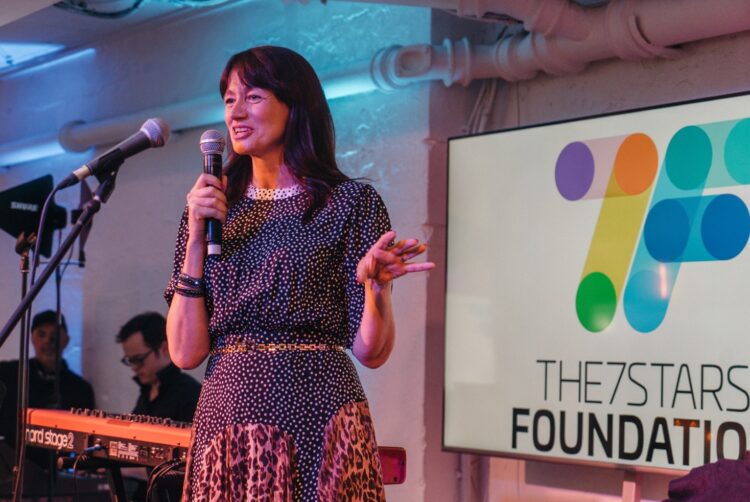
The Media Leader Interview
Owner Jenny Biggam reflects on how the agency grew from a small, offline-only outfit to the UK’s largest indie over two disruptive decades.
On 1 September 2005, Jenny Biggam was sitting on an Italian beach enjoying a holiday when her phone started blowing up with congratulatory calls from friends and colleagues.
“What for? What have I done? I’m on holiday,” she recalls.
Unbeknown to her, the7stars had launched slightly ahead of schedule. While the founders had agreed the independent agency — now the UK’s largest — was set to open for business in September, the exact date had not necessarily been settled on.
“A friend of mine was going to build a website, which probably looked terrible,” Biggam tells The Media Leader. “He had the idea of doing a countdown clock on the URL that we’d bought and lots of people got wind of the name and the fact we were launching. There was a big accidental trade press announcement on 1 September.”
Twenty years later and she is still running the shop. What began as a venture from Biggam and her former Carat colleagues Mark Jarvis and Colin Mills has turned into a major agency brand that regularly rivals holding group networks for business.
How would she summarise the past two decades in one word? “Fun.”
“It’s been fun. We’ve consciously tried to create a business that we’re all really proud of; a business that really cares about our clients, that cares about people, that develops new products, that keeps pace with technology,” Biggam continues. “We’ve tried to keep culture at the heart of what we do. We’ve tried to have a bit of fun along the way.”
Early days
The7stars was named after the Grade II-listed pub on Carey Street in Holborn, near Lincoln’s Inn Fields. The pub, dated to 1602 and one of just a handful of buildings that survived the Great Fire of London, was also the breeding ground for the agency, with Biggam and her fellow founders meeting there regularly when deciding whether or not to launch an indie.
“We couldn’t think of a better name,” she jokes, attributing the idea to partner Gareth Jones. While Biggam has no regrets about the name, the pub landlady is probably “less happy” about it. “She keeps getting our Amazon deliveries,” Biggam laughs.
For her, the7stars had a clear raison d’être: “At the time, we thought there was a gap in the market for an agency to be focused on both UK advertisers and advertisers who select their agencies on a market-by-market basis.
“The direction of travel at the time for the networks was very much focusing on the big global clients and a lot of advertisers weren’t getting the best end of agency deals, whether that was the best service or pricing or access to the best talent.
“We just thought there was an opportunity to do things differently. We wanted to be an agency that was set on really sound ethical business practices. We’ve always stood for transparency, for doing the right thing for advertisers, for working in a really client-centric way.”
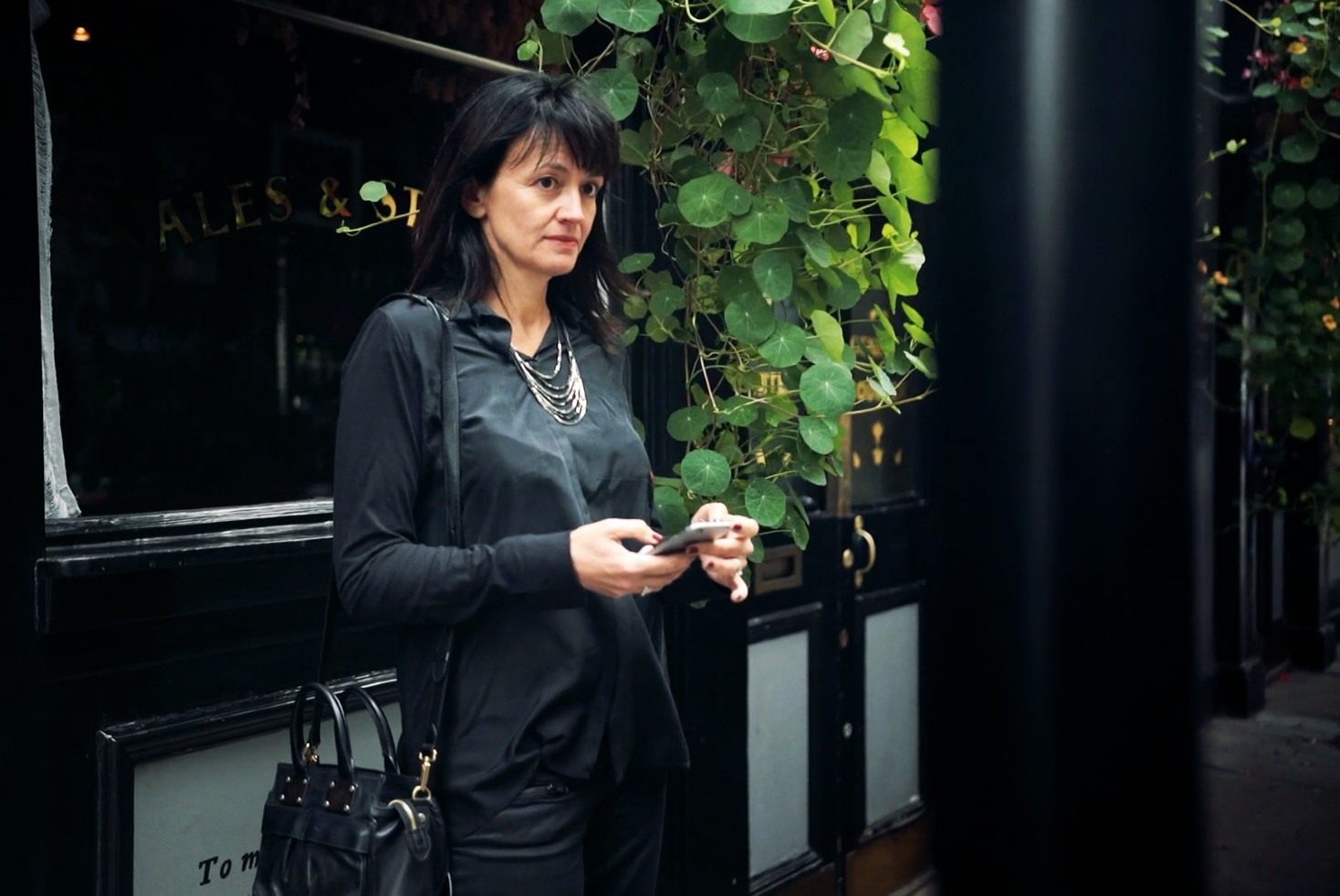
Biggam outside The Seven Stars pub
Recalling the early days of the agency, Biggam says she often received comments to the effect of “Oh, you’re really brave”. But, to her, the real risks came later, once the7stars began scaling. Headcount growth suddenly meant senior leadership were not just responsible for their own wellbeing, but for other people’s mortgages and livelihoods too.
Fostering a close-knit and supportive company culture is at the core of what sets the7stars apart from its larger rivals, Biggam argues. While the7stars now counts 300 employees, they are still offered unlimited holiday — the same policy it had when it was founded.
It is part of a wider philosophy of granting autonomy, promoting mutual respect at all levels and encouraging people to develop their careers within the agency as they see fit.
Navigating change
At the start of 2026, the7stars will be moving into a new office on Long Acre in Covent Garden. All staff will be on one floor — something that Biggam hopes will lead to more integrated client service and more cohesive cross-team collaboration.
She’s not being kept awake at night by the rapid pace of change in media or how the7stars will handle AI transformation. For Biggam, the only thing that she worries about is “if I thought we weren’t being true to those principles of being a great place to work, moving at pace and really caring for our clients”.
So perhaps it’s no surprise that current market uncertainties don’t daunt her, given she was able to successfully steer the agency through the past 20 years of disruption.
“The landscape has changed so fundamentally from 2005 to today,” she says. “The key for us is always being a step ahead of the changes, keeping on top of the tech, making sure you’re hiring experts in new disciplines. Keeping the principles the same and changing the product, changing the team, changing and expanding their capability really quickly.”
Much has changed since the7stars opened in 2005. That year, YouTube launched with “Me at the Zoo“. The highest-grossing film was Harry Potter and the Goblet of Fire. Revenue from digital music sales exceeded revenue from singles for the first time. Apple had just announced it would begin selling videos on iTunes Store and the first iPod Nano launched. Facebook wasn’t yet open to the general public.
For the first handful of years post-launch, the7stars was an offline-only agency, because its founders knew little about how to buy media in the digital world. As business picked up, it grew digital capacity — first by partnering digital specialists and later by building in-house capabilities.
Subsequently, the agency expanded further to become a full-service offering.
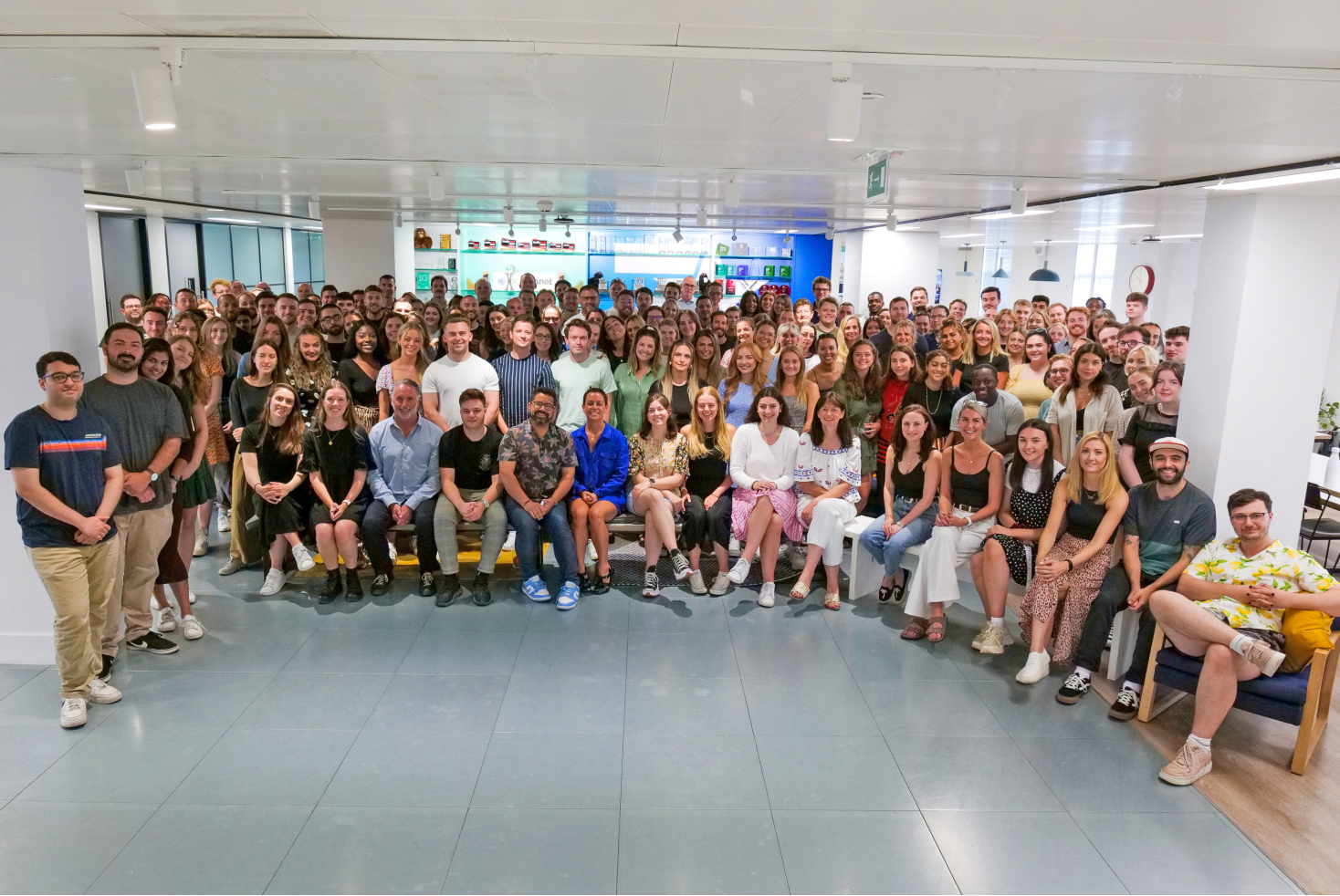
The classic agency shot
“We then grew and built a big insight capability, a big data capability, a big tech capability, now an influencer capability, now a creative capability, now an in-house studio capability,” Biggam continues.
“We’ve literally gone from being a media agency to being a media agency that has capability across creative, tech and media. Each of those were their own milestone. Each of those have their own story.”
Among other landmarks was the creation of sister shop Bountiful Cow in 2016, “another roll of the dice” for a team that wanted to grow the business without turning the7stars into something “so big that it lost its personality and the essence of what it was”.
Bountiful Cow, led by ex-Guardian director of advertising Adam Foley since 2022, has carved a niche through its “Relative Advantage” philosophy.
“We built it all organically,” Biggam says of the overall business. “It’s not that we’ve become the biggest independent by a merger or acquisition or anything like that. We’ve built it the hard way.
“We’re only in the situation that we’re in because we’ve attracted lots of great clients, retained those clients over the long term and we’ve got a brilliant, dedicated group of people that work here.”
What do the next 20 years have in store?
The effort to build is never ending for the7stars’ leadership. Not only are media agencies vastly different today than they were 20 years ago, but Biggam expects their role to be “completely different again” in the next 10 years, let alone 20.
Over the past six months, the7stars has had its shareholders “get out of the way a little bit” to let the next generation of employees, including junior staff, consider how the7stars should evolve as an agency. Each year, the shop also rewrites its business plan from scratch to more easily decide how to adjust investment or whether to launch new products and services.
A working group, dubbed “Vision 2030”, has been given the heady task of “defining what we think will be the new role of the media agency in 2030”.
That could mean an expansion of services, particularly to address the changing role of the marketer. Biggam agrees that agencies will likely need to become more consultative and focused on delivering business results for clients, not just ad campaigns.
“In order to do that, you need a slightly different blend of people, to be constantly bringing in new skillsets into the agency,” she says.
Advertisers, Biggam reckons, are spending more time and resource into making the investment case for advertising. Equally, they want to better understand where brand advertising should fit on a media plan relative to performance.
“Because there’s more data and evidence available, there’s just more rigour that goes into it now. I think that’s a good thing. We need to be more business-like in our approach to how we help advertisers make that case.”
News, analysis, comment and community — Join The Media Leader
If agencies are indeed moving towards a more consultative relationship with clients, Biggam believes the7stars is well-placed to benefit primarily because of its strict stance against principal media.
“We’re not into principal media, we’re not into buying media at one price and selling it to advertisers at another price,” she explains. “Clients come to us and they can trust the advice they can get from us. I think that’s so important for the future of the media agency model.
“There’s fundamentally a difference between an agency that acts as a true consultant and business partner, and one that is reselling media at undisclosed mark-ups that aren’t audited. That’s a retail model. There’s nothing wrong with a retail model, but it’s very different to the service that we offer.”
Biggam prides herself on the7stars’ single source of income coming from clients. Despite growth of services into creative, for example, the7stars retains a single profit and loss statement, and its independence allows its leadership to concern themselves less with quarterly earnings and more on growing the business for the long term.
“We genuinely can invest in the longer term,” she says with an air of pride. “And we can shape the agency around what our clients want and need, not what shareholders or the City or a PE company is looking for.”
Not dealing in principal media costs us millions, but keeps us impartial – the7stars