



Canadian broadcaster claims commercial TV faces ruin
Québecor, the telco and media owner serving the French-speaking Québec market with TV channels including TVA Network, has admitted its TV business may not survive another five years, given the current competitive and regulatory environment in Canada.
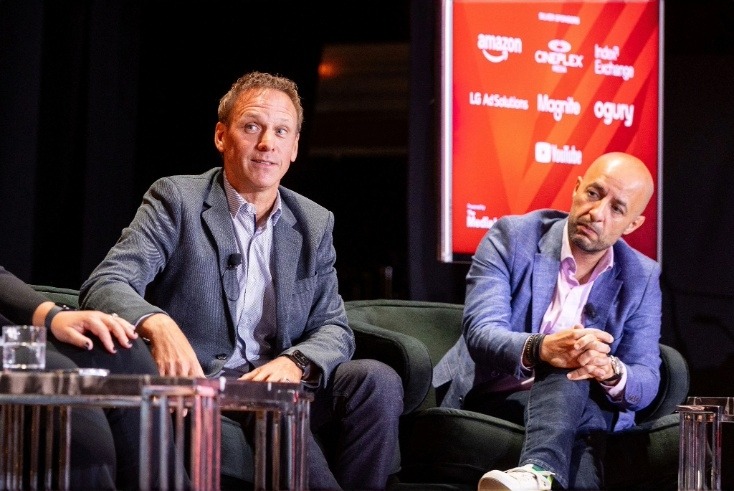
Speaking at The Future of TV Advertising Canada in September, Patrick Jutras, chief advertising revenue officer at the company (who is also president of MELS, Québecor’s film and TV production company) warned: “In five years we could be gone.
“If we were not part of a vertically integrated company [that also offers broadband and mobile] our media business would be in real trouble – we would be in real trouble.”
Jutras bemoaned the high costs of production, especially for flagship shows like The Masked Singer, which typifies the mass reach appeal the TVA Network still generates in the province.
He said TV revenues were declining 25% a year, despite linear TV audience share falling by 2-3% a year in Canada, and agreed that advertisers seemed to have fled linear broadcast before the audiences had. He admitted that he did not know the reasons for this.
Reducing content investment is not an option, he suggested, with TVA having already reduced budgets for original productions: “We need to double-down on content investment.
“We are challenging local producers to lower their costs.”
These frank comments followed a press release issued in late August where Pierre Karl Péladeau, president and CEO of Québecor and acting CEO of TVA Group (the subsidiary that contains TVA Network plus nine thematic channels and the TVA+ streaming service) described the danger for the wider ad-supported broadcast industry in Canada.
Crisis for private broadcasters
“The situation is a crisis, not just for us but for all private broadcasters,” he said.
“The advertising revenues of conventional television channels continue to dwindle, decreasing by nearly 40% in Canada since 2011. Web giants now take 92% of online advertising revenue in Canada – money that previously went to traditional media.
“The consequences for private broadcasters, which rely on these revenues as their main source of financing, have been disastrous. In absolute terms, TVA and its specialty channels have lost $34.9 million in television advertising revenue over the past three years.”
TVA has cut 700 jobs from its broadcasting business, moved out of its historical home at 1600 De Maisonneuve Blvd, closed its in-house production division and failed to renew some popular programmes.
“Despite these constant efforts to rethink and restructure, and enhance our commercial offering, private broadcasters have virtually no room to manouvre,” he said.
The press statement continued: “TVA Group’s channels are the most watched in Québec. Their combined market share continues to grow and now exceeds 42%. How is it possible that a broadcaster that reaches 5.7 million Quebecers per week is in jeopardy?
“Realistically, TVA will not be able to continue operating in such a precarious environment in the medium term.”
Péladeau called for government help, noting that if other industries were in danger, like aerospace, they would receive government support.
His company provided a list of changes it wants from government and the regulator (the CRTC), one of which is to remove tax deductions for advertising purchases from foreign companies and instead offer tax incentives that encourage ad purchases from Canadian media.
TVA Group and Québecor want what they consider a fairer regulatory environment “that corrects inequities between foreign digital companies and domestic broadcasters.”
It is calling for significant reductions in regulatory, financial and administrative burdens on the local broadcasters.
Québecor is not a lone voice.
At The Future of TV Advertising Canada, Hisham Ghostine, chief revenue officer at the public broadcaster CBC/Radio-Canada, also flagged the dangers ahead.
“Fifteen years ago, everyone was making enough money. But today, the [future of the] whole [local] industry is at stake,” he told the Toronto audience of senior media agencies, advertisers and media owners.
“The world is uncertain, and we are not sure what comes next. We got left behind [as an industry]. We are a mid-sized country that is unable to regulate properly, and when we do regulate, we regulate Canadians rather than everyone else.”
A whole industry is at stake
“It is very important to realise what’s at stake – a whole [media] industry and economy that may not be here in five years. This is serious.”
Ghostine declared that CBC should not view itself as competition to privately owned broadcasters, before committing to work with his peers to help improve their situation.
This was probably a reference to criticism that CBC competes for ad dollars that private broadcasters need to survive, despite it also receiving public funds.
TVA Group/Québecor certainly had CBC/Radio-Canada in its sights when writing its wish list for the government. It wants advertising removed from CBC platforms, claiming this would release C$270 million in potential ad revenue for private broadcasters.
It also wants public broadcasters to be blocked from accessing the Canada Media Fund, which supports the creation of Canadian content using contributions from the Canadian government and the TV industry.
Jutras and Ghostine were joined on stage by Barb McKergow, senior vice-president, ad sales at channel owner Corus, whose brands include Global Television.
Corus does not have the backing of a telco with broadband and mobile revenues and has spent the last year working with creditors on a capital and debt plan.
McKergow agreed that Canada’s media buyers have been very quick to abandon linear TV but was not drawn on the danger to private broadcasters.
She did suggest: “Maybe there was a perception issue around it [linear] and we could have done a better job at demonstrating the benefits of TV.”
The Québecor/TVA Group statement pulls no punches and began by admitting it paints a bleak picture for TV in Québec.
Governments help other industries
Péladeau stated: “This crisis affects our entire culture. Governments are quick to support other industries that are struggling or threatened by foreign markets and rightly so. The film and television industry in Canada is an important economic engine.
“Private broadcasters do not have the resources of the global players or the public broadcaster, but they drive an entire industry.”
TVA Group and illico+ (a Québecor owned streaming service) spent C$400 million on content in 2024, but Péladeau warned: “If nothing changes, the majority, if not all of the content broadcast in Québec could be produced in France, the US or by Radio-Canada [CBC].”
He went on: “All governments say culture is important, but when it comes to giving due consideration to our television industry, supporting it and investing in it, we’re getting no sound and no picture – only empty statements and, without real action, further decline.
“Governments and the CRTC must act without delay to address the serious competitive imbalances that are destabilising the ecosystem.”
Péladeau complained about years of industry meetings with the CRTC and government ministers that failed to instigate the change TVA Group believes is necessary.
“We feel as if we were helplessly watching the death of television foretold. How much longer will governments and the CRTC allow the industry to teeter and decline? Will they allow it to disappear entirely?”