



Live sports piracy fuels organised crime groups, and EU must toughen stance
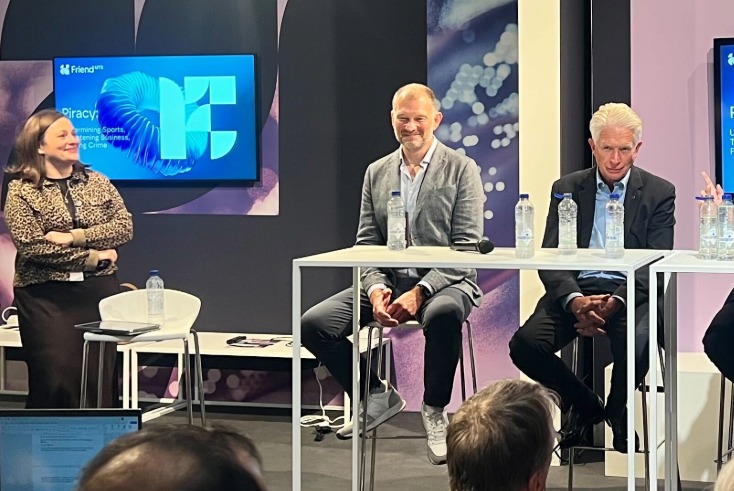
Sports piracy fuels organised crime groups in Europe and is likely to be their third largest revenue stream after drug smuggling and people trafficking.
That is according to Mark Lichtenhein, CEO at the Sports Rights Owners Coalition (SROC), which represents 50 international and national sports bodies and competition organisers, with a particular focus on rights issues.
According to a representative of Interpol’s IP crime and digital piracy unit, who has requested anonymity for security reasons, live sports content piracy is linked to other crimes from the same groups. These include money laundering, data and ID theft and malware distribution through the pirate service streams or devices.
In the case of ID/data theft and malware attacks, illegal streaming provides the means to “attack” the victim as they use pirate services.
He added: “We clearly see that piracy is being used by criminal groups to enable other criminal activities.”
Emphasise link to organised crime
The Interpol representative believes the TV industry must make the link to organised crime clear to law enforcement and governments to encourage stronger action against the theft of intellectual property.
The two men were speaking at IBC last month on a panel organised by Friend MTS, the anti-piracy solutions provider that works with many of the world’s biggest sports and media brands including the Premier League, Rogers Sports & Media, Sky, TNT Sports, UEFA, Warner Bros. Discovery, F1, ITV and LIV Golf.
Dave Gilmore, VP intelligence at Friend MTS, investigated piracy when he worked for the police in Ireland. He offered his personal opinion that organised crime is behind most of it.
“The money feeds into other crime types – I have seen that myself,” he said. “Pirate enterprises have a degree of expertise and organisational structure that suggests organised crime, like a cell-type structure.”
Such a structure minimises the number of people that any one person has contact with.
Further evidence was provided by Lee Kent, content protection manager at beIN Media, which includes the Turkish Pay TV operator Digiturk and part-ownership of film and TV studio MIRAMAX, but is probably best known for BeIN Sports.
He recalled how counter-piracy efforts during one major sports tournament pointed towards synergies between content theft and other serious crime.
Lichtenhein believes piracy is an existential threat to the sports rights business. His organisation is pressuring the European Commission to harden its recommendation to member states that intermediaries and infrastructure providers (e.g. data centres, server providers, CDNs) should provide “expeditious removal” of pirate streams.
This term is not defined enough, he reckons. “Nobody knows how long that is, but when it comes to live sport, time is critical.
“For some people this might mean the pirate stream is removed that working day. We see companies who say they don’t work weekends, so they will take care of it on Monday morning.
“We need clarity on what ‘expeditious’ means. At the very least it should mean the stream is removed during the live window for the content.”
Even this may not be enough. As Lichtenhein pointed out, a five-minute delay may save a [guaranteed 90 minutes] football match from revenue losses but five minutes may be too late to get someone to subscribe legally to a boxing match that ends in one or two.
“When we send notifications to intermediaries, 10% act upon it in a timely fashion,” he continued.
“We think there are only 250 data centres within the EU that have the capacity to deliver piracy at scale and probably 80% of those are good actors. There are maybe 50 who are part of the problem and we know who they are, because we send them takedown notices that they do not act upon in a timely manner.”
Putting pressure on EU
Lichtenhein recalled that in 2021 the European Parliament asked the European Commission (EC) to legislate on piracy, and the result was an anti-piracy EC recommendation to member states that is not legally binding.
In November, the EC must report back to the parliament on the success of its measures, with Lichtenhein convinced it has not been effective. The Sports Rights Owners Coalition and the other panellists at IBC hoped that the rules will tighten.
As background to these EU discussions, Lichtenhein believes legislators should consider piracy as more than a threat to sports and entertainment industry economics, but a fuel for organised crime networks in Europe.
The Interpol representative believes the link to organised crime could help make live sports piracy a bigger police priority, while admitting that it is understandably not a priority for them today, “and to be honest, never will be.”
Gilmore painted a picture of how sophisticated the piracy industry is as an alternative to legal distribution. For $15-20 users can get access to almost all channels.
“The quality is higher than ever and nearly as good as the genuine content. The customer support is quite good – similar to what you get from legitimate services.”
Some services are funded by advertising, with the ads coming from other outlawed services like illegal gambling. There are even secondary pirates who redistribute the pirated content – often with the free ad-funded model.