



Binet and Davis warn of marketing ‘death spiral’ over focus on ROI
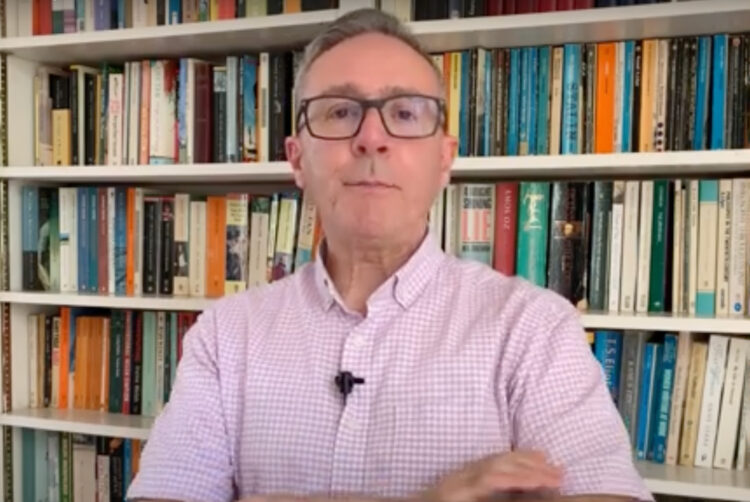
Trying to do more with less, risks doing less with less.
That is one of the key takeaways from new research released by effectiveness expert Les Binet (pictured) and Will Davis, chief data officer at Medialab Group, who found that budget is nearly eight times more important than return-on-investment (ROI) when it comes to driving marketing effectiveness.
The study analyzed IPA Databank data and conducted a survey of 500 senior marketing decision-makers. It will be presented at the IPA Effectiveness Conference later today.
According to the Binet and Davis’ analysis of IPA Effectiveness Award-winning case studies, ROI only accounts for 11% of the variations in payback observed, compared to 89% for budget.
However, just 35% of surveyed marketers said budget was the most important contributor to effectiveness, compared to 65% for ROI.
Meanwhile, IPA Databank figures found that ROI has increased by 4% since the Covid-19 pandemic, despite net profit generated declining 11% in the same timeframe.
Marketers have been reducing the scope of their activities due to tighter budgets. More than half (56%) of marketers are opting to target sub-segments of customers with ads rather than all potential customers. This has led to a “narrow media mix” with a bias towards performance-driven media plans.
Older generations were particularly neglected: Nearly two-thirds (62%) of marketers admitted they aren’t targeting over-45s, even though they account for half of consumer spending.
The abandonment of scaled, broad-audience campaigns is having negative consequences. According to Binet and Davis, advertisers must generate between 30m and 60m exposures to drive statistically significant sales uplift, and at least 200m to drive “major results”.
Binet warned that the relative decline of brand-building can lead to a “death spiral”, with budgets, campaigns and profits all shrinking due to worsening effectiveness.
“Our industry is obsessed with efficiency, and rightly so. We’re spending other people’s money, and we need to spend it wisely,” he commented. “But efficiency isn’t everything – you also need scale. Our research reveals a paradox: the more we focus on efficiency, the less money advertisers and agencies make.
“We believe that the only way out is to rediscover advertising’s super-power: to deliver creativity at scale. We need to Go Big or Go Home.”
Get better at budgeting
The findings echo recent research from fellow effectiveness expert Peter Field, in partnership with news media marketing body Newsworks and attention measurement company Lumen Research, which found that investing in high-attention media channels — TV, cinema, radio, magazines and news brands — is more profitable than low-attention channels like OOH, social media and pure-play internet.
Field has repeatedly advocated for marketers to reinvest in media channels that deliver brand building, even as marketers have embraced short-termist, performance-driven strategies that are easier to deliver and communicate to boardroom leaders.
For his part, Davis emphasised that the latest research is not advocating for offline versus digital media, or brand versus response.
“It’s about balance,” he insisted. “Doing all of these things well and at the right scale.”
Separately today, the IPA will unveil another effectiveness study that has found influencer marketing delivers strong long-term returns, though this was measured based on ROI.
Influencer marketing was found to deliver comparable short-term ROI with other channels, and long-term multipliers of influencers were found to be the strongest of any channel, though the IPA’s Databank found wide variability in influencer ROI.
Binet and Davis recommended a four-step effectiveness “playbook” for marketers and their agencies to maximise success.
This includes: focusing less on efficiency and more on effectiveness, and remembering that effectiveness is about budget, reach and scale.
In addition, the pair advised that budget setting is “the most important bit of the planning process”, and so marketers should work to get better at it. However, they acknowledged that budget setting is often “crude” and financial modelling rare, with budgets often getting cut without strong financial evidence to justify requests. This can lead to increased pressure and focus on efficiency.
Davis continued: “Efficiency is vital, but the data show it drives larger growth when combined with scale, creativity and the bravery to experiment. That balance is what unlocks transformative results.”
Laurence Green, the IPA’s director of effectiveness, added that the research “marks a tipping point for our industry”.
He continued: “We can continue to prioritise efficiency and small margins, or we can make the case for big, bold advertising at scale that will drive big profits for clients.”