



Trust is essential to the future of media. But how can advertisers measure it?
Opinion
On the eve of The Future of Media London, the ‘present’ of media is a mess of fake video, AI slop and endless content. Can we build a future where trust is not only measured, but traded?
What kind of gullible idiot would believe this:
At Christmas, a fat old man will squeeze through a four-inch-wide chimney in the middle of the night. He will somehow pass through the bricked-up fireplace to deliver presents, without leaving a trace of the destruction he has left behind. And he will commit the same breaking-and-entering crime billions of times that evening, somehow evading police detection for hundreds of years.
The teachers keep telling me my five-year-old daughter is smart, but she actually believes it.
But rather than worry, I know it’s wonderfully innocent… and temporary. Because belief, like bone density, hardens with age.
That’s why I wouldn’t let her watch an 18-rated horror movie. Common sense says kids aren’t ready for that kind of exposure because their brains, judgment, and boundaries are still forming.
Why doesn’t the same logic apply to online content? Every day, children scroll through videos of abuse, self-harm, violence and sexual exploitation — all presented as real life. No rating. Just the algorithm, deciding what they see next.
We’ve built a global media system that protects kids from fake monsters — but not from real ones.
Our generational challenge
Tomorrow, this publication’s The Future of Media London event is back, so many of us are thinking about what comes next.
So here’s my prediction: the next big battleground in media is trust. It won’t be how good your content is, but how real your content is.
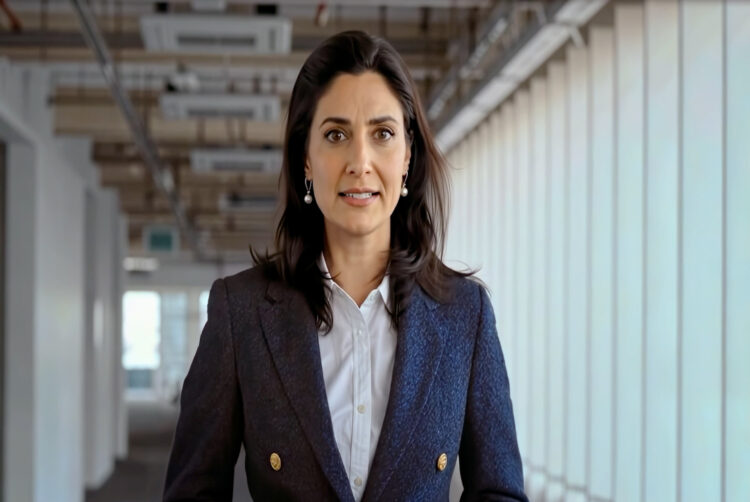
Because, while we assume that only children struggle to tell what’s real and what isn’t, look around: adults aren’t doing much better. How many of you fell for Channel 4’s AI presenter stunt a couple of weeks ago?
Indeed, every day is April Fool’s Day, with more deepfakes, more AI-created content, and more cheap tat thrown at our eyes and ears, the line between awful and authentic gets thinner. What used to be media literacy now looks like paranoia.
Last year’s Ofcom study backs up what many of us see at home: children and teenagers may think they know the difference between fake and reality on social media, but many are not as savvy as they think. But we know why they’re hooked: Netflix’s Adolescence did a great job in explaining how teens create a whole other world of language and identity in social, specifically one that their parents can’t understand.
It’s the cool kids club, and you need more than a smartphone to be invited.
Unbelievably (to me anyway): a quarter of five- to seven-year-olds do indeed own a smartphone in this country. Nearly 20% of kids in this age group use WhatsApp, despite its minimum age of 13. What the actual Zuck?
So part of this is a generational issue. Our kids are growing up in a world of low-quality information and not hardened by years of critical cynicism like me, the increasingly old git.
So trust won’t just be a moral issue for us; it will be a commercial one.
What makes media valuable (clue: it’s not reach)
This is where broadcasters still have something precious.
By broadcast, I mean any medium which publicly displays content to a mass audience: TV, radio, out-of-home, news, and magazines.
These media still work within frameworks of editorial standards, regulation, and cultural responsibility—even when it’s inconvenient. There’s a reason a film has a rating and a news bulletin has an editor.
It’s the difference between being guided and being manipulated.
The problem is, we still can’t trade trust.
In adland, we talk about reach, frequency, attention, viewability… everything but belief. “Trust” sits in the brand tracker somewhere between “perception” and “sentiment,” when in reality it’s the foundation for every click, every conversion, every purchase decision.
So how do we make it measurable—and valuable?
Trust per thousand?
There are already clues.
Research from the Reuters Institute consistently shows that trusted news brands are still the most frequently named information sources.
Lumen Research and Teads have shown that attention quality increases when audiences feel safe and engaged.
I’d argue that the media platforms of the future—ISBA’s work on cross-media measurement and BARB’s evolution into CFlight—are implicit admissions that industry is inching towards trading on trustworthy attention, not just exposure. They both enable deduplicated reach and frequency data across channels.
But imagine if we went further and could build a “trust per thousand” as a planning metric on these platforms?
Imagine if advertisers started paying premiums for being seen next to journalism, documentaries, and factual entertainment that audiences believe.
It sounds idealistic… but so did carbon pricing once. When society decides something intangible has value, we find ways to quantify it.
If we don’t do that with trust, we’ll lose it to the platforms that exploit it best.
The monsters are real
Forget the movie; here’s the real horror story: AI is about to make fakery effortless.
Anyone with a laptop can now generate realistic videos of politicians, celebrities, or ordinary people saying or doing things they never did. The platforms, including the attention-seeking AI chatbots, will profit from the confusion. The public will grow numb to outrage.
And, if unchecked, the media will lose the only currency that really matters: credibility.
So yes, broadcasters should invest in new tech, new formats, new business models. But they should also remember what made people trust them in the first place.
Integrity. Verification. Human judgement.
The things algorithms can’t fake.
Because when the line between fiction and reality finally disappears, audiences won’t remember who made the best content.
They’ll remember who they could still trust.
 Omar Oakes was founding editor of The Media Leader and continues to write a column as a freelance journalist and communications consultant for advertising and media companies. He has reported on advertising and media for 10 years and was previously media and tech editor of Campaign. His column on The Media Leader was nominated for the BSME’s B2B Column of the Year in 2024.