



Act Climate Labs launches blueprint to phase out fossil fuel advertising

At COP30 earlier today, ACT Climate Labs, a group of advertising and sustainability experts, unveiled a roadmap to help the ad industry phase out working with fossil fuel clients.
The blueprint attempts to reframe the phase-out of fossil fuel clients as a business opportunity, rather than leaving money on the table from high-spending brands.
It acknowledges that advertising agencies and media owners “help deliver the messaging that enables” fossil fuel companies’ success by “shaping public perception, influencing policy, and normalising high-carbon lifestyles precisely when society needs to transition away from them”.
The report is a direct response to United Nations director-general António Guterres, who last summer called for a worldwide ban on fossil-fuel advertising.
In a speech, Guterres likened fossil-fuel organisations to tobacco companies, arguing media owners should stop taking ads from the “godfathers of climate chaos”.
The issue flared in late 2023, when Havas controversially won the Shell account and was subsequently stripped of its B Corp status.
Other media agency holding groups have also been widely criticised by climate activists for taking on fossil fuel clients, with critics noting that even those who work only on campaigns for clients’ green energy initiatives risk greenwashing fossil fuel brands.
Why working with fossil fuel companies is ‘choosing revenue over ethics and integrity’
ACT Climate Labs argues this places wider business interests at risk, both in terms of public and regulatory pressure, and also because the actions of fossil fuel companies are often in direct conflict with the interests of holding groups’ other clients, like healthcare companies.
Given that most holding groups derive only a fraction of their revenues from fossil fuel clients, the risk of working with them outweighs the potential reward of severing the relationship, the report argues.
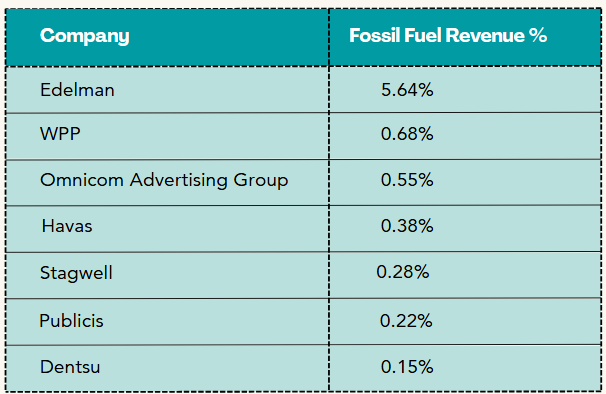
Amid COP30 this week, an open letter organised by campaign group Clean Creatives and penned by climate activists and influencers urged the climate change conference to drop its PR firm, Edelman, noting that its Brazilian general manager is overseeing communications strategy for both COP30 and Shell at the same time. Its other global fossil fuel clients include Chevron, ConocoPhillips and Masdar.
This June, a special rapporteur commissioned by the United Nations published a recommendation suggesting they go further by criminalising media and advertising companies that amplify disinformation and misinformation from fossil fuel companies, and by banning fossil fuel advertising, promotion, and sponsorship.
The ACT Climate Labs report thus seeks to lay the groundwork for advertising agencies to stop working with fossil fuel clients.
5 strategic levers
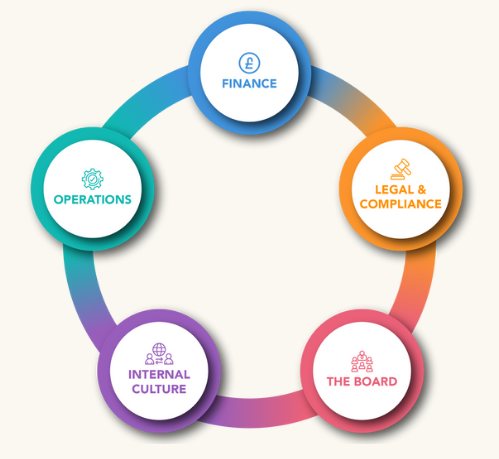
The report suggests five key strategic levers for agencies to pull: financial, legal and compliance, influencing the board, supporting internal culture, and operationalising the transition.
It recommends that agencies and media owners identify the share of their revenue derived from fossil fuel clients, and then engage their legal teams to develop a compliant phase-out plan. This will enable them to brief and influence their board on the material risks and opportunities of a phase-out, prompting them in turn to support their staff through such a transition.
The ultimate goal is then to adapt operations for a fossil-free future. This would include developing strategies for replacing revenues and redefining how businesses consider fiduciary duties to their shareholders to consider long-term business restructuring.
“This isn’t a manifesto, it’s a business plan,” ACT Climate Labs co-founder Florencia Lujani commented. “It’s designed for agencies that want to lead, protect their reputation and future-proof their business”.
The project was developed in consultation with ad industry leaders and features additional insights from M&C Saatchi, ITV, Lucky Generals, The Guardian, Mobsta and Ace of Hearts, among other organisations. It argues agencies and media owners that act now will benefit from a first-mover advantage in the green economy.
“The real risk isn’t being first — it’s being last,” said Lucky Generals’ head of social impact Lameya Chaudhury.
Jeremy Mathieu, head of sustainability at ITV, added that media owners that assess how well-prepared their clients are for a transition to net zero “might find that the majority of their clients are aligned”.
He continued: “Suddenly, it becomes more about opportunity than risk… that’s the opportunity to have different conversations with clients and potentially bring in new ones.”
Not a slippery slope
The blueprint has received public support from Selwin Hart, the UN secretary-general’s special adviser on climate action.
He writes in the report: “The fossil fuel industry and their enablers have long been obstructing the transition to clean energy — seeking to deny scientific fact and delay urgent action. The UN secretary-general called on advertising and PR firms as well as media and tech companies to stop taking on new fossil fuel clients and make plans to drop their existing ones.
“This blueprint is a constructive and substantive answer to the UN secretary-general’s call to action — outlining concrete steps for businesses to accelerate the transformations needed to address the existential threat of climate change, and providing evidence that transitioning away from fossil fuels is an immense commercial opportunity that benefits all.”
UN special rapporteur recommends criminalising ad industry for role in climate disinformation
Still, whether the ad industry is prepared to leave fossil fuel clients behind remains to be seen. Ad industry leaders have commonly argued that fossil fuel advertising is relatively ineffective and not the source of fossil fuel consumption given that goods like petrol have inelastic demand. Critics of the industry have nevertheless argued that advertising drives demand for increased consumption, and helps spread a more positive image of fossil fuel companies.
Another rebuttal common among industry leaders is that fossil fuel ad bans risk becoming a “slippery slope”; why draw the line at working with fossil fuel companies rather than, say, car manufacturers or airlines? Why not decline to work with other businesses that cause severe negative externalities, like gambling or alcohol companies?
The report acknowledges this argument and insists that fossil fuel companies are “fundamentally different to other sectors” for three key reasons: they have misled the public about climate change for decades; they are the largest contributors to climate change; and they actively obstruct necessary climate action.
While it concedes that “not all fossil fuel companies are the same”, with some actively pivoting to green energy production, the report’s contributors are nevertheless steadfast in their stance that “agencies and media owners should not be working with any of them”.
The report reads: “No other industry combines this unique direct climate impact with greenwashing and threats to information integrity at such scale”.