



At last! Disney embraces creators — now who else has the courage to follow?
Opinion
Disney quietly announced something radical: letting fans create their own short-form IP on Disney+. But it exposes just how defensively the rest of the industry has been playing.
“Offence is better than defence” is one of the laziest clichés in business.
If you’ve spent any time in media or advertising, you’ll know plenty of giants who’ve done just fine hiding behind defensive moats — platforms, agencies, FMCG behemoths.
Just look at last week’s playground scrap where Publicis Groupe’s Arthur Sadoun complained that Omnicom should report its revenue the way he does. Omnicom is days away from becoming the world’s biggest agency group after swallowing IPG, but Sadoun is upset about… accounting definitions. Aw, diddums.
Our industry spends so much energy fighting about the past that it routinely misses the future creeping up behind it with a baseball bat.
Because the uncomfortable truth behind “offence beats defence” is simple: by the time you notice the threat, it’s already slit your throat.
Publishers learned this the hard way. They thought partnering with Facebook and Google would protect them, right up until those businesses pivoted to crush their incentives and rewrite the rules of distribution.
TV is learning it now. YouTube has parked its tanks on the lawn and insists its vast, unregulated creator ecosystem should be treated as equivalent to regulated broadcasters… a neat sleight-of-hand that conveniently ignores the difference between a teenager with a ring light and a commissioning editor bound by law.
And if you think YouTube is “just another platform,” go and read about its ongoing carriage fight with Disney in the US. Google knows how to play offence. Incumbents, generally, don’t.
Which is why, last week, Disney CEO Bob Iger briefly made me believe in magic again.
Frozen 3 starring… me?
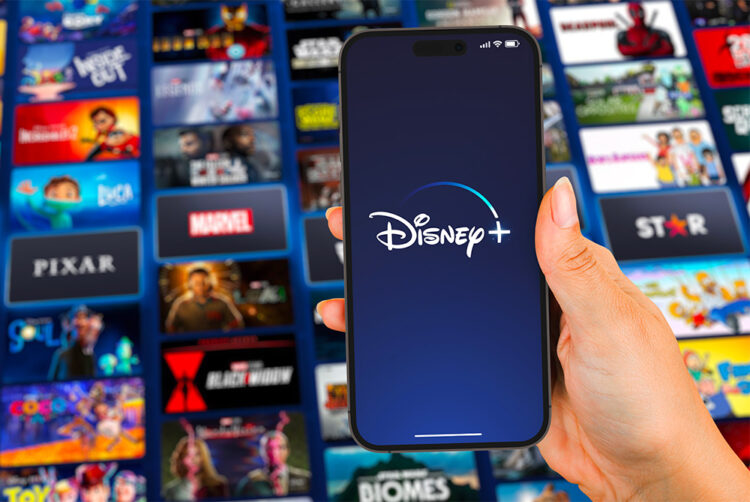
On Disney’s earnings call last week, Iger announced that Disney+ will soon allow users to create and share short-form, AI-assisted content using Disney’s own intellectual property.
He mentioned “productive conversations” with unnamed AI companies, the kind that suggest either competitive secrecy or quiet nervousness, and promised “more engaged” experiences for subscribers.
Translation: Disney is about to let fans make their own Frozen 3 before 2027.
‘We want to be accessible’: Rita Ferro on Disney’s ad strategy
This might just not be a gimmick. It might just be a strategic pivot that every major studio and broadcaster should have made years ago.
YouTube won the creator war because it embraced user-generated content when everyone else treated it as beneath them. It gave itself the world’s deepest attention engine, with very little risk because of the steep monetisation hurdles that creators must jump. And, for the price of free, it let billions upload whatever they pleased, from cute cat videos in 2007 to professional-grade passion projects in 2025.
The fact that someone like Miss Rachel can go from homemade UGC to global IP is exactly the point: YouTube didn’t just host creators; it incubated them.
Meanwhile, studios and broadcasters clung to their prestige, convinced that “quality” would be enough. We’re learning the hard way that it might not be. Smartphones became democratised production studios, social platforms became the new broadcast networks, and every viewer became a potential competitor for attention.
Broadcasters need to stop acting like UGC is someone else’s problem.
Disney’s move (if executed properly) might just be the first serious attempt by an incumbent to reclaim that lost ground.
Don’t just platform UGC, produce UGC
Let’s be honest: a lot of UGC is slop. But that’s irrelevant.
Because UGC’s power has never come from its average quality. It comes from its scale, its spontaneity, and the raw proximity between creator and audience.
YouTube understood this and built a creator pipeline so efficient that even Hollywood now chases its stars. At MIPCOM last month, YouTube’s pitch was crystal clear: come to us first. Build an audience with lower risk. Let the algorithm do the farming. The message wasn’t subtle: traditional TV is now the junior partner in global entertainment.
And the economics are brutal. Despite the myth of “creator riches,” most YouTubers can’t make minimum wage from the platform. But a handful explode, and those handfuls drive culture, trends, and—importantly—ad revenue. If studios want to remain culturally relevant, they need to build their own ladders for emerging talent instead of waiting for YouTube to hand them over.
That’s why a Disney-run UGC ecosystem matters. Not because kids will generate masterpieces, but because the company can offer something YouTube can’t: training, curation, safety, brand coherence and an actual pipeline into its professional IP machine.
Imagine learning the “Disney way” of storytelling through a tool built by Disney itself. Imagine the BBC or Channel 4 doing something similar. Yes, there have been digital pivots, such as new commissioning models, youth-skewing strands, more social-first content… but that’s not the same as giving audiences tools to create inside your ecosystem.
Even advertisers are catching up. Unilever set the tone earlier this year: more influencer spend, more creator partnerships. And at the IPA Effectiveness Conference last month, we saw longitudinal evidence that the right creator strategy can drive long-term brand effects.
So creators aren’t replacing TV talent. They’re becoming the talent pool TV refuses to recruit properly.
Follow the money
Next year, according to WPP Media’s forecasts, ad revenue attached to UGC content is projected to overtake revenue linked to professionally produced content for the first time.
You don’t need to believe in the prophecy to see the direction of travel: the attention economy has already decentralised, and the ad economy is following.
And yet, most incumbents still respond by tightening their grip on legacy models instead of building new ones. More windowing strategies, more bundle reshuffles, more defensive manoeuvres that look smart internally and suicidal externally.
Disney’s move isn’t guaranteed to work. IP protection could become a minefield. The tools might be clunky and the audience might not care. But doing nothing was never an option. If creators are the new studio system, then studios need to start behaving like studios again, by discovering, training, and empowering talent.
And Disney is one of the few companies with the IP library, storytelling muscle and brand coherence to turn UGC tools into an actual learning and talent pipeline… if it chooses to.
In other words, not ceding the entire process to platforms whose priorities begin and end with algorithmic retention.
Cliffhanger
For the first time in a long time, a legacy media giant shows signs that it will stop playing defence and start shaping the battlefield. If Disney can teach its audience to create, not just consume, it rewrites the power dynamic of the streaming age.
The only real question now is who follows… and who gets trampled while arguing about last quarter’s revenue definitions.
 Omar Oakes was founding editor of The Media Leader and continues to write a column as a freelance journalist and communications consultant for advertising and media companies. He has reported on advertising and media for 10 years and was previously media and tech editor of Campaign. His column on The Media Leader was nominated for the BSME’s B2B Column of the Year in 2024.