



How smarter media planning is keeping London safe
Opinion
Transport for London (TfL) and Wavemaker UK outline their latest road safety campaign, which coincided with National Road Safety Week.
Every day, Transport for London helps keep millions of Londoners moving across the entire city – and that extends to our roads.
Road safety is a critical part of this; despite last year having the lowest level of road casualties outside of the pandemic, some 81% of those killed and injured were walking, cycling or motorcycling.
Each life lost on London’s roads is one too many. That’s why we’re committed to delivering impactful campaigns that help change behaviours and make our streets safer for everyone.
Last week marked National Road Safety Week. While a variety of factors shape safety, communications – the messages people see, when they see them and how they make people feel – have a vital role to play.
The way we plan, target and tell stories can shift behaviour in ways that make our city safer. When creativity, data and insights come together, media can do more than raise awareness – it can help save lives. Smarter, more human media planning can change how people act in the real world.
From awareness to behavioural impact
Our most recent campaign was shaped by one stark reality: compared to car drivers, motorcyclists are 39 times more likely to be killed or seriously injured per journey in London, while cyclists are 13 times more likely.
These figures frame our approach. Research shows that drivers failing to look properly is a leading cause of collisions with riders. So, how do we make drivers see what they might miss otherwise?
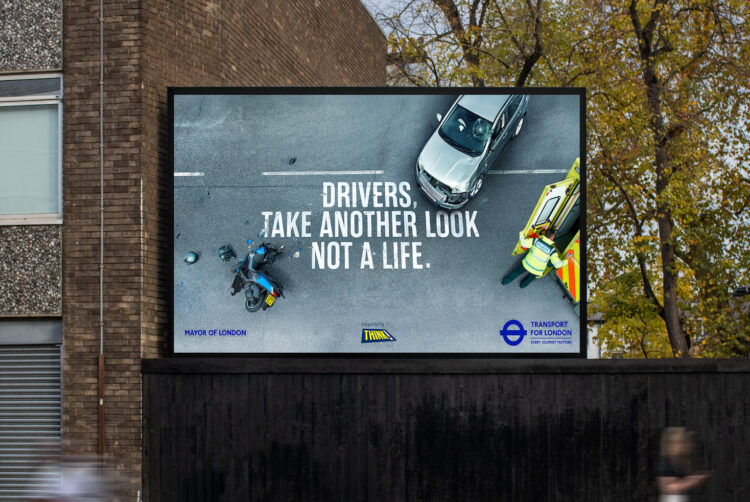
We use behavioural science to take a strategic approach to our campaigns. The Take Another Look, Not a Life campaign, launched earlier this month, combined emotional storytelling to prime drivers to think about the human lives impacted by their driving and activate them to change their behaviours.
Media was critical, with ads delivered when drivers are most likely to be behind the wheel. Radio spots running during commuting peaks are most relevant when more drivers are on the road.
Specially built lenticular out-of-home placements in high-impact roadside locations show a different message when viewed from different perspectives, reinforcing the campaign’s call to take another look and the devastating consequences of failing to do so.
Impactful video and social content further emphasise the message, creating repeated touchpoints at the moments when drivers are most receptive.
This strategic media planning means we move drivers along the stages of change, priming them to consider road safety and reminding them to make safer choices while on the roads.
Creative empathy as a catalyst for change
Impact doesn’t come from instruction; it comes from empathy. Our campaign began not with a storyboard but with conversations – including the charity RoadPeace, bereaved families and emergency service workers. Their stories shaped the tone: honest, emotional and deeply human.
The films open with intimate moments – a child’s birthday, a friend on the beach – before revealing those scenes as photos on a shattered phone screen. The twist is powerful because it’s grounded in truth. The message is simple but deep: pause and truly see the person in front of you.
Leaning into humanity is a powerful motivator for behaviour change, as we’ve seen when taking a similar approach in previous road safety campaigns like Watch Your Speed and in recent public transport safety campaigns like Act Like a Friend.
This campaign is part of a wider strategic approach to road safety communications. As well as encouraging drivers to look out for riders, we use media and behavioural psychology to tackle dangerous speeding on London’s roads and raise awareness of the Highway Code. It’s about creating campaigns that speak to all road users to reinforce rules that protect those most at risk.
Measuring meaning, not just metrics
As communicators working in the public realm, we carry a dual responsibility: to use media effectively and meaningfully. For us, that means moving beyond traditional campaign metrics towards tangible outcomes.
We measure shifts in perception, confidence, and reported action. Are drivers consciously double-checking for cyclists? Are they thinking about how fast they drive?
While we have seen some positive long-term shifts in claimed behaviour, with significant increases in the need to think about speed, there is always more to do to eliminate deaths and serious injuries on our roads.
In the advertising and media world, we often talk about ‘brand purpose’. In London’s transport ecosystem, the message is even simpler: we have a civic purpose. Aligning these means the campaign, media plan and creative work become part of how the city moves, lives and protects itself. For agencies, this means shifting from siloed performance measures to shared social metrics.
It’s about building impact, not just award entries. Because in a city of nine million, that pause – that extra look – matters.
Throughout Road Safety Week, our message to the people of London was simple: take another look. Because behind every campaign is a real person, a real story, a real life – and our shared responsibility is to make that life safer and more secure.


Joe Wood is strategy lead at Wavemaker UK. Miranda Leedham is head of customer marketing & behaviour change at TfL.