



‘A newspaper behemoth’: Could DMGT’s purchase of The Telegraph get past regulators?
Analysis
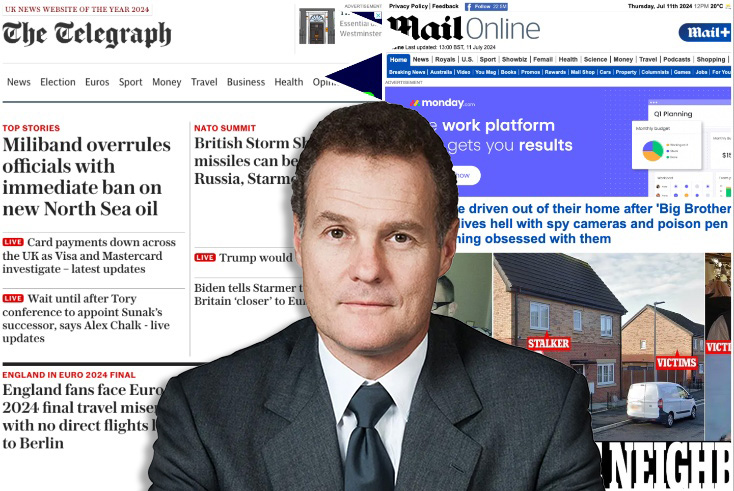
Over the weekend, Daily Mail and General Trust (DMGT) signed an agreement with investment firm Redbird IMI to enter into an exclusive acquisition effort over Telegraph Media Group.
The purchase would value the newspaper publisher at £500m. The two parties expect the process, which includes finalising terms of the transaction and preparing regulatory submissions, to “happen quickly”.
It is the latest turn in what has been an arduous, years-long process to sell the 170-year-old broadsheet. Previous potential buyers had included other investment consortiums, Sir Paul Marshall (who ultimately purchased The Spectator for £100m, but not The Telegraph), as well as US buyer Dovid Efune.
Last summer, DMGT pulled out of one such bid for the title over fears that it would be drawn into a complex competition inquiry.
But now the publisher is framing itself as a “responsible custodian” of the Telegraph, and one that is compliant with the UK’s Foreign State Influence regime.
This had been a major sticking point in Redbird’s multiple attempted acquisitions of the title due to its financial ties to the UAE’s royal family. Redbird had also come under scrutiny for potential ties to China.
A spokesperson for DMGT said it believes the acquisition would give “much-needed certainty and confidence” to Telegraph employees, with Telegraph Media Group benefitting from “DMGT’s significant resources and experience in transforming media brands in a digital world, and growing British brands into global news operations”.
Planned investment
If the acquisition were to go through, DMGT would plan to invest “substantially” in the Telegraph, especially with the aim of “accelerating its international expansion”, primarily in the US market.
“I have long admired The Daily Telegraph,” commented DMGT chairman Lord Rothermere. “My family and I have an enduring love of newspapers and for the journalists who make them. The Daily Telegraph is Britain’s largest and best quality broadsheet newspaper, and I have grown up respecting it. It has a remarkable history and has played a vital role in shaping Britain’s national debate over many decades”.
‘Social as a destination itself’: Inside Mail Metro Media’s two new social publishers
Rothermere added he believes current Telegraph editor Chris Evans, who previously spent 11 years at the Daily Mail and who Rothermere reportedly attempted to poach in 2023, is an “excellent editor”.
“We intend to give him the resources to invest in the newsroom,” Rothermere continued. “Under own ownership, The Daily Telegraph will become a global brand, just as the Daily Mail has”.
Competition concerns?
Such a deal would doubtlessly raise serious competition questions given the popularity of both the Telegraph and the Mail, let alone DMGT’s other holdings.
Media industry analyst Alex DeGroote told The Media Leader the acquisition thus amounts to a “game changer” for the UK press sector, both in terms of circulation and advertising.
“Such a deal creates a newspaper behemoth, with a particular political skew to the centre-right,” he said.
The Telegraph does not publicly disclose regular subscription or circulation figures. In its latest public trading statement, Telegraph Media Group indicated total subscriptions to the paper and its other brands grew 5% to 1.08m in December 2024.
The Daily Mail, meanwhile, reports circulation figures via ABC. In October, its average circulation sat at 617,447. As of this summer, the paper also indicated that its Mail+ digital subscription offering had more than 325,000 subscribers globally.
DeGroote estimated that between DMGT’s current holdings and The Daily Telegraph, the combined entity would have a greater than 50% share of the UK newspaper market by circulation, and would also control at least one-third of UK newspaper print ad revenue.
“Normally this would cause competition concerns,” he said, noting it was possible the combination would lead to a reduction in media supply.
DeGroote continued: “The main competition issue is whether the regulator takes into account the wider advertising market (including digital), which of course these days is dominated by the big search and social media platforms. Is it realistic in 2025 to consider newspapers in isolation? Their share of total advertising is shrinking.”
Depending on how the CMA considers the deal, it could therefore be plausible the regulatory allows such consolidation as a defensive measure for a flagging news publishing industry. It would also arguably be an exercise in pragmatism: DMGT’s lack of foreign ownership satisfies the Foreign State Influence regime, and a speedy buyer is important for The Telegraph’s success following years of uncertainty.
As DeGroote concluded: “After years of ownership uncertainty, the titles need some stability now, or they could be permanently impaired.”
Stagwell CEO: There is a ‘perverse distortion’ in the news media ad market
In many ways, the acquisition effort is similar to the confirmed discussions for Sky to acquire ITV. What would have never been approved by the CMA just a handful of years ago has become a distinct possibility amid declines in the linear TV and print publishing markets, respectively.
It is also possible the CMA could force DMGT to sell its ownership of its other holdings to make way for a purchase of The Telegraph. Unloading The i Paper and Metro would help the publisher reduce its overall scale and therefore address potential competition concerns.
Metro has itself come under recent financial strain. Last week, an undisclosed number of staff at the tabloid were warned their jobs had been put at risk amid declines in web traffic and circulation.
Potential synergies
Generally, however, Telegraph Media Group and DMGT are understood to be profitable businesses despite headwinds facing the publishing sector, and DeGroote added there would likely be “financial synergies” in combining the two groups.
These include US growth pushes, as well as an embrace of subscription models. In 2013, The Telegraph became the first UK general interest newspaper to introduce a metered paywall; the Mail meanwhile launched its own premium subscription service, Mail+, in January of last year.
DMGT has also taken a forward-looking strategy to audio-visual publishing, launching two social publishers last month that it views as a key part of its future business and editorial models.
Whether the bid is ultimately successful, the Telegraph will be in need of a new commercial chief. Karen Eccles, an eight-year veteran of the sales team and its chief commercial officer since 2023, is set to depart the company in January.
Editor’s note: This article has been amended after publication. An earlier version of this article incorrectly stated the Daily Mail does not report regular circulation figures. This has been corrected, and additional information has been added.