



AI isn’t killing the linear narrative
Opinion
Is dynamic story optimisation going to become a thing? Are we all showrunners now?
If you could stop Thelma and Louise from driving over the cliff with the click of a button, would you do it?
If you could alter the ending of 2001: A Space Odyssey with a right or left swipe, so it made sense, would you do it?
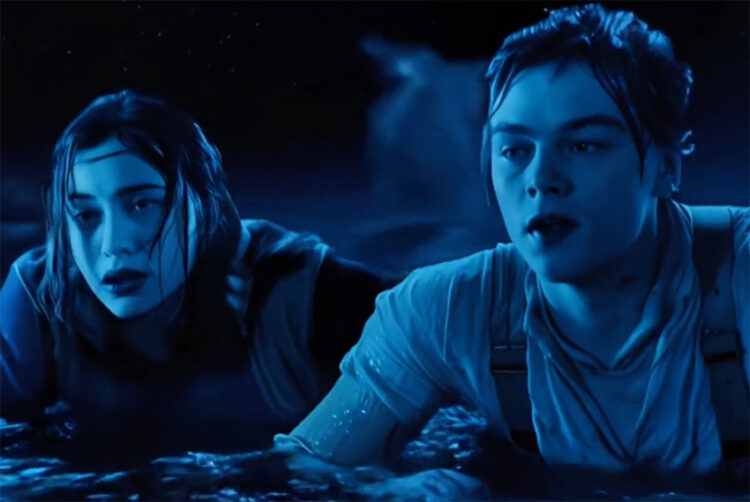
If you could change the final scenes of Titanic with a thumb up or down, so that Jack survived by clambering on to the makeshift raft alongside Rose, would you do it?
On that last example, one AI-powered creator thought it was worth a try. Thanks to some generative AI, Jack joins Rose on the floating door and they go on to live a happy life together, before Jack leaves Rose for a younger woman.
I discussed this in August on the AI Haven’t a Clue podcast, where I was asked this intriguing question: does AI now make all stories customisable?
Indeed, this idea has been circling for a while now: that tech will give us more control over the outcome of our entertainment. “Dynamic story optimisation”, if you will.
Netflix’s Todd Yellin stated: “Interactive storytelling is something we want to bet more on… we’re doubling down on that.” Meanwhile, Wired proclaimed: “With interactive TV, every viewer is a showrunner now.”
So has AI gifted us the power to guide narratives to our own satisfaction? Can all content have multiple endings, depending on our choices? Can viewers now become collaborative authors by default?
My answer is no.
Why? Well, let’s bust some myths about AI’s role in the future of storytelling.
AI creativity is about raising the floor as well as the ceiling
Experiments in multi-strand storytelling
Over the years, there have been many experiments to place control of the story into the hands of the reader or viewer.
People who grew up in the 1980s, like me, may remember the literary trend exemplified by Choose Your Own Adventure (CYOA) novels.
CYOA novels were written in the second person, imagining you as the story’s protagonist, and allowed readers to choose between competing story paths as they progressed. “If you want to enter the haunted house, turn to page 16. If you want to call in the ghost hunter instead, turn to page 30.”
Multiple stories were contained within the pages. Some readers might “win” and solve the mystery or readers could “lose” and become trapped in a wormhole for the rest of time. They were great fun.
Early 1980s computer “adventure” games further developed the notion of interactive stories that ended in a myriad of permutations. The command “head west” instead of “pick up Jewel” could send players down the wrong side of a decision tree into the jaws of defeat.
More recently, Black Mirror’s interactive episode “Bandersnatch” enabled viewers to take multiple routes through alternative stories, powered by Netflix’s bespoke Branch Manager — a software solution designed to house the disparate cross-pollinated story elements.
AI has the potential to turbo-power interactive fiction further, using its “god’s-eye view” of billions of plot lines and character interactions to generate personalised storylines in real time.
But is that what we really want?
Myths about customised narratives
Here is the key question: have these many attempts to place the reader and viewer behind the narrative steering wheel changed the default format of our fiction?
Is every book in the bookstore now a CYOA? Does every streaming series have narrative forks in the road, waiting for us to punch a button that will design a story path unique to each viewer?
Of course not. In the main, we’re still letting creatives, makers, artists and directors tell their story to us their way.
Why? For two reasons.
First, editing and re-editing power aside, audiences still value a single creative vision.
To use an analogy: we can all follow recipes in cookbooks or use meal kits at home. But we still go out to restaurants to eat food from a menu designed and cooked by an expert.
We want to engage with creators’ choices and understand their tastes, and we are still willing to pay money in exchange for products and services from people who possess a skill that we do not — whether master chefs or master storytellers.
Second, everything in media does not necessarily have to be customised or personalised. Cultural meaning can often be derived from collective and shared experience. We say to a friend “That character has such witty comebacks, don’t they?” or “What did you think of the ending of that film?”.
We seek connection via commonality. Surely it’s better if we’re all shocked by the same twist ending to Sixth Sense in the same way, so we can talk about it the next day.
Conversely, how much value is there in one viewer witnessing Hercule Poirot reveal the maid as the killer, only to discover another viewer’s stream revealed it to be the vicar?
We shouldn’t underestimate the desire for shared appreciation of an artist’s singular, creative vision — whether film, fiction, paintings, music, theatre or fashion.
News, analysis, comment and community — Join The Media Leader
Implications for creators
So is there no place for AI in the future of storytelling?
AI is better-placed not to create “dynamic story optimisation” but to augment and enhance the way that singular narrative vision is crafted during its creation.
We can use AI to do audience research, spot plot holes, ensure historical accuracy or cross-check to see if the story is too similar to ones in the public domain.
We can use machines to provide writing prompts to spark our imagination, to fact-check our work, to visualise certain characters so that we can “see” them more clearly when writing.
We can use it to critique our work, requesting the AI take on the persona of a tough studio executive or literary agent.
But at all times, however, the human takes on the feedback and drives the narrative. In every case, we’re trading on the primacy of humans as the storytellers; those with skills in guiding us on an emotional journey and those with a singular vision.
Yes, a machine can assist in delivering that vision but, for now, I think the idea of AI giving us freedom to personalise our narratives will no more redefine our storytelling than CYOA books redefined literature.
AI will expand the storyteller’s toolbox, not replace the storyteller. Creators who treat machines as collaborators — and audiences as communal witnesses — will define the next era of memorable stories.
So let’s get our story straight.
 Phil Rowley is head of futures at Omnicom Media Group UK and author of Hit the Switch: The Future of Sustainable Business. He writes for The Media Leader about the future of media