



Ask the experts: Havas, Wavemaker, Republic of Media and Ozone answer your questions on data and research
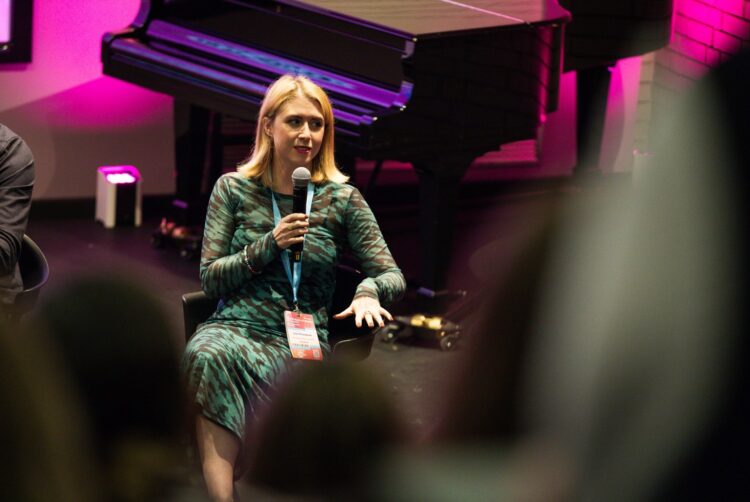
At this year’s Future of Media Manchester event, Sam Tidmarsh, head of content and The Media Leader‘s events business Adwanted Events, hosted a panel of experts to answer attendees’ questions about how consumer data and insights can be used to impact media strategies.
The session featured Havas Media UK strategy partner Thomas Reeve, Ozone head of insight and communications Alex Maude, Wavemaker North strategy lead Lisa Thompson, and Republic of Media head of research and insights Laura Maguire.
The panellists were unable to get to every question posed by the room full of adlanders, but were kind enough to follow up here. Conference attendees submitted the following questions in real time.
Is there a trend towards cheap research leading to data that doesn’t address reality and reflect real people? Should there be more investment?
Reeve: “Technology is a wonderful thing. We have access to more data than ever before and the tools to interact with it in increasingly meaningful ways. I am in favour of harnessing AI to empower planners to do more with their time, focusing on uncovering real insight that drives strategic value.
“However, over-reliance on data signals (synthetic or otherwise) means we fall short when it comes to capturing the complexity of human behaviour. The risk is that we end up with insights that are shallow, biased, or disconnected from the diverse lived experiences of real people.
“As for cost, good research has never been cheap, but that doesn’t mean planners can’t take simple steps to get closer to the people they’re trying to connect with. It can be as straightforward as stepping outside of your bubble and having honest conversations with people. If we want research to inform strategy and drive truly meaningful decisions, we need to shift the mindset from efficiency to value creation. That means investing in approaches that prioritise rigour and representation.
“Crucially, planners should experience the messy, unpredictable nature of human behaviour as it’s often in the outliers, the contradictions, and the unexpected moments that we find the richest insights that unlock new growth opportunities.”
Thompson: “The cost of research isn’t what dictates how good it is. I’ve seen expensive research that’s bloody useless, and cost-effective research that’s absolutely brilliant. The price tag isn’t what makes research good—it’s the thought, care, and clarity of purpose behind it.
“The real key is understanding why you’re doing the research and making sure every step is aligned with that goal. Spend smart, not just big.”
Maguire: “There should definitely be increased investment, but research budgets are typically at the forefront of being the first cut, so it can be really challenging. All media agencies have their own (nat rep) audience planning tools, but over time, AI-generated insights and big data are eroding representativeness, depth, and reality.
“AI can guesstimate trends, but nuances can be missed – especially cultural ones; while big data is so vast that qualitative voices don’t even feature and can include internal/external biases. Even convenience samples, which at the time are deemed fast, effective and ‘cheap’, don’t truly represent target populations as they have essentially been hand-picked to save time and money.
“Investment should therefore be placed on mixed method approaches where its not simply one data set that determines how we proceed, data collection/analysis should be combined with traditional surveys, big data, qualitative interviews/ethnography and AI to all reach an accurate and real depiction of reality and real people.”
Maude: “I don’t believe so. Across the industry, brands, agencies, media owners, platforms and trade bodies continue to invest in research and data. This investment helps them discover real, credible insights that add value. Look at the quality of the insight presented at the Future of Media Manchester, the work entered into the Media Research Awards every year, or the papers shared by members of the Media Research Group. It’s top-notch stuff.
“Ozone is an audience connection platform, fuelled by a unique data set that informs and powers all the ad campaigns we run. We really value the insight we derive from our platform. We take great care to respect the contracted and compliant data shared by our publisher partners. We continually invest in our data infrastructure, capability, and talent. This ensures we have a rich picture of our audiences to create more effective advertising campaigns.
“One big area of focus for our team is to democratise data use. We do this by investing in the tools and capabilities for our wider team. This allows them to tell the stories they need to tell their customers from our treasure trove of data points.”
How to deliver on boardroom promises — with Boots, Havas, Kinesso and MiQ
Are we at risk of overcomplicating things by going too deep into data, when it may be simpler just to hit folks with a simple message?
Reeve: “Data is an essential part of modern planning, but not every data point is useful. We should be more intentional about how and when we use it.
“The real value of data lies in how it supports better outcomes, whether that’s through sharpening our understanding of people, targeting them in the right moments or optimising our approach to drive effectiveness.
“We shouldn’t fall into the trap of using data for data’s sake. For example, not all messaging needs to be personalised; in fact, Havas research has shown that overuse of personalisation can alienate audiences. Ultimately, we should be using data to serve the work, not the other way around.”
Thompson: “The simplest messages often come from diving deep into the data. It’s usually the result of tons of hard work, digging into the research, and going all in on the details.
“The real skill lies in taking all that insight and presenting it in a way that feels clear, effortless, and almost obvious.”
Maguire: “A true insight is short and sweet but grounded in fact, so while consumers should always be presented with the simplest message possible, digging deep into the data, to a certain extent, is what’s normally needed to have a perfect distilled understanding.
“But it’s completely fair that in some instances such as establishing a brand, growing baseline awareness or reaching a broad audience, simply getting consumers to recognise, feel or do something is enough and understanding of the why can come later.”
Maude: “Going deep into the data is part of the job for researchers, analysts, and data specialists – I mean, who doesn’t want to get their hands dirty with a load of data? Without sifting through the detail, how else would you identify what’s an insight and what’s not? If anything, surfacing simple messaging and making it stick in people’s minds is the real skill.
“It is easy to get distracted by the volumes of data. Making the switch from analyst mode to storyteller is no mean feat, but that’s where sticking to your hypothesis and objectives, thinking about the audience you’re trying to engage, collaborating with others, and seeking inspiration from outside your own personal bubble is really, really important. Mark Hadfield’s presentation at the Future of Media Manchester was very grounding. My takeaway: real people are not data, and data needs to be humanised.”
What are your thoughts on using synthetic surveys to enhance the quality of findings of big data, and are there any rules on when we should and shouldn’t use AI?
Thompson: “If there’s one word to keep in mind with this question, it’s enhance. [AI] is a brilliant tool to make your research work harder, smarter, and faster.
“At Wavemaker, our incredibly clever Insight experts have pulled together some fantastic guidelines, grounded in academic research, that I’ve personally found invaluable as I’ve started to explore this space. Synthetic data can streamline processes, accelerate insights, and enable creative ways to test ideas.
“But, like any shiny new tool, it needs to be used responsibly. The key? Make sure it’s based on real audience data, validated with real participants, and always backed by rigorous human oversight and transparency. Synthetic data should enhance your research, not replace the real-world data that gives it integrity. Think of AI as your research sidekick—it won’t do the thinking for you, but it’ll supercharge your process and free you up to use your real brain to uncover the insights that matter.”
Maguire: “There is a time and place for synthetic surveys mainly due to cost, time and representativeness. Traditional survey methods can be expensive and take time for fieldwork to run and big data can often omit people in data collection, so synthetic surveys can account for this and adjust the population weighting to include them.
“They don’t, however, replace real primary data, where data sensitivity is key and validation can be needed, so that risk always needs to be debated and is client and brief/objective dependant.”
Maude: “Using synthetic datasets and AI tools present us with huge opportunities and challenges.
“For synthesised data, ensuring you’re working with credible, human-verified sources of information is key. If datasets are synthetically produced then they should be clearly kitemarked, with the provenance transparent – there should be no black box!
“Used correctly, it can be incredibly effective in synthesising scale efficiently. A consensus approach to its use is also important. UKOM-endorsed data in Ipsos iris makes use of synthetic data for digital audience measurement, but the UKOM endorsement comes from an industry-agreed set of standards (painstakingly agreed by real human stakeholders, I should add).
“As for AI, absolutely there should be rules in place. AI is a technology in its infancy. For all the headlines, chatter and eye-watering investment levels, we’re all still working out what it is. At Ozone, we have a group of AI champions who have provided use cases by business area so they can be rigorously tested.
“Guardrails should be in place to ensure its responsible, sustainable and specialist-led use. AI is a tool that can help empower us, but setting rules and guidelines about its application is important.”