



Biggest questions in broadcasting, streaming and Pay TV answered at Connected TV World Summit
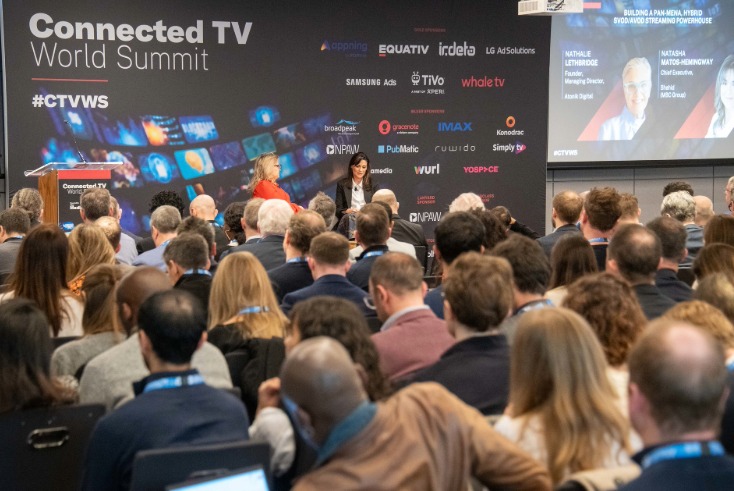
Connected TV World Summit returns from March 10-11 (at Kings Place in London) with a thought-leadership programme that tackles the biggest questions in media and entertainment.
These include how broadcasters balance owned-and-operated streaming distribution (through their own BVOD services) with a growing range of third-party distribution options, from YouTube and Spotify to global SVOD services.
The event also considers how Pay TV operators remain the go-to aggregators despite much of their content being non-exclusive, and how they maintain their UX advantage over Smart TVs that increasingly offer a content-rich home screen.
Speakers include:
- Frank Rippl, global head of TV product, Vodafone Group
- Nicole Agudo Berbel, managing director & chief distribution officer, Seven.One Entertainment Group
- Chris van der Linden, director entertainment platforms, Liberty Global
- Laurence Pera, head of strategic partnerships, Groupe TF1
- Marco Hellberg, managing director, CANAL+ Germany
- Kerensa Samanidis, general manager, BBC iPlayer, BBC
- Ivor Micallef, director entertainment products, Telenet
- Grace Boswood, director of technology & distribution, Channel 4
- Julie Mitchelmore, VP, product and commercial partnerships, Hearst Networks.
- Ruben Senor-Megias, VP product delivery broadband & TV, Deutsche Telekom.
Technology sessions focus on platform operator app and device strategies, and how the industry prepares for ever-greater streaming audiences.
The event also looks for ways to increase advertising revenues at broadcasters and other premium TV providers. Speakers consider how TV takes a greater share of performance marketing budgets and ways to enable more and better targeting on TV.
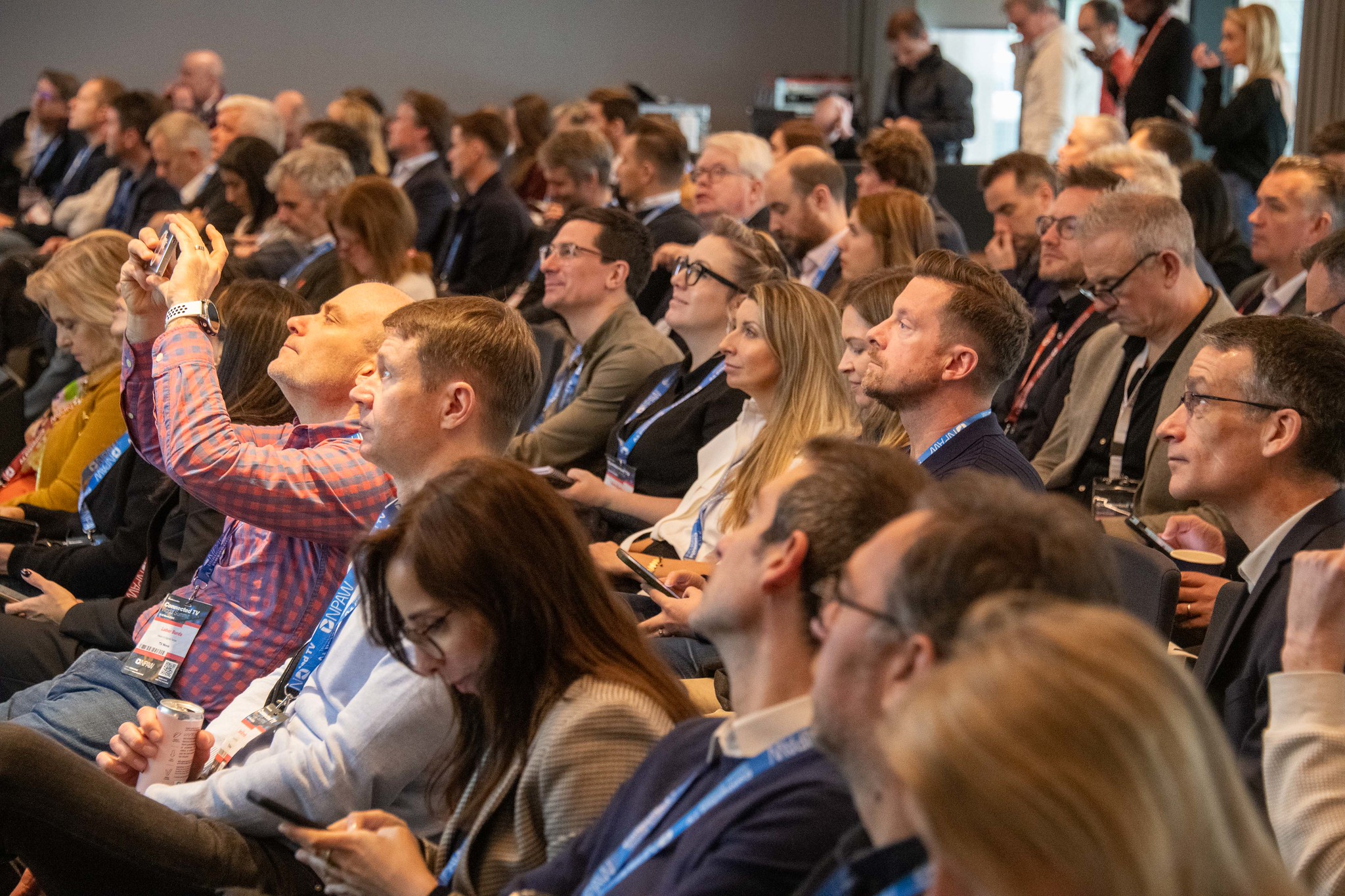
Broadcaster distribution strategies
One of the most interesting developments in TV is the close collaboration between some major broadcasters and global SVOD services, several of which involve broadcaster linear channels appearing in the SVOD apps.
As broadcasters everywhere review their distribution strategy and the balance they want between their owned-and-operated BVOD services and third-party partners (including YouTube), Connected TV World Summit assesses their expanded distribution options.
Laurence Pera at Groupe TF1, whose linear channels will appear in Netflix France starting this summer, is among the broadcasters speaking.
She outlines the ambition to establish TF1+ as a go-to destination platform (including with multi-market expansion) before addressing TF1’s work to optimise reach through OTT and telco ecosystems – including with Netflix.
Grace Boswood at Channel 4, explains the UK broadcaster’s determination to meet viewers where they are, like on YouTube and Spotify.
Channel 4 is a global pioneer when it comes to partnering with video sharing and social media platforms, and the strategy is about more than drawing viewers back to Channel 4’s own streaming service – as witnessed by its commitment to long-form programming on YouTube.
Grace’s colleague Hannah Barlow, head of social sales, explains how Channel 4 is successfully monetising its distribution across YouTube (where the broadcaster sells its own ads), TikTok, Spotify and other platforms.
Maria Rua Aguete, head of media and entertainment at Omdia, analyses the rationale for creating curated broadcaster hubs that sit within global SVODs, looking at this question from the SVOD and broadcaster points of view.
Nicole Agudo Berbel at Seven.One Entertainment, whose brands include ProSieben and SAT.1, explains how the strategy of ‘Alles auf Joyn’ is creating a super-streamer to compete with global SVOD platforms.
She then joins a panel discussing broadcaster strategies to widen audiences and increase viewing time.
Kerensa Samanidis at BBC iPlayer explains how the BBC emphasises distinctive homegrown storytelling to differentiate from global media providers.
Why consumers need Pay TV
Network and studio content that was once exclusive to Pay TV operators is now inside SVOD apps that can be found nearly everywhere, and this conference asks how platforms create unique value propositions today, in collaboration with content partners.
Telenet’s Ivor Micallef is among the executives tackling this question, and what makes consumers seek content through one user interface rather than another.
Frank Rippl at Vodafone Group, and Deutsche Telekom’s Ruben Senor-Megias also feature in a session themed, ‘New opportunities in Pay TV’.
In a session about set-top box and app strategies, Alejandro Casal Gomez, senior TV technical product manager at KPN, explains how the Pay TV operator addresses different market segments through UX and device choice. He also explains how KPN helps users manage their apps subscriptions.
Attendees can hear how Liberty Global has transformed voice search on its Horizon TV Entertainment platform using AI.
Chris van der Linden explains the pioneering SuperSearch solution – powered by Google’s Gemini large language model – which understands natural, conversational queries like ‘Give me something about space’.
SuperSearch is already live at Sunrise and Ziggo. Visitors can hear how the product was defined and what backoffice guardrails are in place.
Deutsche Telekom will outline its customer premise equipment strategy, including the evolution of set-top boxes, with reference to the near-term impact of the global memory shortage (caused by AI build-out) and how that shapes current thinking.
Mike Echternach, senior commercial product manager TV at the Pay TV operator, provides the insights. He also reviews the groundbreaking partnership with VIDAA and Hisense to develop an Operator Smart TV that will use Magenta TV as the default UI.
Smart TVs and streaming
Connected TV World Summit is produced by Adwanted Events, which publishes The Media Leader.
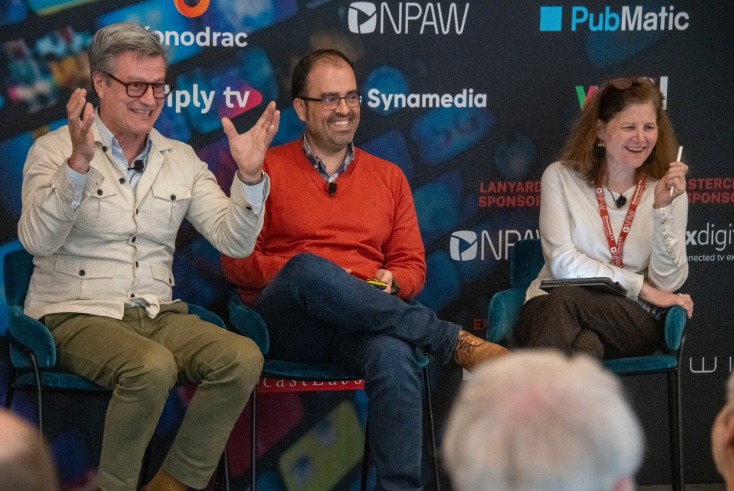
The conference, which attracts hundreds of international speakers and attendees, includes a panel discussion about how Smart TV OS providers can become the aggregator of choice when consumers seek streaming TV.
Visitors will hear how FAST can evolve on these platforms and how TV-OS and content providers can deepen their relationships.
Speakers include Jayakumar Raju, deputy chief editor, news & current affairs at CNA, MediaCorp and Rakuten TV’s head of partnerships and business development, Europe, Jorge Del Puerto. Kasia Jablonska, director of digital and on-demand for EMEA at BBC Studios, also addresses this subject.
There is an early chance to hear from Ventura, the new Smart TV OS platform (from The Trade Desk) that promises television set OEMs a fairer share of revenue from streaming ads, content rentals and purchases.
Ventura promises never to own content or sell advertising inventory, and Matthew Henick, SVP of Ventura TV OS at The Trade Desk, is in London to share the big vision.
Jack Davison, executive vice president at 3Vision, outlines the latest trends in content acquisition and licensing, with a special focus on the relationship between US studios and broadcasters.
Linette Zaulich, head of B2C at ZDF Studios, explains how the global expansion of streaming enables her company to move beyond traditional content licensing and build its own B2C channel products.
She outlines how ZDF Studios is developing and positioning FAST, SVOD, AVOD and YouTube channels internationally, and what shapes successful channel strategies.
A panel discussion about ‘The evolution of content and distribution strategies’ looks at content licensing, windowing and distribution partnerships. The future of AVOD is also on the agenda.
Parul Goel, territory head Europe and CFO Europe/Americas at Zee Entertainment, and Tubi’s EVP & managing director, David Salmon, are among the speakers.
Global TV shake-up
Other agenda highlights include Richard Broughton, executive director and co-founder at Ampere Analysis, exploring the economics and business rationale driving a new wave of M&A and innovative distribution partnerships in TV.
Media giants are splitting studio and streaming activities from linear networks (as with NBCUniversal). Broadcasters and global streamers are buying Pay TV providers (witness RTL and Sky Deutschland, and DAZN/Foxtel).
Pay TV providers have expressed an interest in buying broadcasters (see Sky and ITV).
European broadcasters like TF1 and France Télévisions are making their linear channels available within global SVOD services (Netflix and Prime Video respectively).
Broughton assesses the common denominators that help us predict the next big deal.
François Godard, analyst at Enders Analysis, reviews the potential for streaming services to act as aggregators.
Can they fulfil a similar function to traditional Pay TV, free-to-air platform operators and Smart TV OS providers, presenting branded and curated content from multiple third-party media owners in one place?
Tom Morrod, co-founder and research director at Caretta Research, reviews the technology investment priorities for platform owners, broadcasters and other streaming services during 2026-28.
Thierry Fautier, managing director at The Media League, explores where AI can make TV more engaging and profitable.
In the advertising content stream, leading media owners and buyers, including Ross Sergeant, global media director at Allwyn (the multinational lottery operator) address one of the most pressing questions in the industry: how to grow advertising budgets in 2026-28.
Across three sessions, other advertising related speakers include Matt Hill, director of insight & measurement at Sky Media and Sam Taylor, head of marketing at Lloyds Banking.
Vincent Grivet, chairman of the HbbTV Association, explains how HbbTV can unify the fragmented CTV opportunity.
The event has moved to a larger venue – the much-liked Kings Place, a five-minute walk from Kings Cross station in London.
Use these links to learn more about the conference or register.