



Channel 4 appoints Priya Dogra CEO amid revenue diversity push
The Future of TV Advertising Global 2025
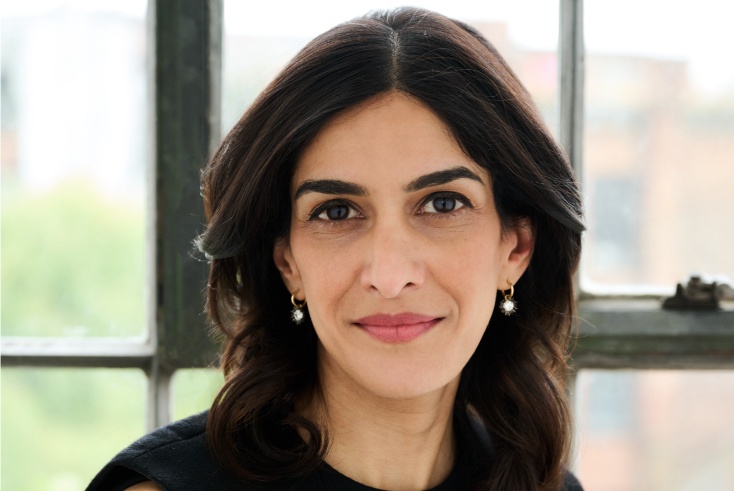
Priya Dogra, Sky’s chief advertising, group data and new revenue officer, has been appointed the next CEO of Channel 4.
She will take on the role from March 2026; interim CEO Jonathan Allan will continue leading the broadcaster until then.
In her role at Sky, Dogra has spearheaded the Universal Ads initiative, a collaborative effort between Sky, ITV, Channel 4 and Comcast’s FreeWheel to create a self-serve marketplace for small- and medium-sized enterprises.
Before joining Sky, she spent 14 years at Time Warner, WarnerMedia and Warner Bros Discovery (WBD), most recently as WBD’s EMEA president and managing director.
Dogra, who will become Channel 4’s eighth CEO, commented: “Joining Channel 4 at this moment is a genuine privilege. Few organisations sit so firmly at the heart of British culture or have such a clear purpose and vital mission: to challenge, to reflect and represent voices across the UK, and to spark change through entertainment.
“I very much look forward to working with the brilliant team at Channel 4 and with partners across the creative industries to build on its distinctive and ground-breaking programming and reporting, accelerate its digital ambitions, and deepen its connection with audiences across every platform.”
The decision to appoint the next CEO of Channel 4 was previewed on Tuesday morning by Allan, who said he had “no idea” whether he would be appointed full-time CEO and joked that it’s been “the longest interview period ever”.
In a statement, Channel 4 chair Geoff Cooper thanked Allan for his “impressive leadership”, adding that his “steady hand on the tiller” helped steer the broadcaster through “choppy market conditions in the last part of the year”.
Cooper said of Dogra: “Priya is ideally equipped to lead the business through its next chapter, and we are thrilled to welcome her aboard.”
Digital transformation the priority
Regardless of its new leader, Allan explained to a crowd at The Future of TV Advertising Global in London on Tuesday that the business is currently focused on driving digital transformation.
“We know linear TV is massive, it’s got huge scale and reach now, but over time that is declining,” he told consultant and conference producer Justin Lebbon. “And at the end — whether that’s 2040, 2045, whenever you believe that might be — linear will no longer be here, and we’ll be a completely streaming-led proposition. Channel 4’s always tried to get ahead of that.”
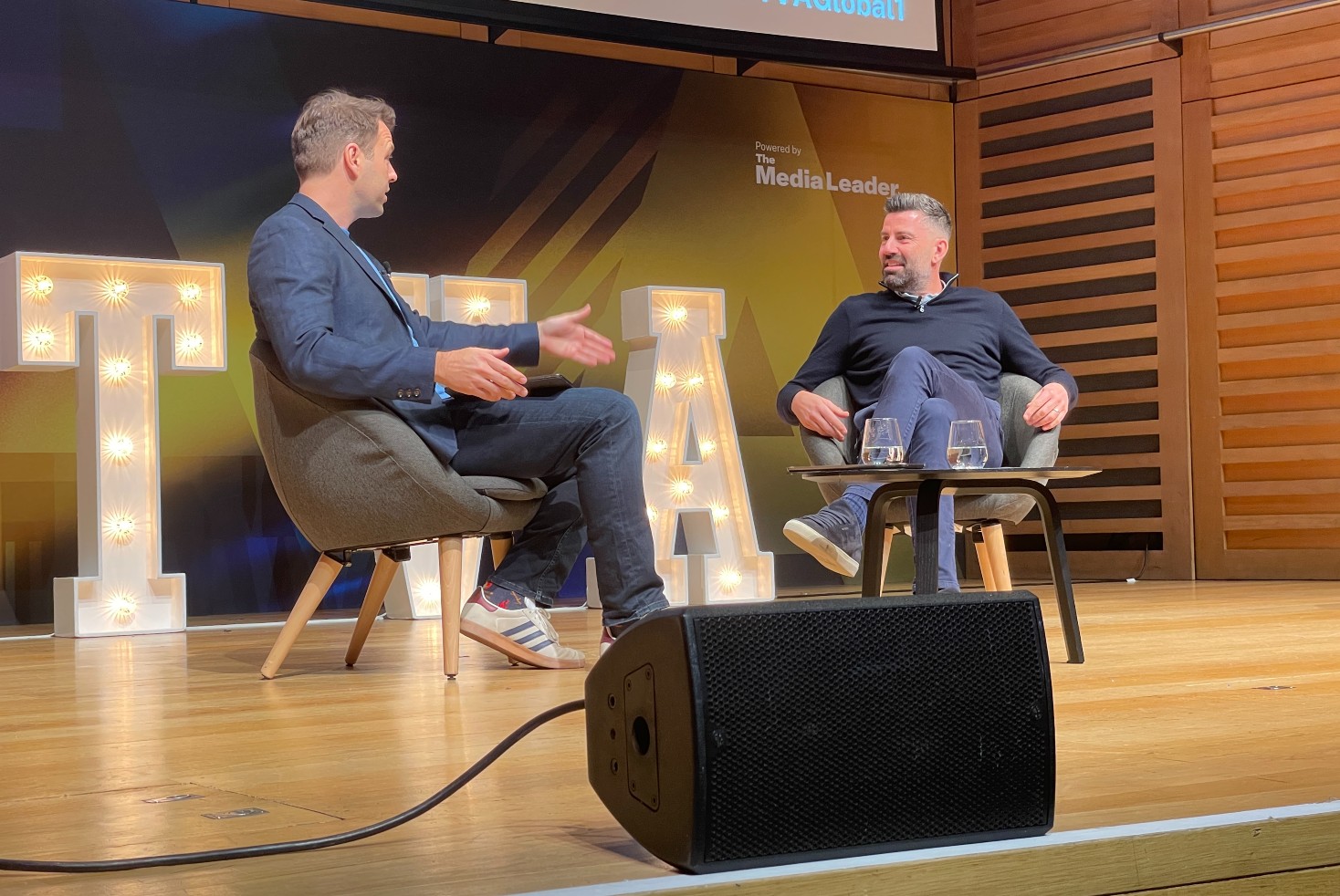
Allan (right) in conversation with Justin Lebbon at The Future of TV Advertising Global 2025.
Allan previewed that between 32% and 33% of Channel 4’s total 2025 revenues will come from digital. In its 2024 earnings report, the broadcaster reported that digital ad revenue grew 9% to £306m, accounting for 30% of total revenue (one year ahead of the broadcaster’s target).
As of last year, non-linear revenue more generally accounted for 39% of total revenue.
“Digital transformation is the key thing we’ve got to do,” Allan added. “That’s kind of a technical problem, but also it’s a cultural challenge.”
To that end, as interim CEO, Allan has overseen a changing of the guard within Channel 4’s commercial team. Since joining at the start of the year, chief commercial officer Rak Patel has reorganised senior leadership by bringing in a raft of new additions, many from tech backgrounds.
Seeking revenue diversity
Currently, around 90% of Channel 4’s revenue comes from advertising.
“It’s really fucking important for us,” said Allan. “But it’s also a risk, so we need to diversify as well”.
Ad revenue is capable of driving nominal growth, but not transformative growth, he continued, noting that C4 is “holding our own, but we’re not growing enough.”
Channel 4 debuts new-look commercial team following reshuffle
As such, the broadcaster “definitely” needs to consider how it builds alternative business models, including expanding its subscription business.
In May, Channel 4 also set out a plan to build in-house production capabilities and take majority stakes in independent production companies, a multi-pronged approach aimed at investing in intellectual property (IP) ownership.
Allan likened the ideal business model to the likes of Spotify and The Telegraph, which maintain larger subscription-based businesses.
“We’ve got to look at subscriptions, we’ve got to look at IP, we’ve got to look at different ways of diversifying revenues, use the brand, license it, more partnerships with other people,” he continued.
While Allan indicated Channel 4’s subscription business is “growing well”, he reaffirmed that subscriptions will “always be quite a small proportion of our overall [business]” and that advertising will be “our bread and butter for the next 25 years”.
Closing the outcomes gap
Advertising investment has generally shifted away from linear TV, and with more video-based supply in the market, including social video, TV’s prominence in media plans is at risk.
Allan appealed to advertisers’ willingness to support public-service media as an important social good, warning: “If you don’t, then be careful what you wish for. In the future, that may not be there quite as it is now.”
But he admitted that such a purpose-driven argument is insufficient to convince advertisers to spend with the likes of Channel 4, and that it is incumbent upon broadcasters to prove their worth.
That includes driving innovation for advertisers, such as launching a forthcoming SME marketplace in the UK and delivering outcomes-based measurement through Lantern, both set to launch next year as collaborative efforts with Sky and ITV.
Allan reaffirmed that, if named CEO of Channel 4, he will maintain strong industry collaboration efforts.
“I’ve grown up in TV,” Allan remarked, noting that he began his career in media as a TV buyer. “I know how effective it is from an advertising perspective. But we don’t quite have end-to-end data going through to sale that others do, and therefore we miss out a little bit because we can’t quite close that gap. So that’s what we’ve got to work on.”
Channel 4, ITV and Sky commercial chiefs ask advertisers to ‘turn down the toxic’
Citing his planning background, he advised clients to spend their ad investment “kind of everywhere”, admitting Google search campaigns are “very effective”. But he added that a combination of TV, search and other “performance”-centred channels tends to deliver the best results.
“Quite a few businesses get stuck because they saturate all those bottom[-funnel] channels, and they’re very expensive, and they’ve got no real brand to drive any differentiation or drive them through the funnel,” Allan continued, noting that TV is still the best channel for demand creation.
Protecting UK voices amid global TV consolidation
Asked to react to Sky’s potential acquisition of ITV’s Media & Entertainment business, as well as Netflix and Paramount’s duelling bids for Warner Bros Discovery, Allan declined to discuss either deal in detail, offering instead that Channel 4 “looks on with interest”.
Addressing the consolidation in the TV market more generally, Allan said that while he can “understand the industrial logic of consolidation”, he warned there are many examples of mergers that have “destroyed value and destroyed creativity”.
He added it is important for the UK TV industry to remain focused on providing “UK-originated content for UK viewers” — as opposed to global or American viewers — as US-headquartered streaming services continue to scale through organic or inorganic growth.
“That dynamic of how we protect our content and our voice, our IP and our creative industry in a world that is potentially becoming more global” becomes even more important, Allan offered, adding that the UK TV industry’s vibrant and competitive landscape benefits viewers.
“We need to protect that.”
This article has been updated after publication to reflect confirmation that Priya Dogra has been named the next CEO of Channel 4.