



Get in the game: why Havas Play thinks brands should be doubling down on women’s sport
Feature
Overcoming adversity, creating their own destiny, more history and a true legacy
Vicki Sparks – BBC Sport on England’s Euro 2025 victory.
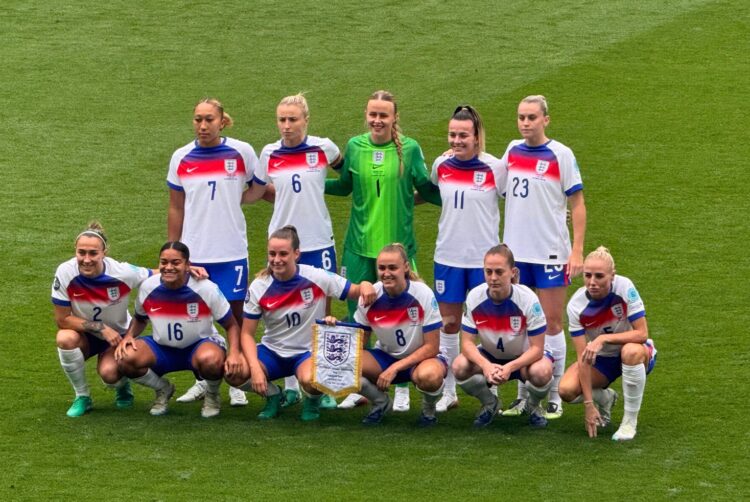
2025 always promised to be a groundbreaking summer for women’s sport, and England’s victory at Euro 2025 on Sunday has delivered on that promise on the pitch already.
Off the pitch, signs seem to be just as positive, meme-worthy radio phone-ins aside.
A peak of 16.2m watched the Euros 2025 final across ITV and the BBC, with ITV reporting its highest rating of the year with England’s semi-final victory over Italy, which had a peak of 10.2m across all devices.
Big TV audiences usually equal big brand advertising, and with women’s sport that can be the case. But according to research by Havas Play, there is also much more scope to grow.
The report, titled Vision 2035, co-written by strategy partners Ellie Moss and James Masters, urges brands and the wider industry to boldly imagine what the future could be for women’s sport if they see 2025 not as a peak, but as the launch pad for a decade of unparalleled growth and opportunity.
A chance to shape the future
The timing couldn’t be better.
Not just because of the Lionesses this month, but with the Women’s Rugby World Cup on the horizon, women playing at Queens for the first time in 50 years, and major events across cricket and beyond, 2025 is a landmark year for women’s sport in the UK.
The momentum isn’t accidental; it’s the culmination of years of dedication from athletes, coaches, sports officials and grassroots initiatives. As the report indicates, approximately three-quarters of adults now follow at least one women’s sport, with women’s football alone boasting 20m followers.
“This isn’t the end, this isn’t the tentpole moment, this is almost just the start of a really exciting journey,” explains Moss. “The rapid pace of change means that as we were writing the report our future ambitions had to become even more bold”.
The relative cost effectiveness of involement now, compared to where women’s sport is expected to grow to in the next decade, presents a unique window for brands to not only invest but to actively shape the future of women’s sport, Moss argues.
Beyond the immediate commercial gains, the report argues there is an opportunity for rich storytelling — investing now means brands can have an integral role in the growth of a team, a league, or a group of athletes.
“This isn’t just about sponsorship; it’s about co-creation and being part of a legacy” says Masters. “Many rights holders have matured their women’s sports properties to a point where they are commercially viable and inherently exciting. The upcoming Women’s Rugby World Cup, for instance, has been built as a standalone commercial offering with its own intellectual property, making it a highly attractive proposition for brands.”
How should brands get involved?
Moss and Masters say brands should take a strategic approach, starting with the core marketing goals. Investment in women’s sport should be meaningful and long-term, not a fleeting engagement, they argue.
While elite-level sponsorships might seem the obvious choice, Havas Play encourages brands to look beyond the top tier.
They highlight the example of Charlotte Tilbury’s involvement with F1 Academy. Beyond sponsoring a car and driver, they’ve initiated scholarship and academy programs in karting, demonstrating a fuller commitment to the sport at various levels.

This multi-faceted approach allows brands to tap into compelling stories and personalities that exist throughout the sport, not just at the pinnacle.
“There are huge personalities, not just at the elite level,” notes Moss, highlighting the potential of underdog stories, much like the Welcome to Wrexham narrative (which isn’t really an underdog story at all, but the application of disproportionate financial resources – Ed).
Brands can also play a transformative role beyond financial investment.
With many women’s teams and athletes struggling with underinvestment, there’s significant scope for innovation and co-creation.
Instead of merely sponsoring a team, a brand could co-create or even own a team or league, explore new short formats of a sport, or leverage technological advancements.
The report envisions a future where brands don’t just put their logo on an event but actively contribute to shaping the future of women’s sport, for example, by funding research into crucial areas like the impact of sport on women’s bodies and injury prevention.
“Its crucial to understand that this isn’t a “CSR (corporate social responsibility) play or a charitable endeavor” says Masters.
“Women’s sport offers access to massive, engaged fan bases and influential athletes with significant social followings. Brands aren’t just adding value, they’re tapping into something that already possesses immense inherent economic and marketing value.”
Which brands stand to benefit?
While traditionally, large national institutions like Barclays and EE have been prominent in women’s sport, Havas Play believes the current landscape offers opportunities for a much broader range of brands.
Masters passionately argues against delineating women’s sport by specific brand categories, asserting that its broad appeal makes it ripe for almost any type of brand, provided values align.
The emergence of beauty and fashion brands like Charlotte Tilbury and Calvin Klein, intersecting with cultural verticals, exemplifies this expanding scope, as does Adobe’s partnership with the Women’s FA Cup.
Instead of traditional badging, Adobe identified a genuine need within clubs for creative and design support, providing not just access to products but comprehensive campaign support in an innovative way.
“I’ve spoken to people who play and work in clubs and they think this kind of sponsorship is amazing and demonstrates a more meaningful and impactful form of sponsorship” says Moss.
A powerful reaction and a collaborative future
Havas Play is itself actively involved in numerous women’s sport initiatives, working with brands like EE and Adidas on the Women’s Euros, and HSBC Championships (Queens).
According to the pair, their commitment extends beyond capitalising on commercial opportunities, and is deeply rooted in the personal passion of individuals within the agency who have championed women’s sport for years.
Moss and Masters’ call to action is clear: “Don’t wait on this.”
For brands on the sidelines, the message is to engage now, to get curious, attend games, and experience the opportunity firsthand.
The rise of women’s sport is not slowing down, and the chance to make a significant and lasting impact is here. By working together — brands, rights holders, media, and agencies — the industry can collectively shape an extraordinary future for women’s sport and, by extension, for society as a whole.
As Moss concludes: “Our hope is that we are part of building that next decade”.