



Inside TikTok’s journey to become a retailer and search competitor
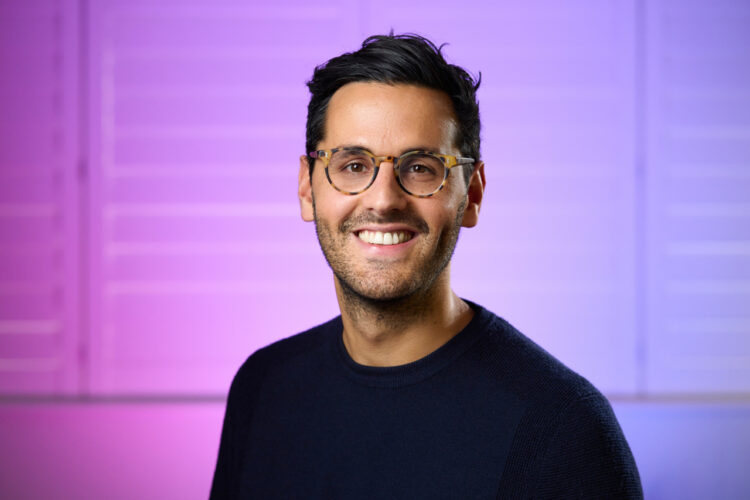
The Media Leader Interview
General manager of global business solutions Kris Boger speaks to The Media Leader about TikTok’s expansion into commerce and search, how the platform has innovated despite US ownership uncertainty, and challenges in tackling teen safety.
Is TikTok a retailer?
It’s a legitimate question. Just four years after launching its commerce platform, TikTok Shop, it has become the fourth-largest beauty retailer in the UK, and a quarter of Brits say they’re using the platform to conduct their Christmas shopping.
The number of products sold on the platform has grown 445% year over year. Major retailers such as M&S, Lidl, and Asda are listed on the platform and are selling Christmas turkeys and trees this festive season.
“We’re a significant commerce platform now,” Kris Boger, TikTok’s general manager of global business solutions for the UK, Ireland and Benelux tells The Media Leader. Chuckling, he says TikTok would “be okay with the retailer comparison”, but insists it’s only one aspect of a growing business. “We’re a full-funnel platform,” he adds. “People are discovering products on TikTok”.
Some verticals on the commerce platform are more mature than others. Beauty, fashion, and retail have stronger traction than, say, CPG brands, but Bogers notes that companies like Coca-Cola are also growing their presence on TikTok Shop.
A growing search destination
TikTok Shop exemplifies a convergence of TikTok’s business strategy with that of a company like Amazon. Whereas Amazon built its business as a retailer and later expanded into entertainment through Prime Video, TikTok began as an entertainment platform and later expanded into retail.
But the social video giant hasn’t just sought to become a marketplace; it has also become a search engine, with TikTok users now making 4bn searches on the platform each day.
Is TikTok a legitimate threat to Google’s search dominance? Boger calls the search market an “evolving landscape”, one that AI search tools and short-form video have upended.
One in four TikTok users conducts a search within 30 seconds of opening the app, demonstrating there is a “native consumer behaviour for people that are coming to our platform to search for things,” Boger posits. “[Users are] opening TikTok and they might not even be coming to scroll their For You page or check TikTok Shop; they’re coming to use search”.
Because of TikTok’s visual nature, user search behaviour differs from that of web search engines. Consumers typically look for visual inspiration, how-to guides, or advice on topics such as travel destinations or recipes. This can complement more traditional or AI-led search, creating an opportunity for TikTok if it seeks to build text-based AI search functions into its platform, much like competitors Meta and Google have.
‘We’ve become a dominant force’
As TikTok has expanded across the funnel, publishers have sought to onboard both by embracing short-form video and commerce.
Emma Callaghan, Reach’s chief revenue officer, told The Media Leader this summer that TikTok has taken a central role in Reach’s commerce strategy.
She boasted that OK! magazine’s Beauty Box product was “one of the most trending beauty products on TikTok Shop for a couple of days”. When asked whether this was Reach’s standard of success, she replied: “It’s not the only standard, but it’s one of the things that we’re monitoring, and it’s a good metric that we’re viral”.
Meanwhile, one of ITV’s biggest announcements at its own Palooza event earlier this year was that it had joined TikTok’s Pulse Premiere programme. Sky likewise dedicated its annual Showcase to its social media output. Even Prime Minister Sir Keir Starmer has finally made a TikTok account (which, of course, also features chief mouser Larry)
“This is definitely the year that we’ve become a dominant force, a major force within the industry,” Boger reflects. “I think that’s been true for brands and for publishers as well. […] With TikTok’s role in culture, then I think naturally the partnerships with ‘mainstream’ media, or whatever you want to call it, TV or the news media, are really important.”
When asked whether TikTok views itself within the TV budget consideration set, Boger says TikTok has become “competitive with a lot of different media, to be honest.”
He continues: “I wouldn’t pigeon-hole us in one media or another. I think you could form an argument that we are playing on a lot of different stages of the funnel. That puts us as competitive with a lot of different companies.”
Owning the mid-funnel
Whereas search and commerce tend to play at opposite ends of the marketing funnel, Boger expresses an interest in growing just as much in the “mid-funnel” as part of a broader effort to build TikTok into a full-funnel offering.
“We’ve launched some meaningful products across the marketing funnel to get us to the point that we can confidently say we’re now number one or number two for a lot of major advertisers, depending on their objective,” he says.
Key to this is the Brand Consideration ad product, which launched in May and enables brands to identify a “high-intent” user with a “hypersensitivity to convert” based on their TikTok usage, and apply this insight to their marketing efforts.
Playing in the mid- and lower-funnel has led TikTok to adapt its measurement approach. A team of solutions engineers today works to “optimise every campaign to give the best performance against a client’s source of truth,” says Boger. “Whatever you say is the goalpost, that’s fine. If it’s last-click [attribution] or whatever”.
The Media Leader reminds Boger that its own head of client measurement, just two years ago, decried last-click attribution as a poor way of measuring media effectiveness. But now that TikTok has a strong commerce solution, that stance appears to have shifted.
“As a discovery platform, we see that the role we can play is often upper-funnel,” Boger says today. “That’s evolved over time with our mid-funnel offering and our commerce platform, too. […] We don’t see it as our role to tell the industry how they should measure.”
Navigating US sale uncertainty
TikTok’s growth in commerce and search has continued even as its US ownership status has remained uncertain all year.
Boger acknowledges that brands have sought reassurance that TikTok will continue to “be around to support them”. This is of interest to UK clients, many of whom derive large audiences from the US market.
He denies, however, that TikTok has been in a “holding pattern” this year amid the uncertainty. “It’s not really the nature of this place to wait and to hang around. We move quickly. We dream big.”
Boger declines to comment on any potential US buyer. In September, The Wall Street Journal reported a “framework of a deal” had been reached with a consortium of investors, including Oracle (owned by Larry Ellison, who this year became owner of Paramount Skydance and who has launched a hostile bid to take over Warner Bros Discovery) and tech investment groups Andreessen Horowitz and Silver Lake. US investors would hold an 80% stake, while Chinese investors would maintain a 19.9% stake.
US TikTok sale brings uncertainty for creators amid free speech chill
Under those reported terms, the new company would have a US-dominated board, including one member designated by its government. It may also require creating a new app for US users, though TikTok’s existing algorithm and other intellectual property could be licensed.
Any such deal could mean that advertisers will be forced to “budget separately for US TikTok and rest-of-world TikTok”, using distinct datasets, ad products and targeting rules, Dept head of influencer Tiah Slattery previously told The Media Leader.
Given the uncertainty, TikTok creators have also been urged to diversify their posting habits to include competitor social video platforms, with beneficiaries including YouTube Shorts and Instagram Reels.
Boger calls creators the “lifeblood” of TikTok, adding it hasn’t “seen any change” in how creators are drawn to the platform in the UK.
AI as an enabler and a concern
Like its competitors, AI has transformed the way brands work with TikTok. Tools like TikTok Symphony, launched last year, have used AI to help advertisers scale and tweak creative.
Boger claims that the time required to produce a creative asset on TikTok has declined by 75% with Symphony.
Does creating more assets lead to better performance? Boger says yes, arguing that AI-led creative assets “enable [brands] to be more tailored and customised”. That includes using AI to dub or caption hero assets in additional languages to reach international audiences.
AI-recommended creative, based on platform data, is also becoming common. Boger notes that creative production is shifting from an effort based solely on artistic instinct and “gut feel” toward a data-led, predictive process.
More isn’t always more, however. AI has also enabled the rapid creation and dissemination of misinformation, and this year, platforms like TikTok have become overrun with AI slop, a pejorative for low-effort, low-quality generative AI videos that have circulated widely on social media.
The issue prompted TikTok to introduce a feature last month that gives users some degree of control over how much AI-generated content they see in their feed.
Asked whether he worries about the preponderance of AI slop on TikTok, Boger replies: “I think it’s important that we correctly show when content is AI-generated. Plus, it’s important that we produce high-quality content on TikTok.
“The nature of our platform is that what people find entertaining, interesting, and useful is what will be shown more on our platform. So by its very nature, ‘slop’, whether it’s AI-generated or not, is unlikely.”
Teen safety is a ‘moving target’
Apart from AI slop, the key issue that has dogged tech platforms for several years is that of child safety, with TikTok and Meta taking the brunt of criticism, due in part to their popularity.
The widespread perception that social media is one of the root causes of a global teen mental health crisis led Australia to this month become the first country in the world to institute a ban on social media use for under-16s.
The law has been criticised by platforms and speech advocates as overly restrictive and potentially harmful, given the need to implement online age-verification requirements.
“We take our safety obligations incredibly seriously, and we’ve launched several industry-leading measures that we’re really confident in”, Boger says of TikTok’s own efforts to improve safety for young users.
Such features include making under-18 accounts private by default, disallowing under-16 accounts from accessing direct messaging, and sending notifications to teen users to turn off TikTok after 10 pm.
“We are proactive in this space, and some of these features are industry-leading; other platforms don’t have them,” he continues.
Yet more than 400 online safety workers have reportedly left TikTok in recent months amid large-scale redundancies to its UK trust and safety team.
Further research commissioned by the Molly Rose Foundation this year also found that platforms like TikTok are continuing to algorithmically bombard teens, especially teen girls, with a “tsunami of harmful content”.
For teen accounts that had previously engaged with suicide, self-harm and depression-related posts, more than half (55%) of posts subsequently recommended to them on TikTok’s For You page actively contained references to suicide and self-harm, with 16% referencing suicide methods.
Platforms’ teen safety efforts amount to ‘broken promises’ — with Andy Burrows and Harriet Kingaby
When pressed on why TikTok does this to its users, Boger points to the platform’s community guidelines and its efforts to remove harmful content.
“There’s no finish line to this; it’s a moving target,” he admits. “What I can point to are the investments that we make in this space, which hopefully signify how seriously we take it.
“We could always do better. I think it’s important we are transparent about the progress that we’re making.”
Is TikTok transparent about its algorithm and how it works? Advocates, including the Molly Rose Foundation, have repeatedly claimed social media algorithms are too opaque. Meanwhile, responsibility for designing and implementing them at tech companies is often diffuse, making it hard to pin negative externalities on any single individual internally.
Boger claims TikTok has previously invited government regulators to examine its algorithm in its Transparency and Accountability Centre in Dublin.
“I think the nature of algorithms is that they are very complex, technical things. I am nowhere near technical enough to understand the fine details of it,” he admits.
When asked whether, in his role as a commercial leader, he should know how the algorithm works and when substantial changes are made, Boger says he has a baseline understanding of how it operates and “how good content gets discovered”.
But he adds that, given how TikTok’s global product teams are constantly tweaking the algorithm, “it’s not feasible for one person to know every single change that happens every single time.”
While that may well be true, as TikTok becomes an increasingly dominant force in social video, commerce, and search, these and other legitimate questions about its responsibility to its users—and how its ownership could use the platform—will likely grow even louder.